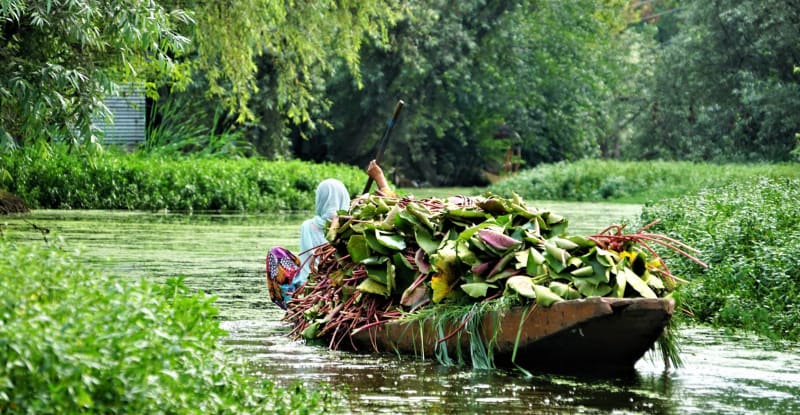
Kashmir Farmers Revive Ancient Lotus Crop in Flooded Fields
In Kashmir's waterlogged wetlands, farmers are turning climate disaster into opportunity by reviving nadur, the traditional lotus stem crop that nearly vanished. Instead of fighting rising water levels, they're working with them and restoring both livelihoods and ecosystems.
When Ghulam Nabi Dar watched his family's two-hectare lakeside plot turn dark and lifeless in 2020, he didn't wait for help. The 68-year-old farmer grabbed his grandfather's old tools and started cleaning Wular Lake himself.
For generations, Kashmir's wetlands produced nadur, the crunchy lotus stem that appears in everything from winter curries to fried street snacks. Women processed and sold the crop, providing steady winter income for families across the Himalayan region. But over the past decade, pollution, floods, and erratic weather choked the shallow marshes where lotus thrived.
By the late 2010s, most families had abandoned lotus farming entirely. The water had changed too much, becoming thick with sewage and debris.
Dar spent months in early 2021 removing silt with handmade reed nets and shovels. He revived his grandfather's technique of stirring the lakebed with long poles to oxygenate the soil and help roots take hold. No chemicals, no machines, just patience.
"The water started responding," Dar says. Small fish returned first, then aquatic plants, then finally the lotus roots.
By winter, Dar harvested 12 quintals of lotus stem and earned about $1,600. It covered his expenses, let him buy more roots, and proved the lake could provide again.
Neighbors waded into his plot to see for themselves. Dar shared his methods openly, and by 2023, at least 15 households across three villages had restored their own patches through pooled labor and shared harvests.
Meanwhile, 75-year-old Abdul Ahad Wani faced a different problem in Khonmoh village. Years of waterlogging had drowned his paddy crops before they could mature. After another failed season, Wani had a realization: the same standing water killing his rice could grow lotus perfectly.
He connected with a young farmer in Sopore who'd already converted flooded fields to lotus production. Within a week, they'd planted Wani's first lotus roots.
His first harvest brought eight quintals and $900. He sold slightly below market price to build trust, and it sold out in days.
The Ripple Effect
What started as two desperate farmers trying to salvage ruined land has quietly spread across Kashmir's wetlands. Families are reclaiming flooded fields and polluted lake edges, turning climate challenges into productive farmland without waiting for government programs or new technology.
The lotus revival is bringing back more than income. As farmers clean and oxygenate the water, entire ecosystems are regenerating, fish populations are recovering, and women are returning to processing and sales roles that provide household stability.
Kashmir's farmers are proving that sometimes the best response to climate change isn't fighting the water, but learning to work with it again.
Based on reporting by Reasons to be Cheerful
This story was written by BrightWire based on verified news reports.
Spread the positivity!
Share this good news with someone who needs it