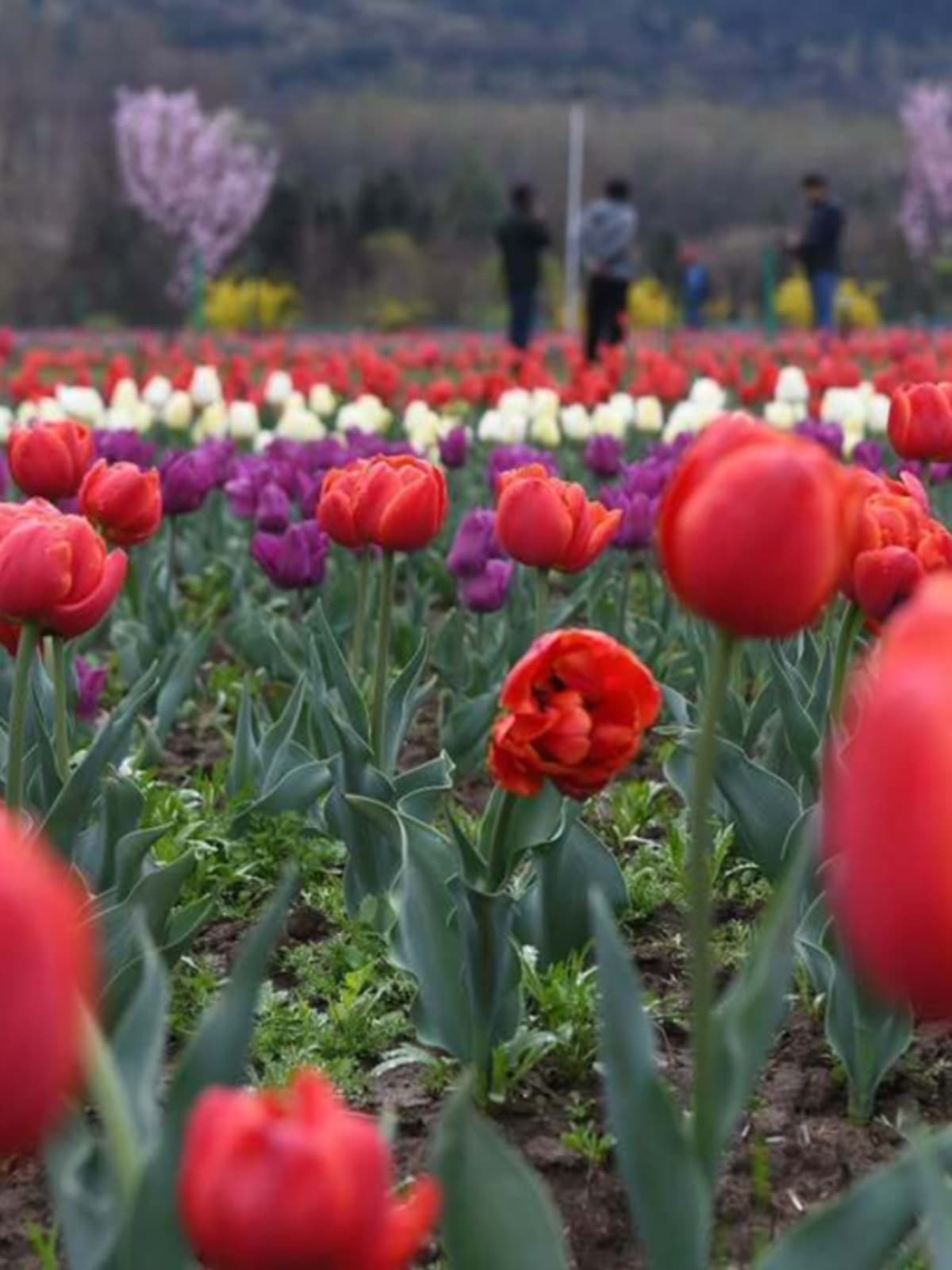
Kashmir's Tulip Garden Reopens With 1.8 Million Blooms
After closing in 2025 following a terror attack, Asia's largest tulip garden has reopened in Srinagar with 1.8 million flowers across 15 hectares. The return brings hope and income back to Kashmir's tourism-dependent communities.
Spring has returned to Kashmir's mountains, and with it, 1.8 million tulips are blooming again across Asia's largest tulip garden.
The Indira Gandhi Memorial Tulip Garden in Srinagar reopened this month after closing last year in the aftermath of the Pahalgam terror attack. Nestled along the foothills of the Zabarwan Range and overlooking Dal Lake, the 15-hectare garden welcomed visitors back after a comprehensive security review.
For the communities who depend on tourism, the reopening means more than beautiful scenery. It signals a return to work and stability for guides, vendors, boatmen, and hotel owners who rely on the spring season.
This year's display features over 70 varieties of tulips in sweeping rows of color, from deep purples to soft pinks and bright yellows. Daffodils, hyacinths, muscari, and ranunculus fill the spaces between, creating layers of seasonal blooms that transform the landscape.
Most tulip bulbs still arrive from the Netherlands, though local growers are working to cultivate varieties that can thrive in Kashmir's climate. The effort reflects a broader goal of making the Valley's signature spring display more self-sufficient over time.
The Ripple Effect
Since opening in 2008, the garden has grown into one of Kashmir's most important tourism destinations. In 2014, it earned global recognition as one of the world's top tulip gardens.
Last season saw record attendance before the closure, with visitors traveling from across India and beyond. The garden's success has inspired similar initiatives throughout the region, creating new opportunities for horticulturists and tourism workers.
The reopening also carries symbolic weight. It shows resilience in a region that has weathered difficult moments, offering a space where families can gather and visitors can experience Kashmir's gentler side.
For many who work in the Valley's tourism sector, the sight of those first tulips blooming represents hope for a strong season ahead. The garden will remain open through the spring as flowers continue to bloom in rotating waves.
After a year of uncertainty, Kashmir's most colorful tradition is back.
Based on reporting by The Better India
This story was written by BrightWire based on verified news reports.
Spread the positivity!
Share this good news with someone who needs it