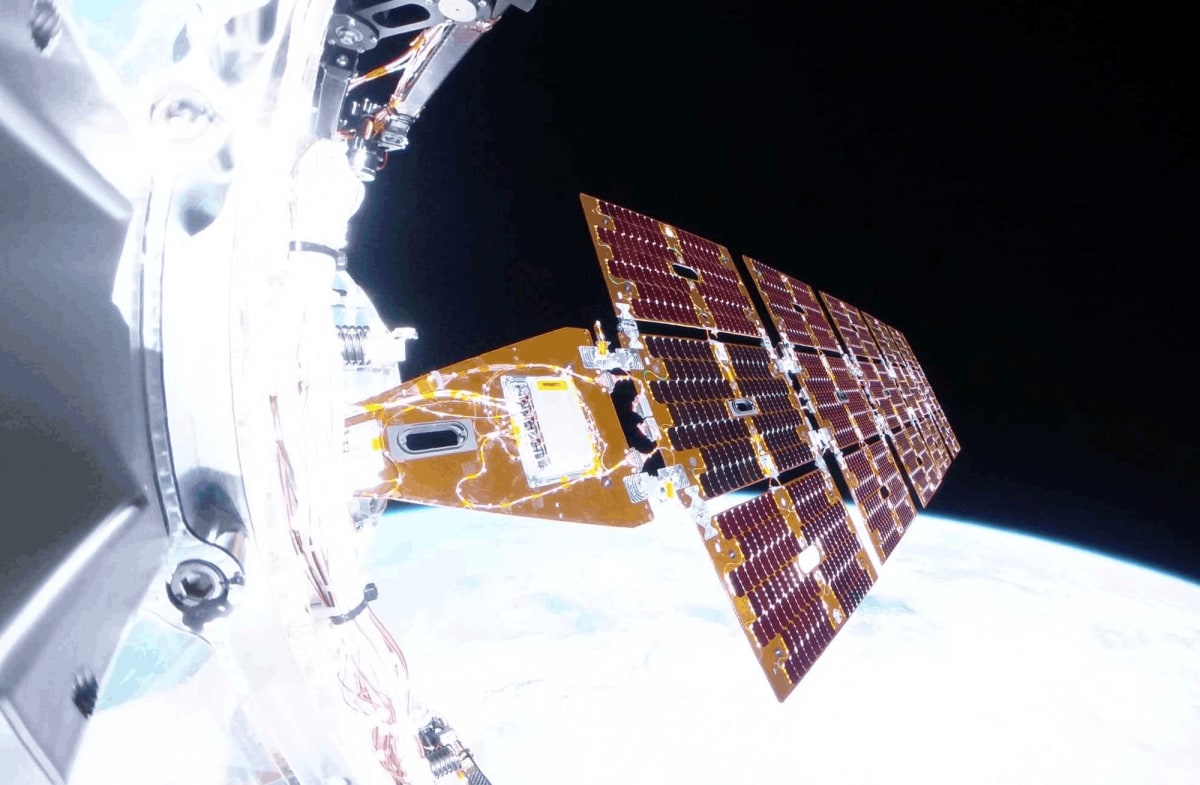
Katalyst Space Slows Spinning Satellite, On Track to Save Swift
A spacecraft that lost control after launch has slowed its dangerous spin from 9 degrees per second to under 2, keeping alive a mission to rescue a NASA telescope from falling to Earth. Engineers used just 100 grams of fuel to regain partial control and are preparing for the next phase.
A tumbling spacecraft designed to save a NASA observatory from crashing back to Earth is getting back on track after its team pulled off a crucial recovery maneuver.
Katalyst Space Technologies announced it has successfully slowed its Link spacecraft from a chaotic 9-degree-per-second spin to just 1.47 degrees per second. The company lost control of Link during post-launch tests in late July when the craft entered what engineers call a multi-axis spin, one of the most challenging problems in spaceflight.
The recovery effort showcases impressive fuel efficiency. Controllers used one of Link's electric thrusters to tame the spin while consuming less than 100 grams of fuel, roughly the weight of a small apple.
Link launched on July 3 aboard a Pegasus rocket with an ambitious goal: become the first commercial spacecraft to grapple another satellite and boost its orbit. Its target is the Neil Gehrels Swift Observatory, a 22-year-old NASA telescope that has been studying gamma-ray bursts and other cosmic phenomena but is now slowly falling toward Earth.
Swift cannot raise its own orbit and faces reentry later this year or early next year without help. The observatory's altitude has dropped to just below 350 kilometers as of August 9, and time is running short. Link must complete its reboost before Swift falls below 300 kilometers, expected no earlier than October.
Two of Link's three reaction wheels stopped working during the incident, and its backup thrusters only partially functioned. Despite these setbacks, Katalyst's engineers adapted quickly. They plan to upload a major software update in the coming days that will work with the spacecraft's current configuration to restore full attitude control.
The team now expects to reach Swift in late August, just a few weeks behind the original schedule. The $30 million mission represents a bold test for the emerging satellite servicing industry.
The Ripple Effect
This rescue mission matters far beyond one telescope. Dozens of valuable satellites face similar fates as their orbits decay, and many were never designed to be refueled or adjusted. If Katalyst succeeds, it could open the door to extending the lives of hundreds of satellites worth billions of dollars.
NASA acknowledged this mission carries high risks but offers enormous benefits to both the agency and the commercial space industry. Success would prove that aging spacecraft don't have to become space junk, and that creative engineering can extend their productive lives for years.
Swift has spent more than two decades scanning the universe for some of the most energetic events in nature. Saving it means preserving a unique scientific instrument that still has discoveries left to make.
The Katalyst team's quick thinking and precise maneuvering turned a potential mission failure into a demonstration of exactly the kind of problem-solving skills satellite servicing will require.
More Images


Based on reporting by Google News - Science
This story was written by BrightWire based on verified news reports.
Spread the positivity!
Share this good news with someone who needs it