Kazakh Poet Helped Close World's Largest Nuclear Test Site
In 1989, a writer turned public outrage into action and helped shut down a Soviet testing ground where 450 nuclear bombs had exploded over 40 years. His movement inspired a UN international day against nuclear testing.
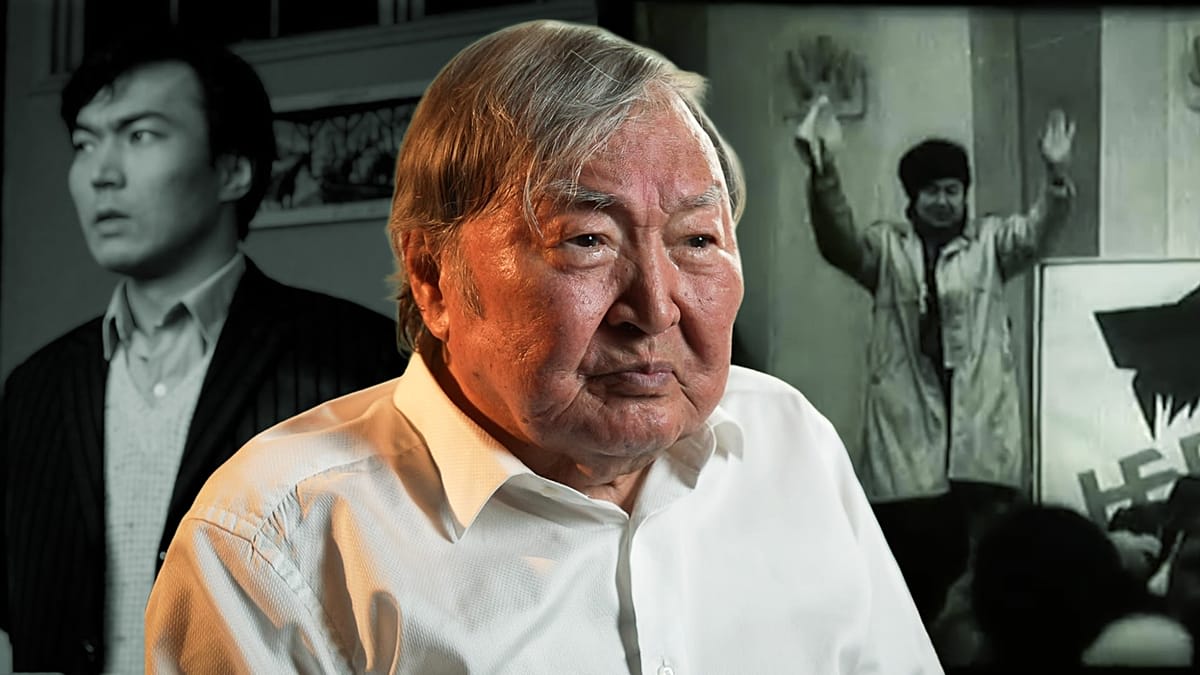
When Olzhas Suleimenov stood up in 1989, he wasn't just speaking as a poet. He was giving voice to thousands of Kazakhs who had lived in the shadow of nuclear explosions for four decades.
The Semipalatinsk test site in northeastern Kazakhstan was one of the Soviet Union's darkest secrets. Between 1949 and 1989, more than 450 nuclear bombs were detonated across an area larger than New Jersey, often without warning to nearby villages.
Families drank contaminated water. Cancer rates soared. By the late 1980s, the human cost had become impossible to hide.
Suleimenov, already a respected writer born in Almaty in 1936, transformed growing anger into organized action. He launched the Nevada-Semipalatinsk movement, symbolically linking Kazakhstan's tragedy with Nevada, America's own nuclear testing ground.
The movement united people across professions and backgrounds. Writers, scientists, doctors, and residents of affected regions joined forces in one of the largest civic mobilizations of the late Soviet era.
Their persistence paid off. On August 29, 1991, the Semipalatinsk test site officially closed, ending one of history's most destructive nuclear testing programs.
The Ripple Effect
The impact reached far beyond Kazakhstan's borders. The United Nations General Assembly recognized August 29 as the International Day Against Nuclear Tests, turning a local victory into a global symbol of hope.
Suleimenov was mentioned as a potential Nobel Peace Prize nominee, though he declined any nomination. His focus remained on his work, not accolades.
Beyond activism, Suleimenov built a literary legacy that spans continents. His controversial 1975 book "AZ i Ya" offered fresh perspectives on Slavic and Turkic history through linguistic analysis, sparking debates that continue today.
From 2001 to 2014, he served as Kazakhstan's Permanent Representative to UNESCO, extending his influence into cultural diplomacy. His poetry and prose have been translated into numerous languages, reaching readers worldwide.
Now approaching his 90th birthday in May, Suleimenov lives in Almaty, the city where his journey began. His life proves that words can spark movements, and movements can change the world.
More Images



Based on reporting by Euronews
This story was written by BrightWire based on verified news reports.
Spread the positivity!
Share this good news with someone who needs it