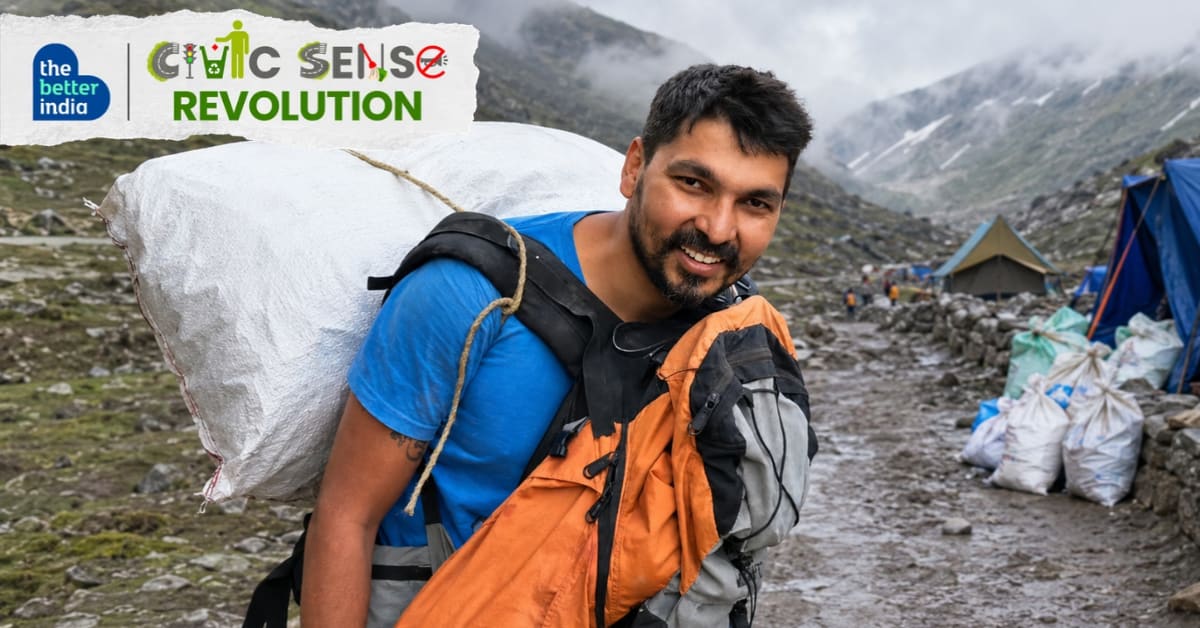
Kedarnath Pilgrims Now Carry 1kg of Trash Back Down
After a decade cleaning the Himalayas, activist Pradeep Sangwan is asking every Kedarnath pilgrim to carry back just one kilogram of waste. If 100,000 travelers participate, that's 100 tonnes removed from the sacred mountain.
Millions of pilgrims climb to Kedarnath each year, but this season they're being asked to take something extra on the journey back down: one kilogram of trash.
Pradeep Sangwan, founder of Healing Himalayas, has spent over ten years hauling garbage off mountain trails himself. Now he's inviting others to join him through a campaign called #CarryMeBack.
The math is simple and powerful. One hundred thousand pilgrims carrying one kilogram each equals 100 tonnes of waste removed from one of India's most sacred landscapes.
Sangwan started his mission after seeing garbage piles disfiguring famous trekking spots across the Himalayas. What began as personal frustration turned into action when he started carrying waste back himself, joined by friends and family.
In 2016, he founded the Healing Himalayas Foundation. Today the organization conducts clean-up drives, waste audits, and awareness campaigns across mountain regions.
But Sangwan realized something important: clean-ups alone weren't solving the problem. The solution needed participation from everyone visiting these sacred spaces.
This year's Kedarnath season saw ten lakh registered pilgrims, breaking all previous records. The #CarryMeBack campaign is digitally tracked, with volunteers recording participation and measuring impact in real time.
Within just ten days of the campaign gaining momentum, hundreds of travelers helped remove more than 1,000 kilograms of waste from the Kedarnath route. Sangwan emphasizes that even small amounts matter when multiplied across thousands of visitors.
The Ripple Effect
The campaign is changing how pilgrims think about their journey. Travelers aren't just passive visitors anymore but active protectors of the landscape they've come to experience.
At Kedarnath alone, the organization recently reported handling 25 tonnes of segregated material through its facility. That's 25 tonnes that won't damage the fragile mountain ecosystem or pollute water sources.
Sangwan sees carrying waste back as one part of a larger solution. He's also calling attention to waste minimization at the source, better segregation systems, and infrastructure improvements at the foothills where journeys begin.
"What we do is postmortem by collecting it," he explained. "But the question is how do we control it at the foothills?"
He believes effective mountain waste management rests on four pillars: minimization, source segregation and infrastructure, public participation, and reverse supply chains ensuring waste gets transported and processed responsibly.
A plastic bottle picked up during a trek may seem small, but when thousands of people do the same thing, the mountains notice the difference.
More Images
%2Fenglish-betterindia%2Fmedia%2Fmedia_files%2F2026%2F08%2F20%2Fleon-3-2026-08-20-15-02-22.png)


%2Ffilters%3Aformat(webp)%2Fenglish-betterindia%2Fmedia%2Fmedia_files%2F2026%2F08%2F20%2Fchatgpt-image-2026-08-20-15-06-07.png)
Based on reporting by The Better India
This story was written by BrightWire based on verified news reports.
Spread the positivity!
Share this good news with someone who needs it