Kerala Sisters Build AC-Free Home That Cools Itself
Two sisters pooled their savings to build a naturally cooled home on their mother's ancestral land in Kerala, keeping every tree she planted. The house stays comfortable even in 80% humidity without air conditioning.
Renu Krishnadas wasn't sure it would work. She knew Kerala summers, the kind where humidity climbs past 80 percent and sticks to your skin. But after 21 days in her new home near Kannur, she never once turned on the AC.
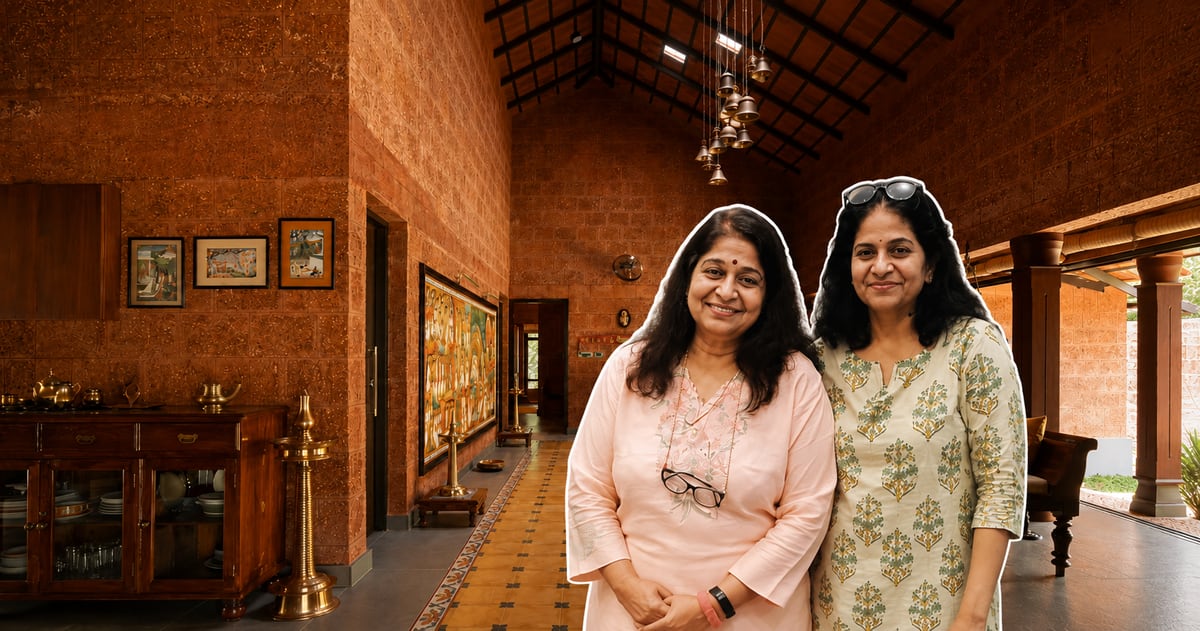
Sisters Renu and Rekha Utham had a vision when they returned to their mother's 70-cent ancestral plot. Renu works in finance in Dubai, and Rekha lives in Bahrain, but this piece of Kerala was theirs through generations of women in their family. They wanted to honor what their mother had left behind: coconut palms, jackfruit trees, red earth, and the breeze rolling in from nearby paddy fields.
They hired architect Amrutha Kishor, who asked one question before drawing any plans: where does the wind come from? Her firm specializes in climate-responsive design, and she knew the Kerala site could do the cooling work itself if designed correctly.
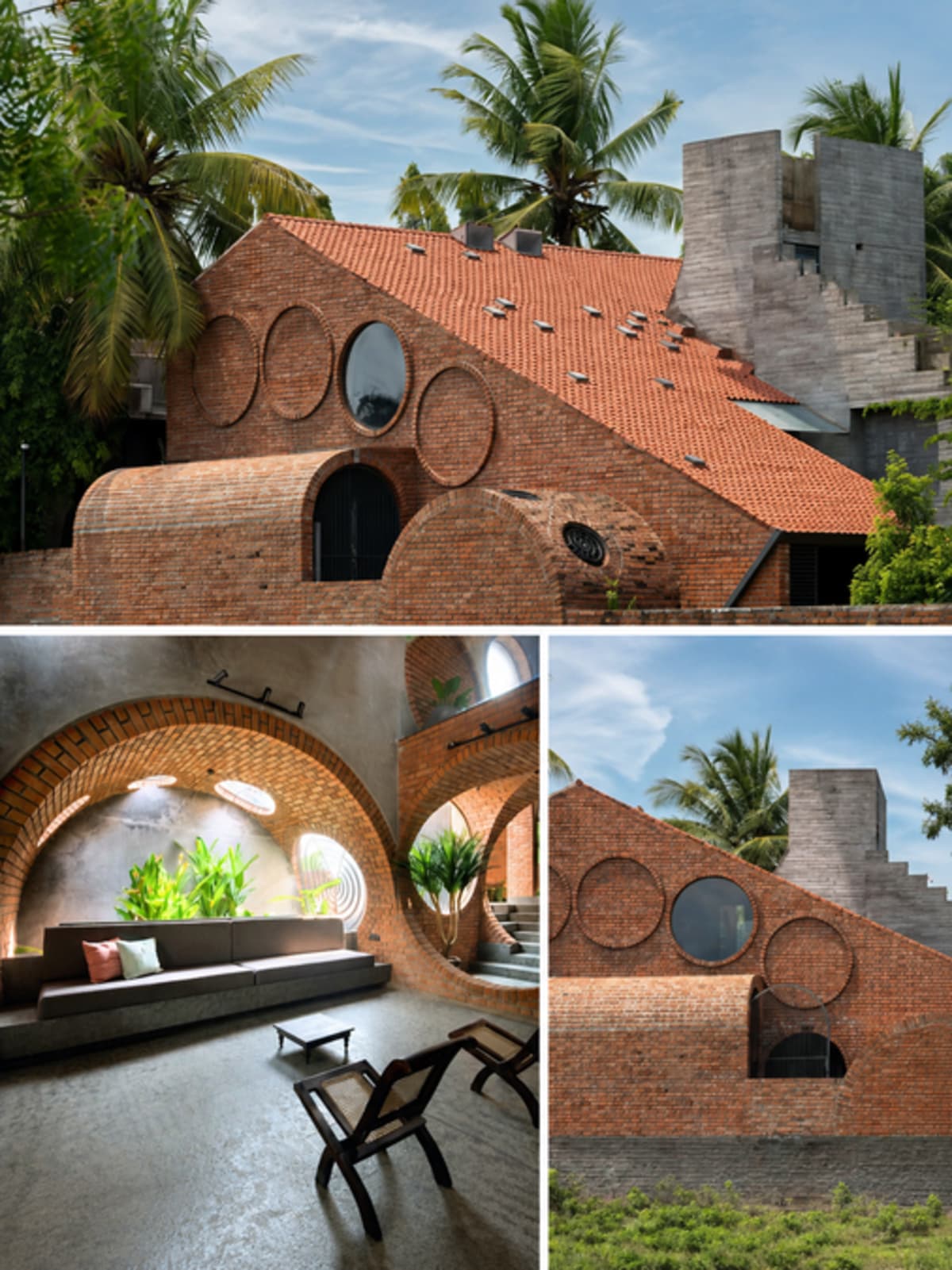
The answer became Kadangotu House, a home built around airflow instead of air conditioning. Cool breeze enters through lower openings near the paddy fields and travels through the rooms. As it warms, it rises toward 12-foot ceilings and escapes through tall windows. The air keeps moving instead of trapping heat inside.
The walls help too. Locally sourced laterite stone absorbs heat slowly during the day and releases it gradually at night. The material also pulls moisture from humid air, making rooms feel less sticky. Two layers of Mangalore clay tiles on the roof, separated by coir sheets, add another barrier against Kerala's intense sun.
Rekha's daughter Namita had doubts when she first saw perforated clay walls in the kitchen. She thought someone would break through them in weeks. But the jali blocks were placed exactly where northern airflow enters, and once the family moved in, they understood. The openings weren't decorative. They were doing real work.
The Ripple Effect
The house cost about what a conventional home would, but its daily running costs tell a different story. Fans are enough most days, even during peak summer. The design proves that working with climate instead of against it isn't just traditional wisdom. It's practical engineering.
Other families in the region have started asking Amrutha about similar designs. Laterite was once common in Kerala buildings but had fallen out of favor. Now it's making a comeback, one naturally cooled home at a time.
Renu spent those 21 days watching breezes move through rooms her mother once walked. The trees stayed, the land remembered, and the house learned to breathe with the seasons.
More Images
%2Fenglish-betterindia%2Fmedia%2Fmedia_files%2F2026%2F08%2F27%2F1-2026-08-27-19-26-44.png)

%2Ffilters%3Aformat(webp)%2Fenglish-betterindia%2Fmedia%2Fmedia_files%2F2026%2F08%2F27%2F7-2026-08-27-19-38-29.jpeg)
%2Ffilters%3Aformat(webp)%2Fenglish-betterindia%2Fmedia%2Fmedia_files%2F2026%2F08%2F27%2F2-2026-08-27-19-38-29.webp)
Based on reporting by The Better India
This story was written by BrightWire based on verified news reports.
Spread the positivity!
Share this good news with someone who needs it