Korea Gives Startups Legal Power to Prove Tech Theft
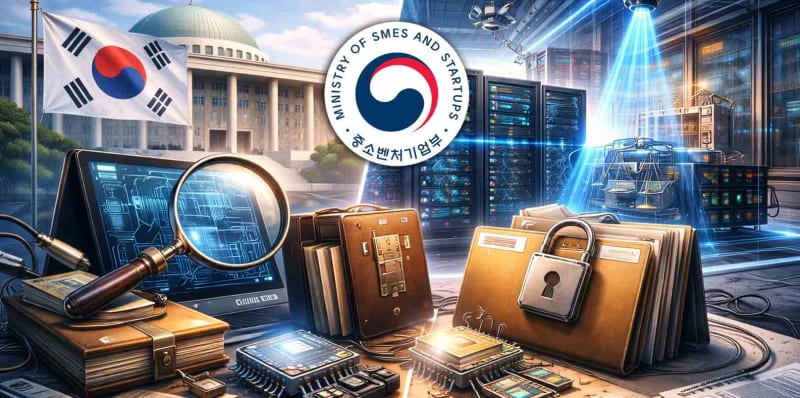
South Korea just passed a law that lets small companies finally gather evidence when big corporations steal their technology. The K-Discovery system levels the playing field in a country where startups lost an average of $1.3 million per theft case but won only a third of lawsuits.
Small startups in South Korea now have a fighting chance against corporate giants who copy their innovations. The National Assembly passed the K-Discovery law in January 2026, giving courts the power to help small businesses gather proof when their technology gets stolen.
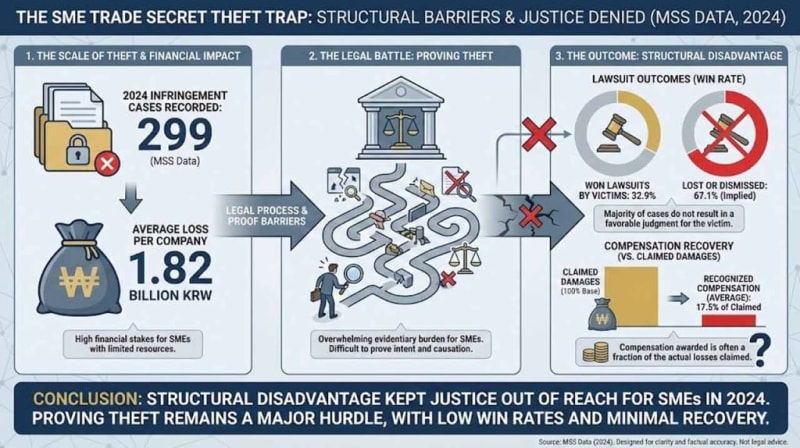
The numbers tell a brutal story. In 2024 alone, 299 South Korean startups reported technology theft, losing an average of $1.3 million each. Only one in three victims won their lawsuits, and even winners recovered just 17% of their claimed losses.
The problem wasn't that theft didn't happen. It was that small companies couldn't prove it when all the evidence sat in the thief's filing cabinets.
K-Discovery changes that equation completely. Courts can now appoint independent experts to investigate suspected theft, visit company offices, and access records. Those findings count as real legal evidence, not just accusations.
The law also lets courts order companies to preserve documents and data during trials so critical proof can't mysteriously disappear. Startups can even conduct recorded questioning outside the courtroom to build their cases faster.
Minister Han Seong-sook from the Ministry of SMEs and Startups called it an "institutional turning point." President Lee Jae-myung made eliminating tech theft a core national priority, backing the reform with action after earlier efforts only raised maximum fines.
The reform closes a particularly nasty loophole. Big companies often misused technology shared during pre-contract negotiations, leaving startups with no recourse since no official deal existed yet. Now that exploitation counts as theft too.
The Ripple Effect
Beyond individual cases, K-Discovery signals to international investors that South Korea takes intellectual property seriously. Foreign founders entering Korea's market now face clearer protections similar to discovery procedures in the United States, Germany, and Japan.
For Korea's deep tech and AI sectors, where unauthorized replication happens fastest, the reform means partnerships can form on trust rather than fear. Venture representatives told Korean media the system "finally levels the playing field" by letting small companies prove what they already knew was true.
Some experts caution that enforcement matters more than any law on paper. Real deterrence depends on courts using their new powers consistently and judges imposing meaningful penalties when theft gets proven.
Still, the shift from moral appeals to measurable mechanisms marks genuine progress. Justice no longer depends on goodwill from powerful companies but on procedures that make evidence accessible and accountability real.
Innovation thrives when creators know their work stays theirs, and South Korea just built that protection into law.
More Images

Based on reporting by Regional: south korea technology (KR)
This story was written by BrightWire based on verified news reports.
Spread the positivity!
Share this good news with someone who needs it