Korean Scientists Boost Battery Life Tenfold
South Korean researchers just solved a puzzle that's blocked super-powerful batteries for decades. Their breakthrough could make electric cars drive ten times farther on a single charge.
Scientists in South Korea just cracked a problem that's stumped battery researchers for years, bringing us closer to electric vehicles that travel hundreds of miles farther than today's models.
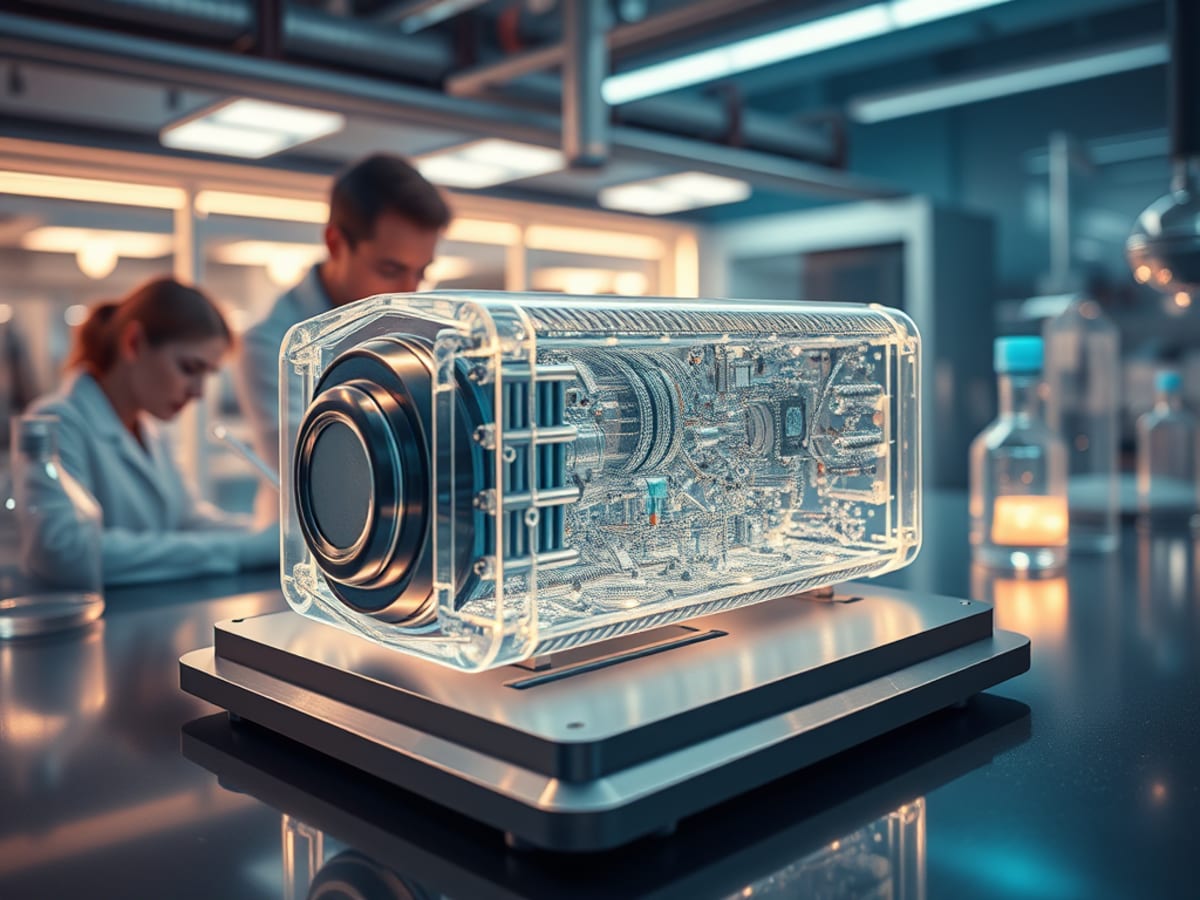
A team from the Korea Institute of Science and Technology and the Institute for Advanced Engineering developed a new catalyst that makes lithium-air batteries actually work. These batteries have tantalized scientists for decades because they can theoretically hold ten times more energy than the lithium-ion batteries powering our phones and cars today.
The catch? Until now, nobody could make them last. The batteries degraded quickly because the chemical reactions inside happened too slowly and inefficiently.
The research team found an elegant solution. They engineered a catalyst from tungsten diselenide, manipulating it at the atomic level by adding platinum and creating tiny gaps called selenium vacancies. This transformed a previously useless part of the material into a powerhouse surface that speeds up the crucial oxygen reactions batteries need.
The results speak for themselves. Their prototype battery survived more than 550 charge and discharge cycles while maintaining stable performance, even when charged quickly. That crushes the durability of conventional catalysts like platinum carbon and ruthenium oxide.
The Ripple Effect
This isn't just about better smartphones. Imagine electric vehicles traveling over 3,000 miles on a single charge instead of 300. Picture grid-scale batteries storing enough renewable energy to power entire cities through cloudy, windless weeks.
The breakthrough opens doors beyond batteries too. The technique of activating previously dormant surfaces in two-dimensional materials could revolutionize catalysts across chemistry and clean energy. Other researchers can now apply similar atomic-level engineering to different materials, potentially unlocking solutions we haven't even imagined yet.
South Korea continues investing heavily in next-generation batteries, with plans to develop even more advanced systems by 2029. This latest achievement shows that investment paying real dividends.
The path from laboratory breakthrough to commercial product still requires work, but this research removes a major roadblock that's blocked progress for decades, bringing the promise of ultra-efficient energy storage significantly closer to reality.
More Images


Based on reporting by Google News - South Korea Breakthrough
This story was written by BrightWire based on verified news reports.
Spread the positivity!
Share this good news with someone who needs it