Korean Scientists Discover New Armored 'Living Fossil' Species
Marine biologists in South Korea just identified a spiky, armor-plated sea creature that's been hiding in plain sight for millions of years. The discovery proves these ancient organisms still have secrets to share.
Scientists in South Korea just discovered a brand new species of chiton, an armored mollusk that has barely changed in 300 million years, and it was hiding among rocks the entire time.
Biologists Hyang Kim and Ui Wook Hang from Kyungpook National University were studying chitons collected off Korea's southern and western coasts when they spotted something unusual. What researchers initially thought was just a subspecies turned out to be an entirely new species after genetic testing revealed its unique identity.
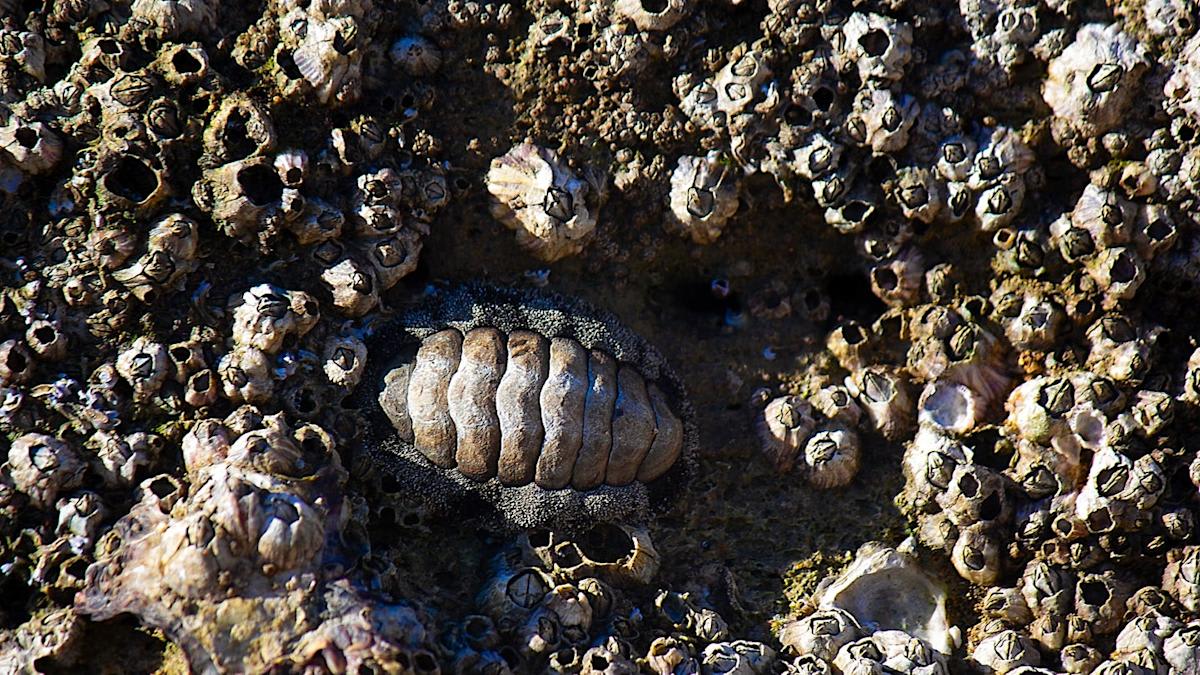
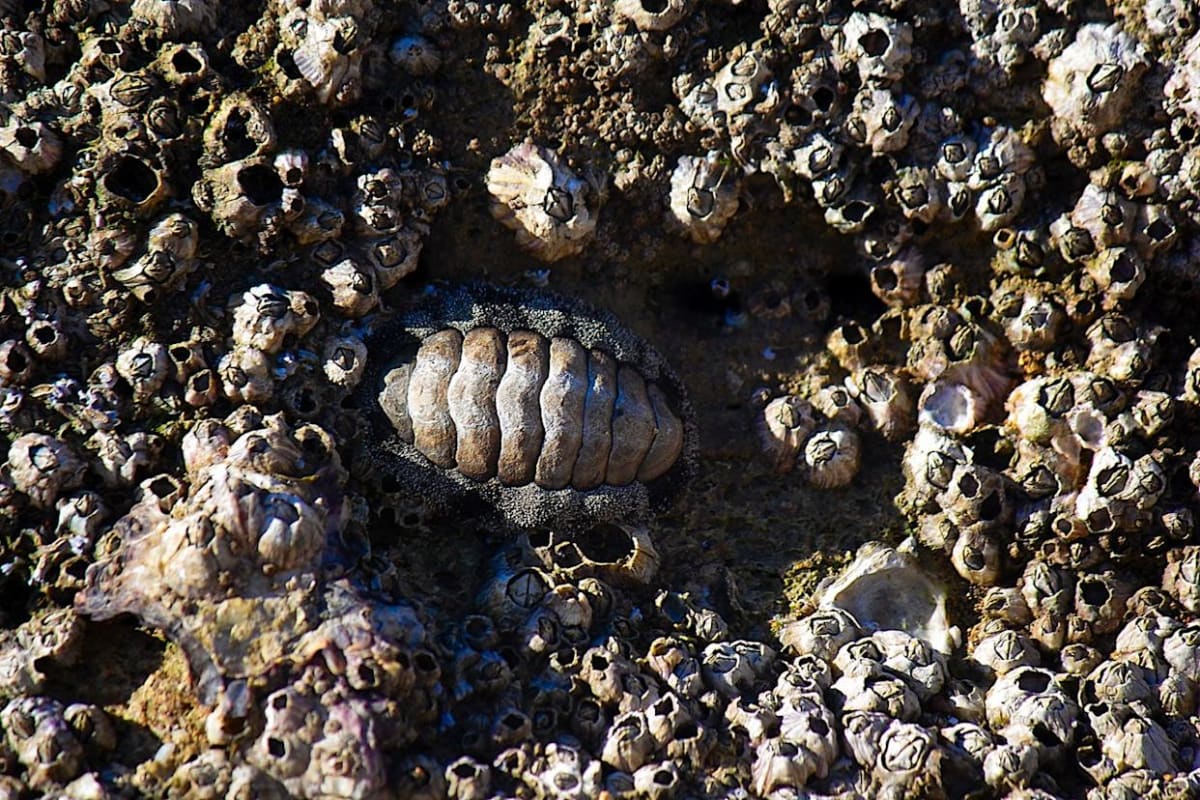
The team named their discovery Acanthochitona feroxa, inspired by the Latin word for "fierce." The name fits perfectly because this little creature sports tufts of bristles along its shell that make it an unpleasant snack for predators. Its brownish-green armor consists of eight overlapping plates, giving it the appearance of a tiny medieval shield crawling across the ocean floor.
Chitons are often called living fossils because they first evolved around 500 million years ago and have remained remarkably unchanged. What makes them even more special is that more chiton species are alive today than extinct, with over 1,300 species known so far. That's rare among ancient life forms.
The breakthrough came when Kim and Hang used molecular genetic tools instead of just looking at physical features. Traditional identification methods can be misleading because chitons often look similar to each other. By sequencing the creature's mitochondrial genome and comparing it to four other Acanthochitona species, they confirmed A. feroxa was indeed unique.
A closer look under a scanning electron microscope revealed the subtle differences. While most chitons in this group have pointed spikes on their shells, A. feroxa has rounded ones. Its tongue-like feeding structure called a radula also showed distinct geometric patterns that set it apart from its closest relative, Acanthochitona defilippii.
These armored mollusks spend their lives clinging to rocks, using their specialized radulas covered in tiny sharp teeth to scrape algae and microorganisms off surfaces. They've been doing this successfully since before dinosaurs walked the Earth, proving that sometimes the best survival strategy is not changing much at all.
The Bright Side
The discovery highlights how much we still don't know about life in our oceans. Chitons exist in waters all around the world, from shallow tide pools to deep ocean floors, and researchers believe many more species remain undiscovered. These creatures have had hundreds of millions of years to diversify into forms nobody has imagined yet.
The genus Acanthochitona itself only developed about 92 million years ago during the Late Cretaceous period, when rising sea levels created new habitats for marine life to explore and adapt to. That geological moment gave these mollusks fresh opportunities to evolve into new forms while maintaining their signature armored appearance.
Kim and Hang's research provides crucial genetic data that will help future scientists identify other hidden species and understand how these ancient animals are related to each other. Their work proves that sometimes the most exciting discoveries are the ones that have been right under our noses all along, just waiting for the right tools to reveal them.
More living fossils are out there right now, blending perfectly with their rocky homes, ready to remind us that Earth still has wonderful surprises in store.
More Images


Based on reporting by Google: fossil discovery
This story was written by BrightWire based on verified news reports.
Spread the positivity!
Share this good news with someone who needs it