Korean Scientists Turn Biodiesel Waste Into Cheap Hydrogen
South Korean researchers have cracked a major clean energy challenge by transforming glycerol, a cheap biodiesel byproduct, into both hydrogen fuel and valuable chemicals at once. The breakthrough slashes energy costs and could make green hydrogen economically viable.
Scientists in South Korea just solved two environmental problems with one elegant solution.
A team from the Korea Institute of Materials Science and Ulsan National Institute of Science and Technology developed a system that turns glycerol, an abundant waste product from biodiesel manufacturing, into hydrogen fuel and useful chemicals simultaneously. The technology addresses one of clean energy's biggest headaches: making green hydrogen affordable enough to compete with fossil fuels.
Traditional hydrogen production through water electrolysis requires enormous amounts of energy, making it expensive and inefficient. The culprit is a process called oxygen evolution reaction at the anode, which demands high voltage and slows everything down.
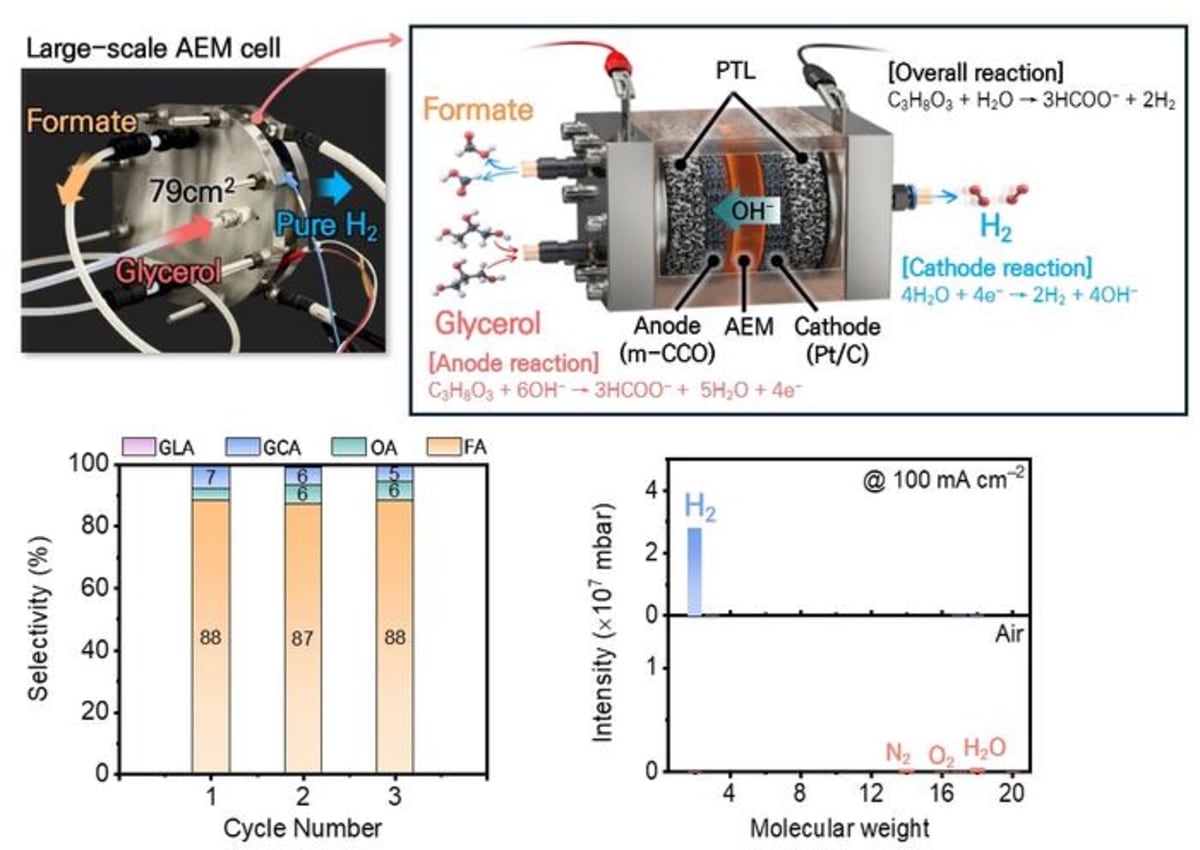
The research team, led by principal researcher Juchan Yang, replaced that energy-hungry step with glycerol oxidation instead. Glycerol is dirt cheap and plentiful because biodiesel plants produce it as a byproduct they struggle to use. By swapping it in, the system runs at just 1.31 volts while achieving a current density of 110 milliamps per square centimeter.
Even better, the process doesn't just make hydrogen. It also produces formate, a chemical feedstock used in manufacturing, with 96% selectivity. That means nearly every glycerol molecule becomes something valuable rather than waste.
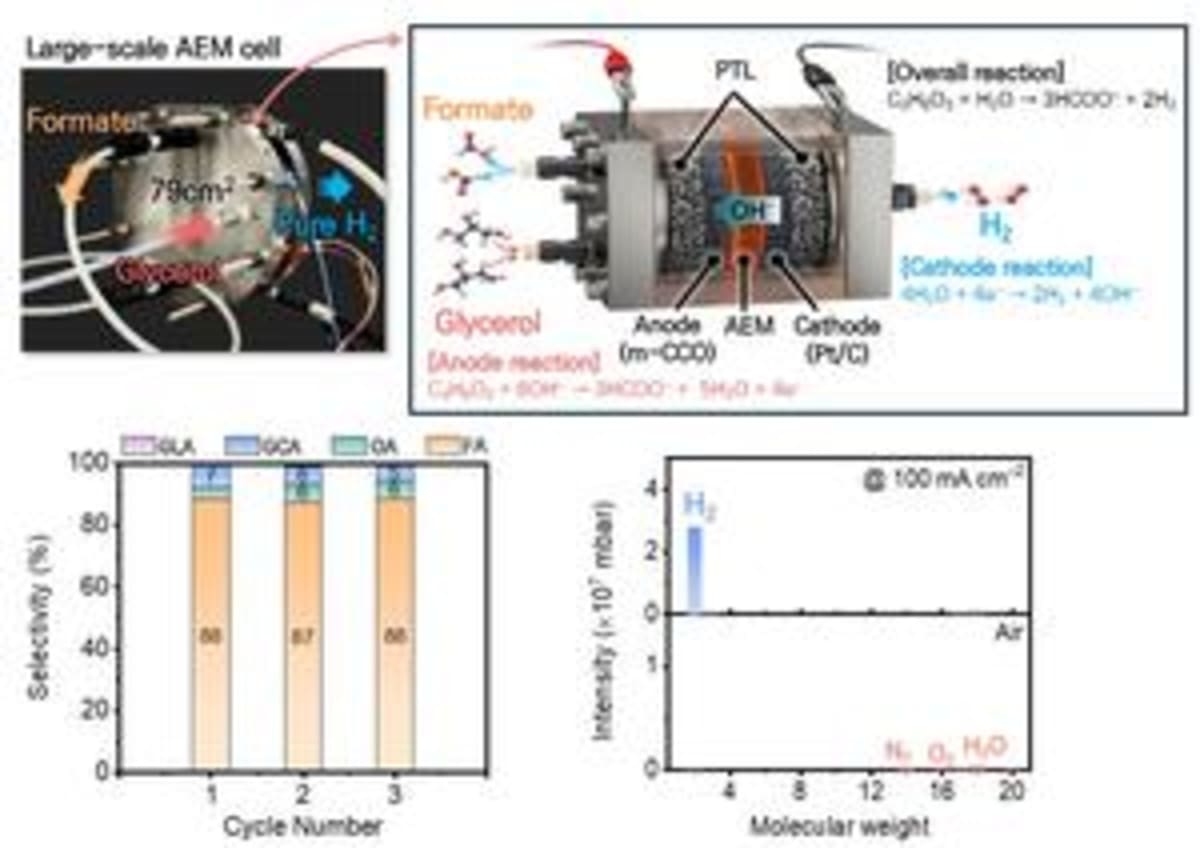
The team built their system using copper and cobalt catalysts instead of expensive precious metals like platinum. They tested it in a large 79-square-centimeter electrolyzer cell, proving it works at scales relevant for actual industrial use, not just in lab beakers.
The Ripple Effect spreads far beyond one factory floor. This technology offers a blueprint for carbon-neutral manufacturing that integrates energy and chemical production instead of treating them as separate industries. Biodiesel plants gain a profitable use for their glycerol waste while hydrogen producers slash their energy bills.
The system is designed to scale up to continuous operation and megawatt-level applications. That industrial-ready design means companies could adopt this technology relatively quickly compared to laboratory concepts that need years of development.
The research appeared in Joule, one of energy science's top journals, in March 2025. The work received support from multiple South Korean national research programs and used advanced computing facilities to optimize the catalyst design.
Professor Ji-Wook Jang emphasized that converting bio-derived byproducts into value-added chemicals represents a key strategy for advancing both carbon neutrality and the hydrogen economy at the same time.
The breakthrough transforms waste into climate solutions while making economic sense.
More Images
Based on reporting by Regional: south korea technology (KR)
This story was written by BrightWire based on verified news reports.
Spread the positivity!
Share this good news with someone who needs it