Korean Startups Use AI to Bridge Global Talent Gap
A new AI platform is helping international workers navigate Korea's invisible workplace culture, solving a problem that formal translation never could. As Korean companies hire more global talent, they're finally addressing the informal communication systems that shape real decision-making.
Getting hired at a Korean startup is no longer the hardest part for international professionals. The real challenge begins after they arrive, when invisible workplace systems block them from influence and decision-making despite their technical skills.
South Korea is rapidly expanding global talent recruitment. A recent survey found 78.4% of Korean SMEs are willing to hire international employees, with most believing foreign professionals can solve labor shortages.
But recruitment isn't solving integration. Research from the Software Policy & Research Institute found that companies hiring overseas talent still struggle with cultural adaptation and communication problems, leading to retention issues.
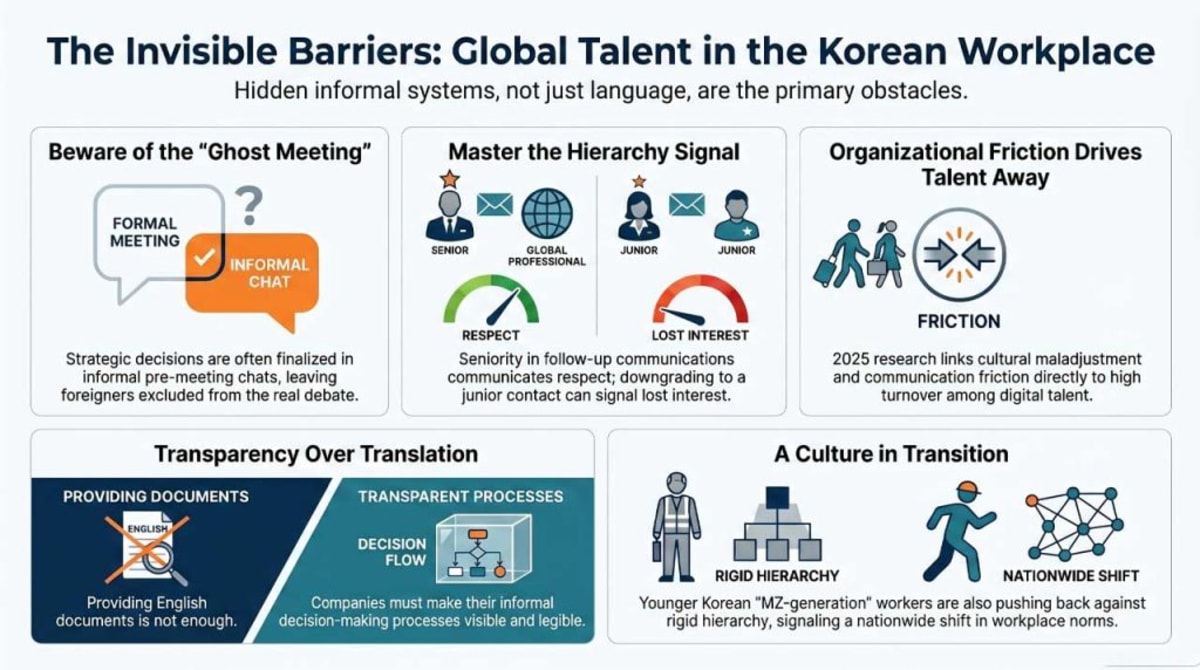
The problem isn't language itself. Jinseong Kim, founder of AI communication platform Noonchi.ai, discovered that foreign professionals often miss the informal channels where real decisions happen in Korean organizations.
"In Korean organizations, official meetings are often a performance, an announcement of what has already been decided," Kim explained. "The real decision-making happens through informal channels: a smoke break, a quick coffee chat, a brief word in the hallway."
Kim calls this the "Ghost Meeting" problem. International employees prepare carefully for formal meetings and contribute thoughtful analysis, but the core decisions were already finalized through informal pre-meeting conversations they never accessed.
The exclusion often isn't intentional. When Korean companies say "that meeting is in Korean, you don't have to join," they genuinely believe they're being considerate, but they're actually cutting people out of consensus loops where strategy gets shaped.
Why This Inspires
Kim's platform represents a new recognition that true workplace inclusion requires more than translation. Korean companies are beginning to understand that attracting global talent means adapting how organizations actually operate, not just providing English documentation.
The shift reflects growing awareness among Korean startups and SMEs that internationalization isn't complete until informal power structures become visible and accessible. Programs linking international students with Korean companies are now focusing on cultural integration alongside employment support.
As more Korean organizations acknowledge these invisible barriers, they're creating pathways for foreign professionals to access the conversations that matter. The willingness to examine and adapt these deeply embedded communication patterns shows Korea's commitment to becoming genuinely global goes beyond recruitment numbers.
More Images



Based on reporting by Regional: south korea technology (KR)
This story was written by BrightWire based on verified news reports.
Spread the positivity!
Share this good news with someone who needs it