KSU Professor Cuts Scientific Computing Time by 90%
A groundbreaking approach to supercomputing at Kennesaw State could slash the time scientists need for major discoveries from days to hours. The breakthrough brings hope for faster medical research and climate solutions.
Scientists racing to solve challenges from climate change to cancer might soon get answers 10 times faster, thanks to a professor in Georgia who's rethinking how supercomputers work.
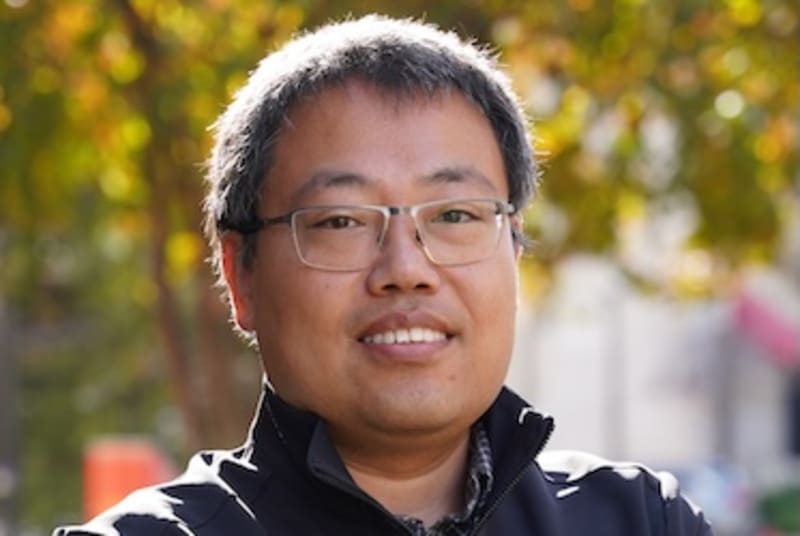
Xuechen Zhang at Kennesaw State University is developing a method that moves computation directly to where data sits, instead of shuttling massive amounts of information back and forth. This approach, called computational storage, could cut processing time from days to hours for projects that train artificial intelligence or run complex simulations.
"When we train scientific machine learning models, we need a lot of data," Zhang said. "Moving that data from storage to processors takes time, and preprocessing can become a major hurdle."
The breakthrough matters most when datasets reach terabyte or petabyte sizes. At that scale, simply moving information creates delays that slow down everything from drug discovery to weather prediction.
Zhang received a $479,358 grant from the National Science Foundation to develop the technology over three years. The funding supports doctoral students and gives undergraduates hands-on experience with advanced computing systems.
The Ripple Effect
Faster data processing opens doors across scientific fields. Climate researchers could test more scenarios to predict environmental changes. Medical teams could analyze patient data more quickly to identify treatment patterns. Space exploration missions could process telescope images in real time instead of waiting days for results.
The technology works by distributing computing tasks across specialized components, each handling what it does best. Zhang calls it a "heterogeneous" approach that makes supercomputers more flexible and powerful.
At his new AI Systems and Storage Lab on the Marietta Campus, Zhang and his team are building servers and testing their theories. Early results confirm their hypothesis that data preprocessing creates bottlenecks in large computing workflows.
The project pairs Zhang's expertise with hardware specialist Xiaokun Yang from the University of Houston–Clear Lake. Their collaboration blends software and hardware knowledge to build systems that work efficiently from the ground up.
"This funding allows us to build a pipeline for our students and give them hands-on experience with state-of-the-art systems," Zhang said. "It's not only about research results, but also about preparing students for careers in high-performance computing and artificial intelligence."
The research also strengthens Kennesaw State's computing curriculum, giving students access to cutting-edge technology before they graduate. Many will enter careers where they'll apply these same principles to solve real-world problems.
As more graduate researchers join the lab in coming semesters, Zhang expects the technology to mature into tools scientists worldwide can use to accelerate their work and reach breakthroughs that change lives.
Based on reporting by Google: scientific discovery
This story was written by BrightWire based on verified news reports.
Spread the positivity!
Share this good news with someone who needs it