LA Professor Uses AR to Transform Surgery and Rehab
A mechanical engineering professor is developing augmented reality technology that helps surgeons plan personalized hand surgeries and assists patients recovering from injuries. Her work shows how AI and AR can make healthcare more precise and accessible.
When Xiangyi Cheng's first major research paper got accepted in 2018, it didn't just launch her career. It showed her that technology could solve real problems for real people.
Today, the Loyola Marymount University professor is building tools that sound like science fiction but are helping patients right now. She's developing systems that scan children's hands before surgery and use computer analysis to help doctors plan the perfect procedure.
The technology targets syndactyly, a condition where babies are born with fused fingers. Surgeons currently eyeball the skin grafts needed for corrective surgery, relying on experience and guesswork. Cheng's system scans each child's unique hand shape and calculates exactly what size and shape of graft will work best.
"Everyone's hand is different," Cheng says. "So the surgery should be personalized."
She's also creating smart gloves for hand rehabilitation that pair an injured hand with a healthy one. The system learns from the patient's natural movements and guides recovery in a personalized way.
Her research published in IEEE Access last year compared mobile devices and AR headsets for medical applications. The findings help doctors choose the right technology for training and patient care.
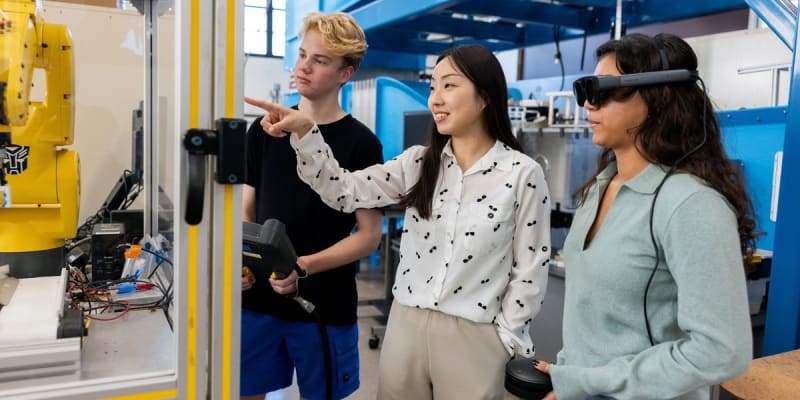
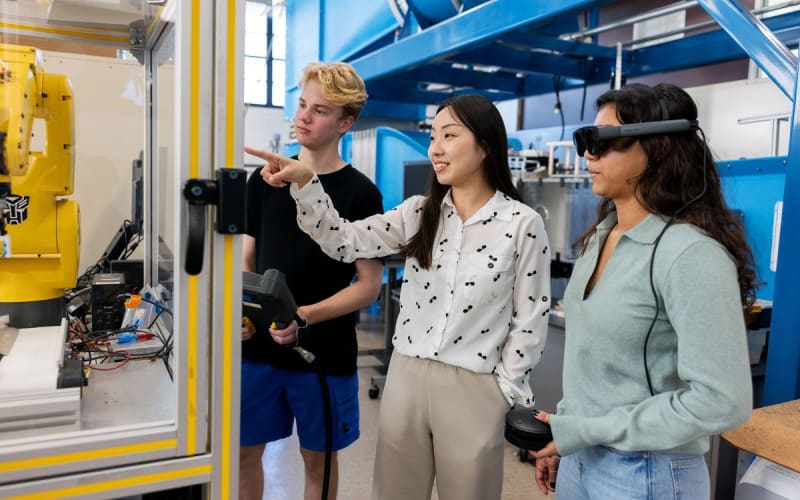
But Cheng's impact extends beyond the lab. In her classroom at Loyola Marymount, she uses augmented reality headsets to teach engineering students how robotic arms work. Instead of watching demonstrations, students experience immersive 3D views of the machines they're learning about.
She grew up in Xi'an, China, where her father worked as a mining engineer and her mother taught literature. That blend of logical and creative thinking shaped how she approaches problems today.
Why This Inspires
Cheng represents a new generation of engineers who refuse to let technology become disconnected from humanity. She warns her students constantly about AI's limitations, telling them that while artificial intelligence can suggest ideas, it should never replace human judgment.
"AI can give you more possibilities, but thinking is still our responsibility," she says. It's a principle she learned as a student herself, when a patient math teacher in Beijing showed her that clear reasoning matters more than getting quick answers.
Her journey wasn't straightforward. She came to the United States in 2015 without plans for a PhD or a research career. But getting that first paper accepted at a major robotics conference changed everything, giving her confidence that her work could make a difference.
Now she's preparing students for an AI-saturated world while developing tools that make healthcare more precise, more personal, and more humane.
More Images
Based on reporting by IEEE Spectrum
This story was written by BrightWire based on verified news reports.
Spread the positivity!
Share this good news with someone who needs it