Lab-Grown Brain Cells Now Power a Data Center in Melbourne
An Australian startup has created the world's first system that runs computer code on living human neurons, combining biology with silicon chips. The shoebox-sized device could make computing more energy-efficient while opening new doors for disease research.
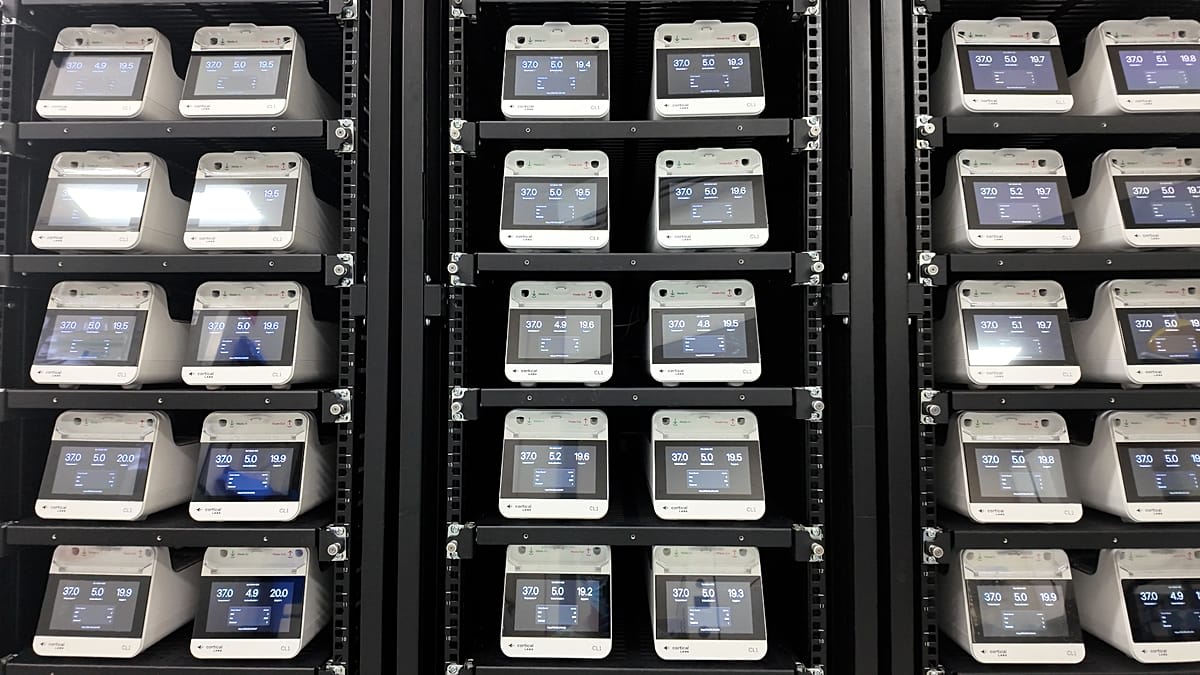
Imagine a computer that learns like your brain does, processing information while using a fraction of the energy. Cortical Labs in Australia has made this a reality with 120 units of their neuron-powered system already running a data center in Melbourne.
The company's CL1 system grows neurons from human stem cells and places them on silicon chips equipped with microelectrodes. These chips send electrical signals to the living brain cells and read their responses, creating a new kind of computing that blends biology with traditional hardware.
"All you need is a little bit of blood or some skin, and you can generate an indefinite supply of these cells that you can then turn into neurons," said Brett Kagan, the company's chief scientific officer. The neurons live in a nutrient-rich liquid inside the shoebox-sized units, sometimes called "wetware."
The difference from regular computers is striking. Where silicon chips excel at fast math, human neurons offer remarkable efficiency and adaptability. A small child needs to see just a few pictures to recognize a dog, while machine learning systems need hundreds of thousands of images to accomplish the same task.
What once took months of specialized lab work can now be done in hours or days. Cortical Labs has standardized the process of connecting cell cultures to electronic interfaces, making the technology accessible to researchers and companies without custom-built lab setups.
Why This Inspires
This breakthrough could reshape how we approach computing's biggest challenges. The human brain runs on about 20 watts of power, while AI data centers consume massive amounts of electricity. Biological computing could help bridge that gap.
The research applications extend beyond efficiency. Because the neurons come from donor samples, they carry genetic traits that let scientists test how different cells respond to treatments. This could accelerate drug discovery and disease research without animal testing.
Cortical Labs is now building biological computing facilities in Melbourne and Singapore where users can access the systems remotely. The company envisions a future where biological and silicon-based computing work together, each contributing what it does best.
Some scientists urge caution about more complex brain structures, noting they could raise ethical questions. But for now, these simpler neuron networks represent a promising step toward computing that learns more like we do.
The future of AI might not be bigger data centers after all, but smaller, living systems that think more efficiently than any chip alone ever could.
More Images

Based on reporting by Euronews
This story was written by BrightWire based on verified news reports.
Spread the positivity!
Share this good news with someone who needs it