Lab-Grown Cartilage Could Revolutionize Bone Transplants
Swedish researchers have created a universal cartilage graft that helps bones heal themselves without triggering immune rejection. The breakthrough could help over two million people worldwide who need bone transplants each year.
Imagine a future where broken bones could be fixed with ready-made cartilage sitting on a hospital shelf, no waiting for your own tissue to be harvested. That future just got a lot closer.
Researchers at Lund University in Sweden have developed a revolutionary cartilage structure that guides the body to repair bone damage without triggering strong immune reactions. The team tested it successfully in animals and is now preparing for human trials.
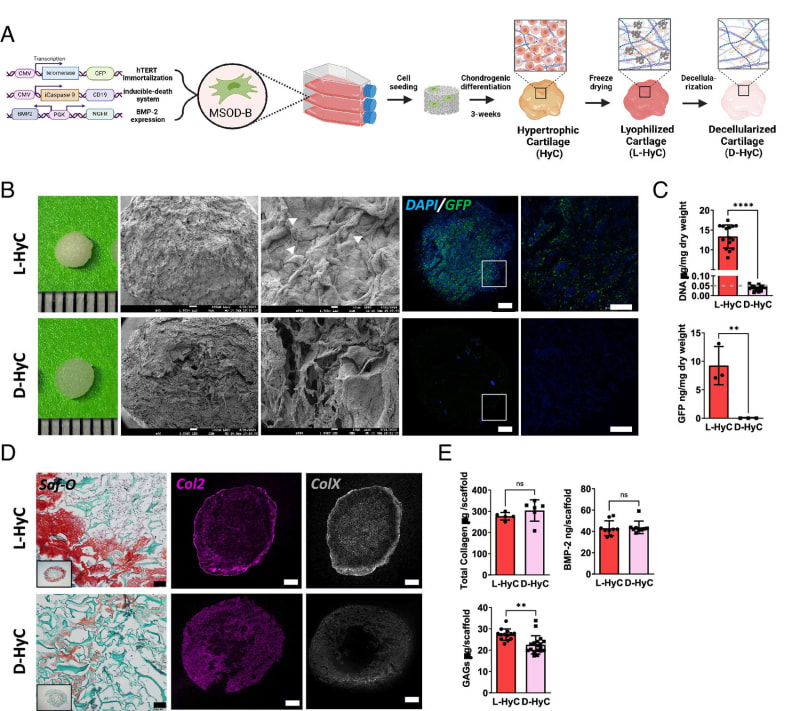
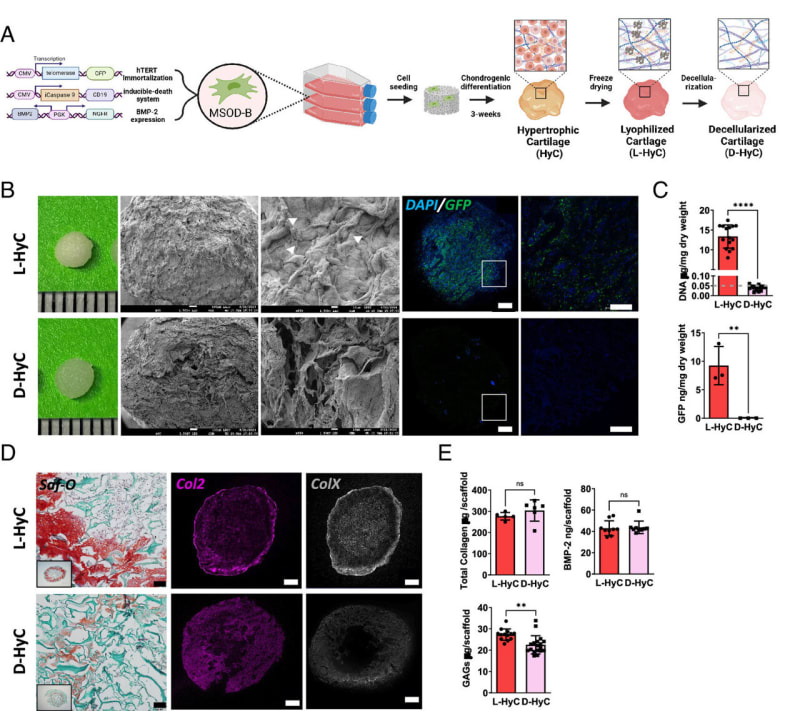
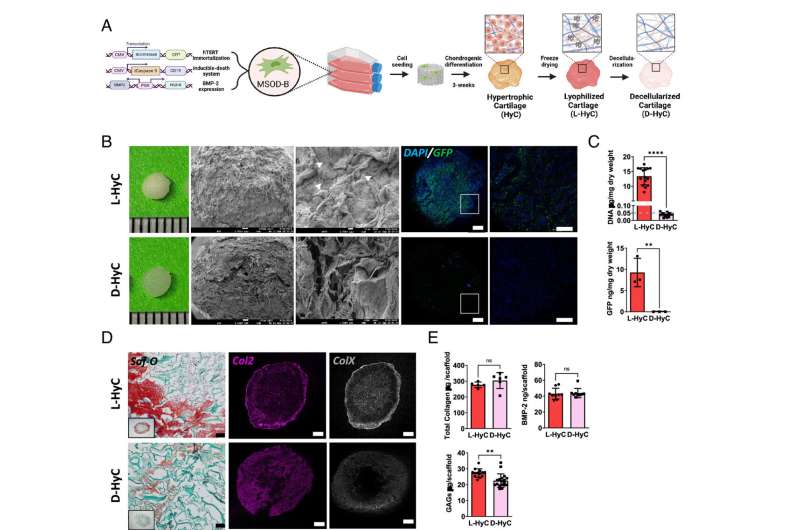
Here's how it works. Scientists grow cartilage in a lab, then strip away all the cells in a process called decellularization. What remains is the natural scaffolding that surrounds cells, embedded with growth factors that tell the body exactly how to rebuild bone tissue step by step.
The real game changer? This isn't customized for each patient. The cartilage can be manufactured in advance and stored, ready to use for anyone who needs it.
Over two million people worldwide need bone tissue transplants every year after cancer, severe arthritis, or infections destroy large portions of bone. Current treatment requires using a patient's own cells or tissue, which is expensive, time consuming, and doesn't always work.
"Patient-specific grafts are both costly and time-consuming and do not always succeed," says Alejandro Garcia Garcia, associate researcher in molecular skeletal biology at Lund University. "A universal approach in tissue engineering, with a reproducible manufacturing process, offers major advantages."
Paul Bourgine, who led the study, explains the significance. "We show that it is possible to create a ready-made, so-called 'off-the-shelf' graft that interacts with the immune system and can repair large bone defects."
The Ripple Effect
This breakthrough could transform how hospitals handle bone injuries. Instead of waiting weeks or months for custom grafts that might fail, surgeons could reach for a pre-made solution that works for everyone. That means less pain for patients, shorter hospital stays, and dramatically lower healthcare costs.
The technology could be especially life-changing for people in areas without access to advanced medical facilities. An off-the-shelf solution means more patients worldwide could receive treatment without needing specialized customization.
The research team is now working on scaling up production and preparing the documentation needed for ethical review and clinical trials. They're deciding which injuries to tackle first, likely severe defects in the long bones of arms and legs.
Getting from animal testing to human patients isn't instant, but the foundation is solid. The study was published in the prestigious Proceedings of the National Academy of Sciences after rigorous peer review.
For millions of people facing painful bone injuries, the wait for a better solution is finally getting shorter.
More Images
Based on reporting by Medical Xpress
This story was written by BrightWire based on verified news reports.
Spread the positivity!
Share this good news with someone who needs it