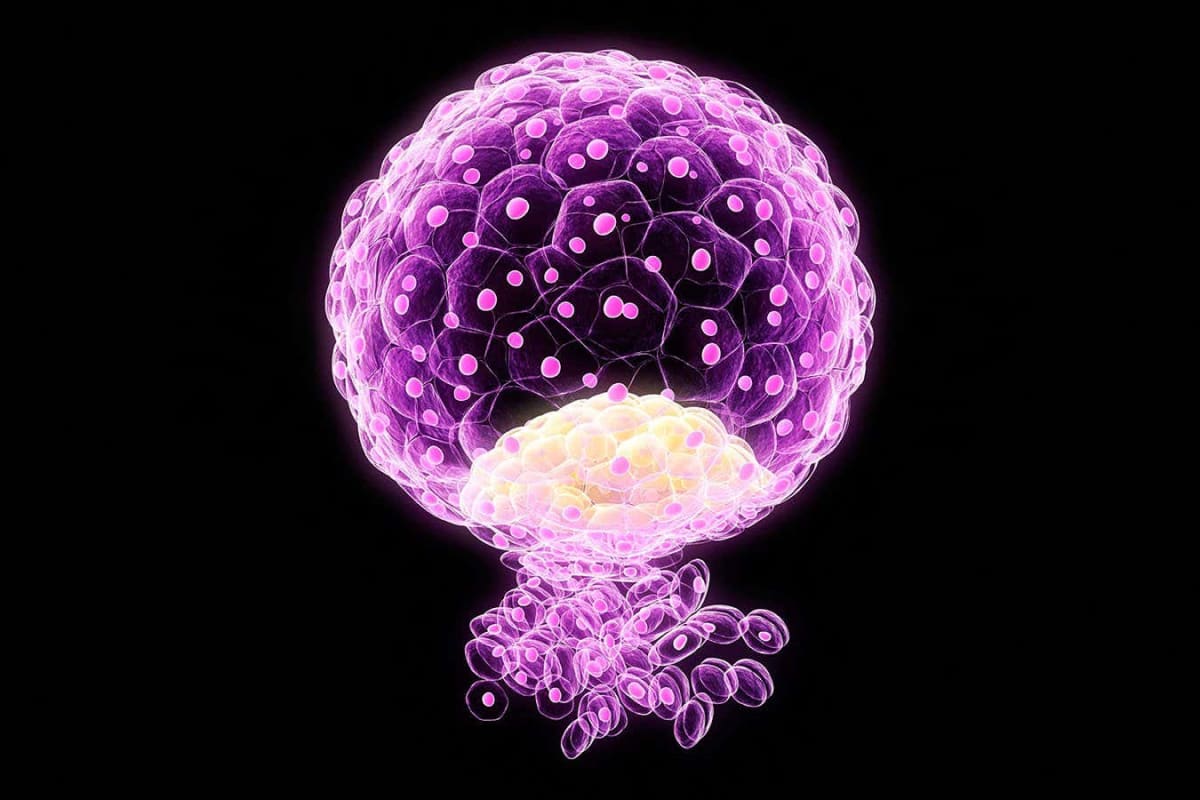
Lab-Grown Embryos Reveal Why 1 in 3 Pregnancies Fail
Scientists in Vienna created the first embryos without sperm or eggs, unlocking secrets about why so many pregnancies don't survive the first critical week. This breakthrough is already improving IVF success rates and treatments for pregnancy complications.
Scientists have cracked open one of medicine's most mysterious black boxes by growing human embryos entirely in a lab, without a single sperm or egg.
For decades, doctors had no way to study what happens in the crucial first week after conception. The uterus kept its secrets locked away, leaving researchers guessing why roughly two-thirds of all embryos never successfully implant.
Now, a team in Vienna has changed everything. They've created what scientists call "blastoids," tiny balls of cells that look and act exactly like five-day-old human embryos. The difference? They're grown entirely from stem cells in a lab dish.
These embryo models are already revealing answers. Scientists can now watch the delicate dance of early pregnancy unfold in real time, testing what helps embryos thrive and what makes them fail.
The breakthrough is personal for millions. Only about one in three natural embryos successfully attach to the uterus, while 60 percent of IVF transfers don't work. Each failure can mean months of heartbreak for families desperate to grow.
Peter Rugg-Gunn, a developmental biologist at the University of Cambridge, explains the power of this new tool. Researchers can now "poke it, perturb it and see how the system copes" in ways impossible with real pregnancies.
The progress over just five years has been stunning. Since blastoids were first created in 2019, scientists have dramatically advanced their understanding of life's earliest moments. They're identifying exactly what embryos need to survive those fragile first days.
The Ripple Effect
The discoveries are already flowing into fertility clinics. Doctors are using insights from blastoid research to improve how they prepare embryos for transfer and support early pregnancy. Each improvement means more families getting to hold the babies they've hoped for.
The research is also leading to better treatments for serious pregnancy complications. Understanding what goes wrong in those first days helps doctors prevent problems before they start.
Scientists can now keep these embryo models alive longer in the lab, opening new frontiers of discovery. Every day they extend the timeline reveals more about how human life begins and what it needs to flourish.
This research represents hope for the one in six couples worldwide struggling with infertility, transforming their chances of success one discovery at a time.
More Images

Based on reporting by New Scientist
This story was written by BrightWire based on verified news reports.
Spread the positivity!
Share this good news with someone who needs it