Lab-Grown 'Flonduran' Corals Bring Hope to Florida Reefs
Scientists just planted the first cross-bred corals combining Florida and Honduras genes in hopes of creating heat-resistant reefs. These "Flonduran" babies could help restore ecosystems devastated by 2023's marine heatwave that killed nearly all of Florida's elkhorn corals.
Scientists just introduced a new generation of coral to Florida's reefs, and it could change everything for ocean ecosystems struggling to survive rising temperatures.
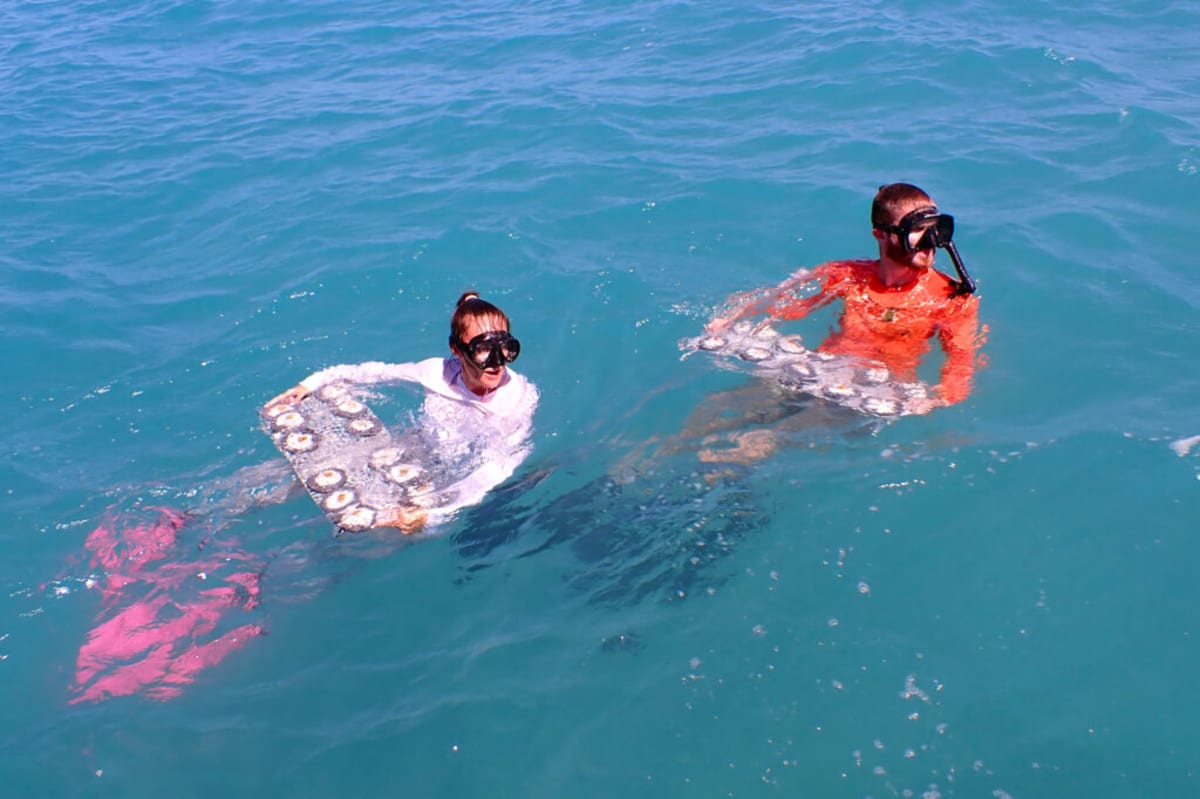
Nearly three dozen lab-grown elkhorn corals were planted in the Dry Tortugas National Park this spring, including experimental "Flonduran" corals. These babies are the first cross-breed of Florida and Honduran elkhorn corals ever introduced to the remote park 70 miles from Key West.
"These babies have been raised on land since conception," said Bailey Marquardt, a doctoral student at the University of Miami who led the planting effort in April. The young corals represent a bold experiment to save a species now considered functionally extinct in Florida waters.
The story behind their creation starts with tragedy. In 2023, an unprecedented marine heatwave swept through Florida's coastal waters for months, causing a mass coral bleaching event that wiped out nearly all of the state's elkhorn colonies.
"Almost every single elkhorn coral that was still alive on Florida's coral reef died," said Keri O'Neil, senior scientist at The Florida Aquarium in Apollo Beach. Too few healthy colonies remain to sustain the species through natural reproduction.
Marine biologist Andrew Baker decided to look beyond Florida's borders for answers. He heard about a "rebel reef" in Tela Bay along Honduras' Caribbean coast where elkhorn corals were thriving in extremely warm and polluted waters.
Baker wondered if these resilient corals could be cross-bred with Florida's elkhorn to produce heat-tolerant colonies capable of surviving the next heatwave. In 2024, he led a team to collect and export some of these tough Honduran colonies to Florida.
Back in the lab, Baker teamed up with O'Neil to attempt something never done before in the U.S.: breeding elkhorn corals from different countries. During carefully controlled spawning events, researchers collected eggs and sperm from both populations and fertilized them in laboratory tanks.
The result was the first generation of Flonduran corals. These cross-bred babies carry genetic material from both their Florida and Honduran parents, potentially combining local adaptation with heat resilience.
Why This Inspires
This work matters far beyond saving one coral species. Elkhorn corals create complex three-dimensional structures that provide critical habitat for fish, lobsters and countless other marine creatures. They also form reef crests that protect Florida's coastlines by absorbing and dissipating waves before they reach shore.
"We have to incorporate as much of the genetic diversity in the species as possible to try to find the corals that will live through climate change," O'Neil said. By bringing together coral populations separated by hundreds of miles of ocean, scientists are giving nature new tools to adapt.
The Flondurans now growing in Dry Tortugas National Park are being closely monitored to see how they perform compared to their pure Florida cousins. If they prove more resilient, this breeding approach could become a model for coral restoration worldwide.
These tiny polyps represent something powerful: scientists refusing to give up on saving our oceans, one innovative solution at a time.
Based on reporting by Inside Climate News
This story was written by BrightWire based on verified news reports.
Spread the positivity!
Share this good news with someone who needs it