Lab-Grown Gut Model Predicts Drug Side Effects at 94% Accuracy
Scientists created artificial human intestines that can spot which medications will cause gut problems before people take them, potentially saving patients from painful side effects. The breakthrough could prevent drug trials from failing and reduce animal testing.
Scientists in South Korea just solved a problem that has plagued drug development for decades: predicting which medications will wreck your stomach before they ever reach patients.
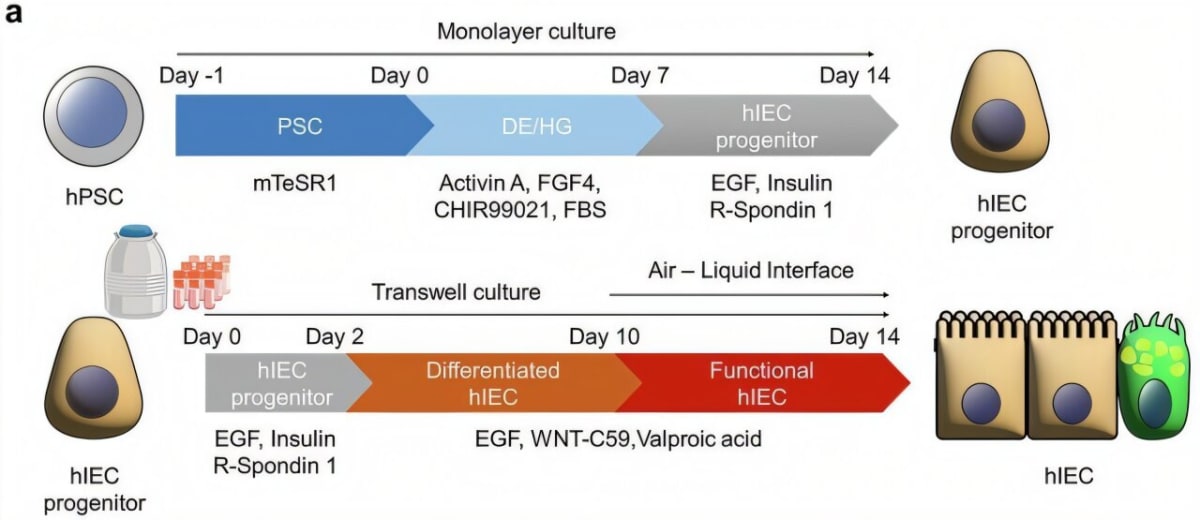
Dr. Mi-Young Son and her team at the Korea Research Institute of Bioscience and Biotechnology built something remarkable in their lab. They created tiny artificial intestines from human stem cells that function almost exactly like the real thing, complete with multiple cell types that absorb nutrients and produce protective mucus.
The breakthrough matters because gut problems are a leading reason promising drugs never make it to market. Patients in clinical trials experience vomiting, diarrhea, and digestive damage so severe they have to stop treatment. By the time these side effects appear, pharmaceutical companies have already invested millions of dollars and years of research.
Previous testing methods missed the warning signs. Scientists relied on cells derived from colon cancer or waited until cells started dying in large numbers. But gut damage often begins much earlier, when the intestinal barrier weakens while cells still appear healthy.
The new artificial gut changes everything. When researchers tested 17 commonly used medications, including cancer treatments and anti-inflammatory drugs, the system predicted gut toxicity with 94% accuracy. Even more impressive, it achieved 100% specificity, meaning it never incorrectly labeled a safe drug as dangerous.
The model caught problems that conventional tests completely missed. Paclitaxel, a widely used cancer drug, showed clear signs of intestinal damage in the new system that old methods couldn't detect.
Digging deeper into how drugs harm the gut, the team discovered something unexpected. Many medications weaken the cellular framework that holds intestinal barriers together, like removing support beams from a building. This damage happens before any cells die, explaining why earlier tests failed to catch the problem.
The Ripple Effect
This technology could transform how we develop safer medications. Pharmaceutical companies can now identify gut-damaging drugs years earlier, saving the enormous cost of failed clinical trials. Patients benefit too, avoiding medications likely to cause severe digestive problems.
The system may also reduce animal testing, since the human-derived model more accurately reflects what happens in actual patients. Dr. Son's team is already working on the next step: creating personalized gut models from individual patients to predict which medications will cause problems for specific people.
From lab bench to medicine cabinet, this artificial intestine represents a smarter path forward for drug safety.
More Images

Based on reporting by Medical Xpress
This story was written by BrightWire based on verified news reports.
Spread the positivity!
Share this good news with someone who needs it