Lab-Grown Spinal Cords Show 'Dancing Molecules' Heal Injuries
Scientists at Northwestern University created the most advanced lab-grown human spinal cord organoids to test a breakthrough paralysis treatment, and the results mirror their successful animal studies. The therapy, called "dancing molecules," significantly reduced scar tissue and regrew nerve connections in injured human tissue.
Scientists just took a massive leap toward reversing paralysis in humans, and it happened in a petri dish.
Researchers at Northwestern University grew miniature human spinal cords in their lab and used them to test a groundbreaking therapy for spinal cord injuries. The treatment, nicknamed "dancing molecules," worked beautifully on the lab-grown tissue, healing damage in ways that give real hope to millions of people living with paralysis.
The team spent months growing these tiny spinal cords from stem cells until they developed all the complex features of the real thing. They included neurons, support cells, and even immune cells that respond to injury just like they would in your body.
Then they injured the organoids and watched what happened. The miniature spinal cords developed all the hallmarks of real spinal cord injuries: cell death, inflammation, and dense scar tissue that blocks nerve regrowth.
That's where the dancing molecules came in. This innovative therapy uses molecular motion to help cells reconnect after injury. Injected as a liquid, it forms a gel network that mimics the natural structure around spinal cord cells.
The "dancing" refers to how fast the molecules move. Faster movement means they bump into cell receptors more often, like social butterflies at a party making more connections. This matters because cells and their receptors are constantly moving too.
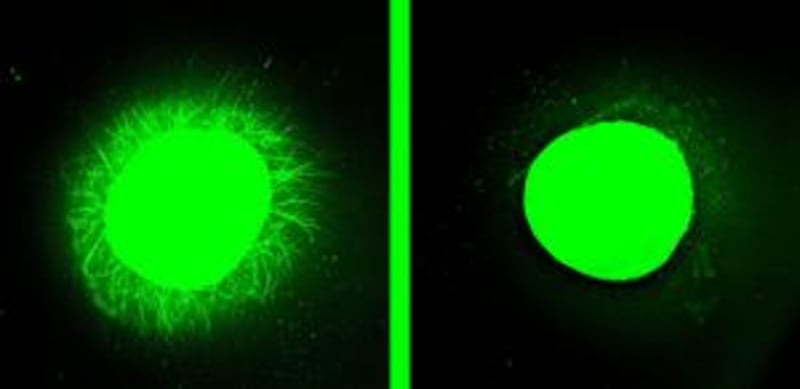
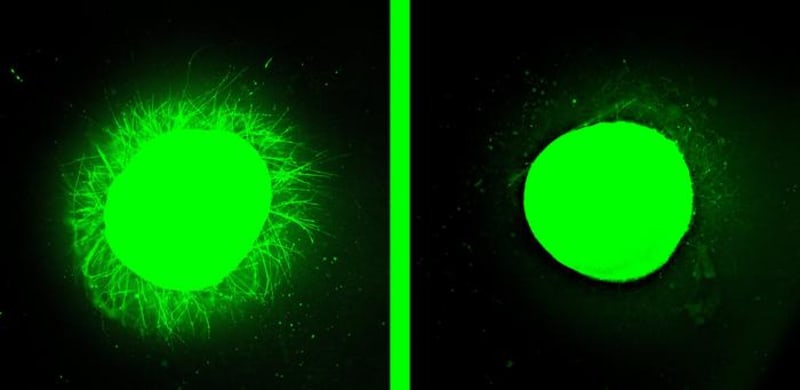
The results were striking. Treated organoids grew long nerve extensions that connect cells to each other. The scar tissue that normally blocks healing faded to barely detectable levels.
"Short of a clinical trial, it's the only way you can test therapies in human tissue," said Samuel Stupp, the scientist who invented dancing molecules and led the study published in Nature Biomedical Engineering. The findings matched what his team saw when they tested the treatment on paralyzed mice in 2021.
Those mice regained the ability to walk in just four weeks after a single injection given 24 hours after injury.
Why This Inspires
Testing treatments in lab-grown human tissue is faster and far less expensive than animal studies or human trials. It's also more accurate because these aren't mouse cells or rat cells responding to treatment. They're human.
The FDA recently granted the therapy Orphan Drug Designation, a status that helps speed promising treatments toward patients who desperately need them. Millions of people worldwide live with spinal cord injuries, and current treatments can't reverse the damage or restore lost function.
This research represents years of patient work coming together: creating the most sophisticated lab-grown spinal cord model ever made, developing a therapy that harnesses the body's own healing signals, and proving it works in human tissue.
The path from lab bench to bedside is long, but this study shows the therapy has a real shot at helping people walk again.
More Images
Based on reporting by Google News - New Treatment
This story was written by BrightWire based on verified news reports.
Spread the positivity!
Share this good news with someone who needs it