Laos Bans Gas Car Imports, Goes 100% Electric Overnight
A small Southeast Asian nation just did something no country has attempted before: it banned new gas and diesel car imports completely. The move isn't about climate goals—it's about keeping money at home.
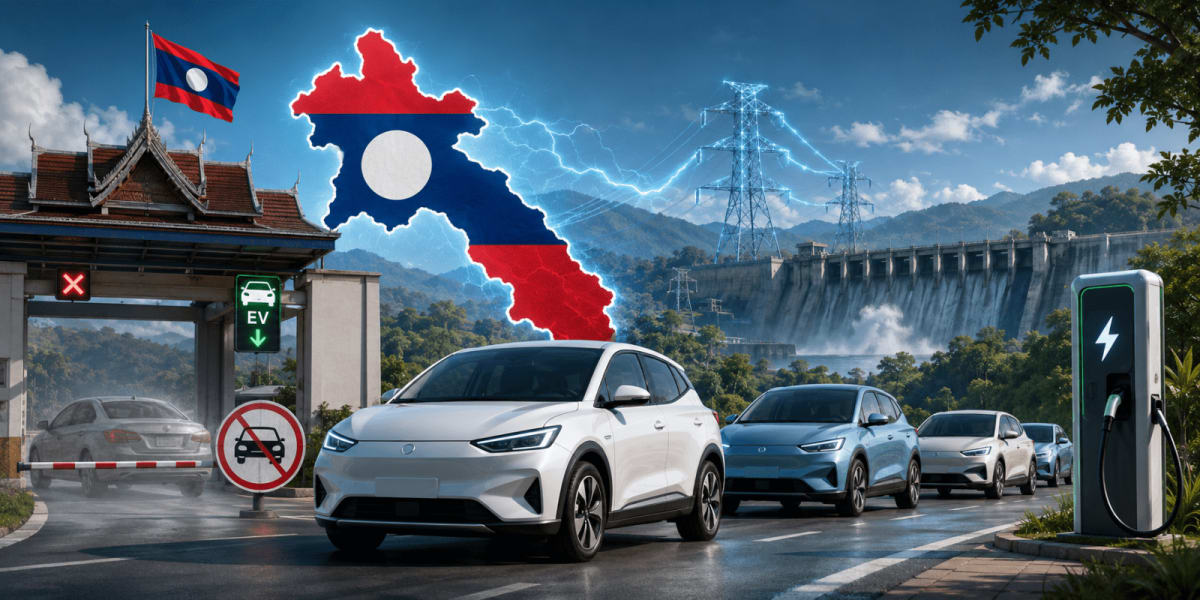
Laos just became the first country to ban gas car imports entirely, forcing every new passenger vehicle entering the nation to be electric starting June 1st.
The landlocked country of 7 million people isn't making headlines for environmental brownie points. This is pure economics. Laos runs almost entirely on hydropower and exports electricity to neighboring countries, but it imports every drop of fuel its cars burn using precious foreign currency the country desperately needs.
The math is simple. Every electric car means fewer dollars leaving the country for imported diesel. Every EV charges on domestic hydropower instead of foreign fuel. For a nation chronically short on foreign currency, this isn't radical environmentalism—it's survival arithmetic.
The ban isn't absolute. Public buses, construction equipment, and specialized vehicles still run on diesel where electric alternatives don't yet exist. But for regular passenger cars, the door just closed on combustion engines for the rest of 2026.
To sweeten the transition, Laos exempted EVs under $50,000 from excise taxes completely. Registration fees dropped too. Transportation companies must now run at least 10% electric fleets by year's end.
In April, the government signed agreements with 27 public and private partners to build charging stations, battery swap locations, and financing options. The national target: 30% of all vehicles electric by 2030.
The Ripple Effect
Chinese automakers are filling the gap almost instantly. When combustion imports freeze, whoever sells affordable EVs wins by default—and right now that's China. Chinese EV exports to Southeast Asia hit $1.2 billion in a single month, with Laos showing record import volumes.
But this pattern extends beyond one small country. Cambodia scrapped EV customs duties earlier this year. Across Southeast Asia, governments are treating electrification as energy security, not a green talking point. When you generate your own electricity but import expensive fuel, the calculation flips fast.
The real test comes in the next six months. A ban only works if people can actually buy and charge the cars that remain legal. In a country where charging infrastructure is thin and incomes are modest, that's no guarantee. The exemptions for trucks and machinery show the government knows it can't electrify everything overnight.
Still, this is what energy-driven electrification looks like when domestic power is cheap and fuel imports drain national coffers. Laos may be a small market, but it's running math that dozens of oil-importing nations will soon calculate themselves.
The boldness isn't in the environmental commitment—it's in the economic clarity.
More Images



Based on reporting by Google News - Electric Vehicle
This story was written by BrightWire based on verified news reports.
Spread the positivity!
Share this good news with someone who needs it