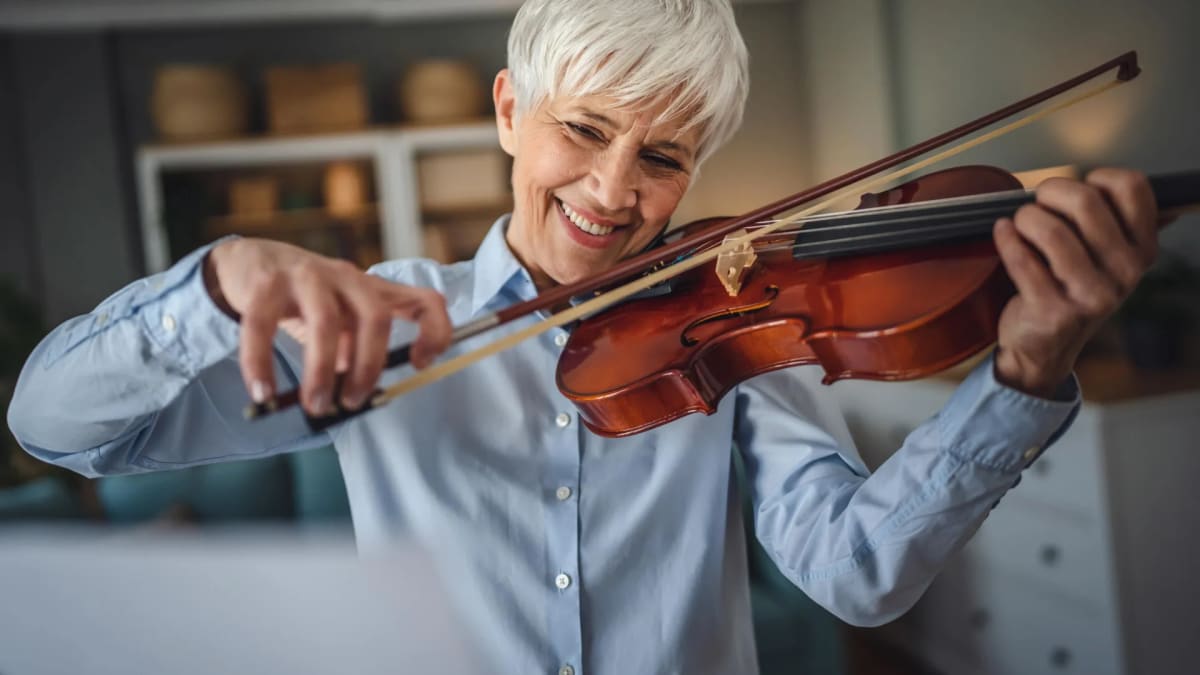
Learning Music After 70 Keeps Your Memory Sharp
Starting piano or guitar in your 70s isn't just a fun hobby. A new four-year study shows it can actually protect your brain from age-related decline and keep your memory working better.
Your brain doesn't come with an expiration date, and new research from Kyoto University proves it.
Scientists tracked adults who started learning musical instruments at age 73, and the results four years later were striking. Those who kept practicing maintained their memory performance while those who quit showed noticeable decline.
The study began in 2020 when researchers taught older adults to play instruments for the first time over four months. Everyone showed improvements back then, but the team wanted to know if the benefits would last.
So they checked in four years later. About half the participants had continued practicing while the others moved on to different hobbies.
Brain scans revealed something remarkable. The people who stopped playing showed shrinkage in a brain region called the putamen and declining verbal memory. The musicians who stuck with it? Their brains looked healthier and their memory stayed stable.
The cerebellum, another brain area that typically shrinks with age, showed greater activity across wider regions in those who continued practicing. These are the same brain areas that normally deteriorate as we get older, making the protection even more meaningful.
"We were surprised to find that the effects on the brains of elderly people who start and continue practicing an instrument were also concentrated in these two areas of the brain," says lead researcher Kaoru Sekiyama.
Why This Inspires
This research flips the script on aging. We often think of our 70s as a time when mental decline is inevitable, but this study shows we have more control than we thought.
The timing matters too. These weren't lifelong musicians or people who played as kids. They were complete beginners in their 70s who still saw dramatic benefits.
For people who struggle with physical exercise due to pain or mobility issues, music offers an alternative path to brain health. You can sit comfortably and still give your brain a powerful workout.
The message is beautifully simple: it's never too late. Whether you've always wanted to learn piano, pick up a guitar, or try the violin, your brain is ready to benefit at any age.
"Starting in old age may have major benefits," Sekiyama notes. "How fortunate that practicing music has such a positive impact on the brain and cognitive function!"
The best news? You don't need to become a concert pianist to see results. Just keep playing.
Based on reporting by Science Daily
This story was written by BrightWire based on verified news reports.
Spread the positivity!
Share this good news with someone who needs it