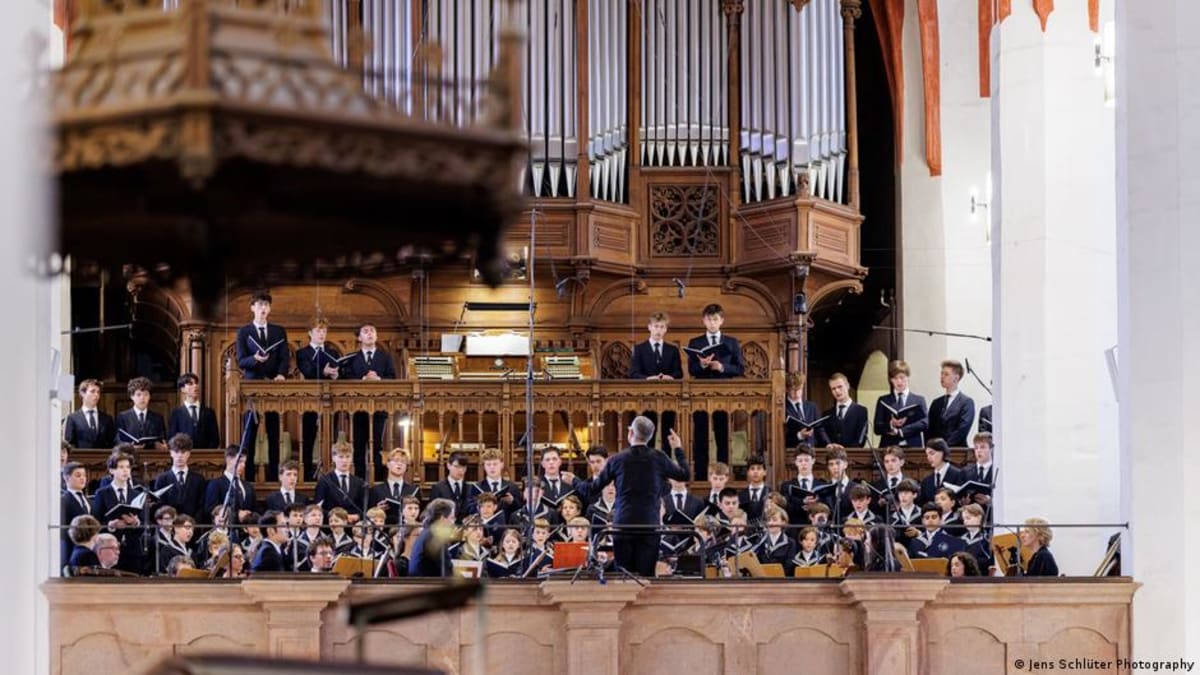
Leipzig Bach Festival Shows Music as Model for Dialogue
Over 70,000 people are discovering how 300-year-old music offers a blueprint for modern conversation. The 2026 Leipzig Bach Festival proves that Bach's polyphonic compositions, where distinct voices interact as equals, can teach us how to communicate better in our divided world.
In a world where everyone talks but few truly listen, a music festival in Germany is showing how Baroque compositions might hold the key to better conversations.
The 2026 Leipzig Bach Festival opened with a powerful message from Lord Mayor Burkhard Jung. He pointed to Bach's polyphonic music, where multiple independent melodies weave together as equals, as a model for how political debates and discussions should unfold.
"The world is full of voices, but they don't really talk to one another," Jung told the audience gathered at St. Thomas Church. In Bach's fugues and complex compositions, voices take turns in question-and-answer patterns, follow each other at intervals, and explore their own paths before coming together again.
Choir director Andreas Reize brought this dialogue concept to life with an extraordinary opening concert. He paired 17th-century composer Claudio Monteverdi's "Vespers for the Blessed Virgin Mary" with works by contemporary composers from Sweden and Lithuania, creating a musical conversation across four centuries.
The St. Thomas Boys Choir performed Lithuanian composer Vytautas Miskinis's "Laudate pueri, Dominum" with delicate, ethereal voices. The choice deliberately presented a 21st-century soundscape in dialogue with Baroque masterpieces, and the audience responded with delight.
The festival, which regularly draws over 70,000 visitors to Leipzig, is marking the 300th anniversary of Bach's "Clavier-Übung" (Keyboard Practice). Star pianist Sir András Schiff and Iranian-American harpsichordist Mahan Esfahani are performing the complete cycle, each bringing dramatically different interpretations to the same music.
Esfahani, the festival's artist in residence, is challenging assumptions about his instrument. "Everyone says the harpsichord is only for early music, but that's not true," he explained, noting its versatility for any musical period.
Why This Inspires
What makes this story resonate is its practical wisdom wrapped in beauty. Bach wrote music for "the delight of the soul," but his polyphonic structure accidentally created a masterclass in productive dialogue. When voices are given equal importance, when they listen and respond to each other, when they can diverge and still find harmony, something magical happens.
In Leipzig, audiences aren't just hearing gorgeous music performed by world-class musicians. They're experiencing a 300-year-old answer to our most modern problem: how to disagree without drowning each other out.
Through distinctive phrasing and dramatic pauses, Esfahani brought fresh energy to Bach's Partitas during his late-night recital. His interpretation incorporated subtle call-and-response patterns, demonstrating how even solo performances can embody the spirit of dialogue.
The festival continues to prove that the best solutions to tomorrow's challenges might be hiding in yesterday's wisdom.
More Images

Based on reporting by DW News
This story was written by BrightWire based on verified news reports.
Spread the positivity!
Share this good news with someone who needs it