Life's Building Blocks Form Naturally in Space
Scientists just proved that protein building blocks form spontaneously in the frozen dust clouds between stars, dramatically increasing the odds of finding life beyond Earth. The discovery rewrites what we thought possible about how life begins.
The universe might be far better at creating the ingredients for life than anyone imagined.
Researchers at Aarhus University in Denmark just demonstrated something remarkable: peptides, the chains of amino acids that form proteins, create themselves naturally in the freezing dust clouds between stars. The findings appeared in Nature Astronomy in January 2026.
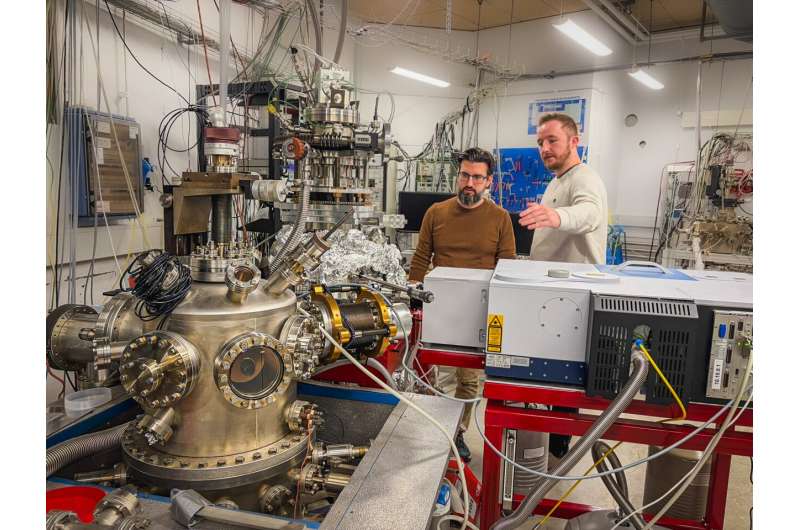
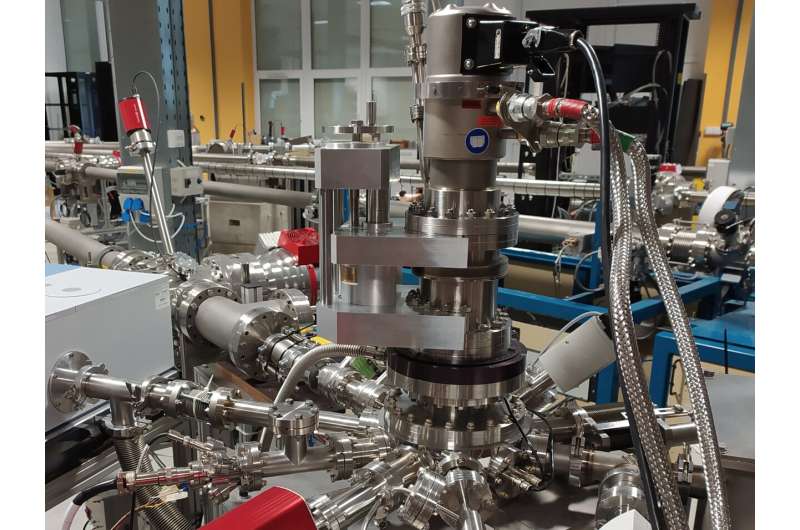
Scientists Sergio Ioppolo and Alfred Thomas Hopkinson recreated conditions from dust clouds thousands of light years away inside a tiny chamber. They dropped the temperature to minus 260 degrees Celsius and maintained an ultra-high vacuum to mimic deep space.
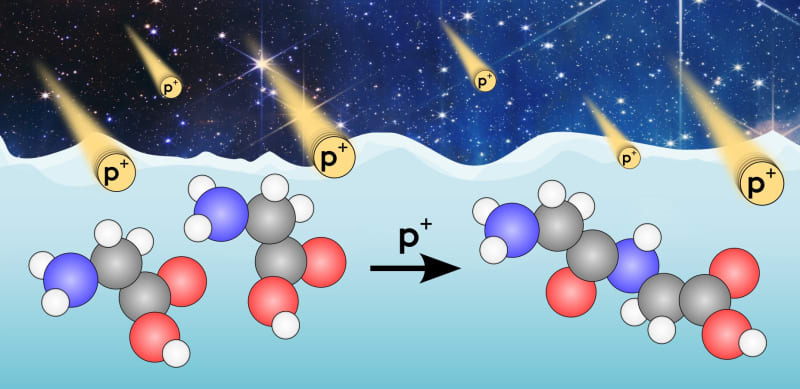
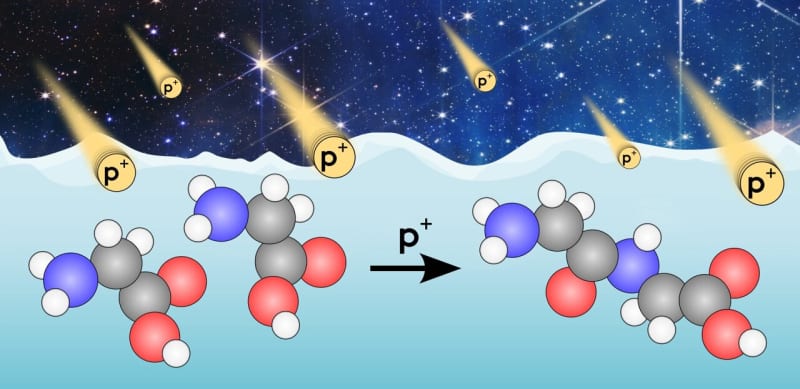
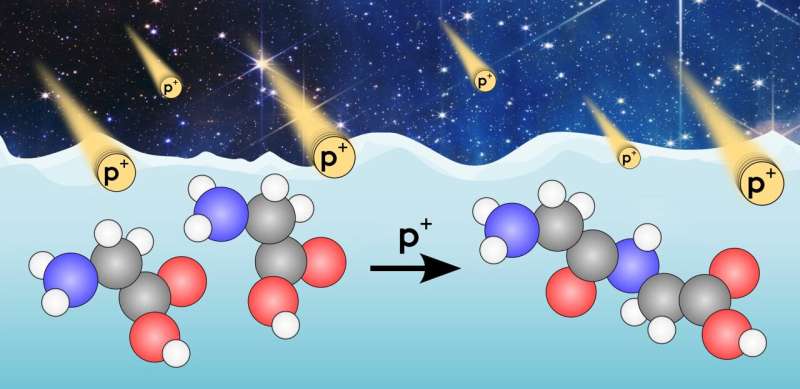
Then they added glycine, the simplest amino acid, and bombarded it with radiation similar to cosmic rays. What happened next surprised them.
The glycine molecules started bonding together on their own, forming peptides and water. No special conditions needed. No rare circumstances required. Just the natural chemistry of space doing its work.
"We used to think that only very simple molecules could be created in these clouds," Ioppolo explains. Scientists assumed complex molecules formed much later, after gases had begun swirling into disks that eventually become stars.
But this research proves otherwise. These essential building blocks form early, in the stellar nurseries where new solar systems are born.
The Ripple Effect
This discovery transforms our understanding of life's potential across the universe. Those dust clouds eventually collapse into stars and planets, and all those tiny peptides land on whatever rocky worlds form in the habitable zone.
The chemical process is universal too. All amino acids bond into peptides through the same reaction, which means countless varieties of these molecules likely float through space naturally.
The Aarhus team isn't stopping with peptides. They're now investigating whether other essential building blocks like membranes, nucleobases, and nucleotides also form spontaneously in space.
Professor Liv Hornekær, who leads the Center for Interstellar Catalysis, points out these molecules might actively participate in early chemistry that leads toward life. They're not just passive ingredients waiting around but potential catalysts for even more complex reactions.
The researchers conducted their experiments both at Aarhus and at an international facility in Hungary, using an ion accelerator to simulate cosmic radiation accurately.
We still don't know exactly how life began, but discoveries like this show the universe comes pre-loaded with many of the molecular tools needed to build it.
More Images
Based on reporting by Google News - Science
This story was written by BrightWire based on verified news reports.
Spread the positivity!
Share this good news with someone who needs it