Light-Activated Gel Heals Wounds Like Natural Tissue
University of Ottawa scientists created a synthetic peptide gel that seals wounds using light, matching commercial adhesives while being fully biodegradable. The innovation could transform how doctors repair tissues without triggering immune responses.
Scientists just solved one of medicine's trickiest puzzles: how to create wound-healing materials that work as well as your own body. A team at the University of Ottawa developed a revolutionary hydrogel made entirely from synthetic peptides that can seal surgical incisions and traumatic wounds without causing harmful immune reactions.
The breakthrough centers on peptides, which are short chains of amino acids that naturally form proteins in our bodies. Researchers designed these peptides to mimic collagen's triple-helix structure, giving them precise control over the material's strength and safety.
Here's where it gets fascinating. Once dissolved in solution, these designed peptides automatically organize themselves into the foundation of a gel. Then researchers activate them with light, triggering a chemical reaction that locks everything together into a flexible, durable material ready for tissue repair.
Dr. Emilio Alarcón, the lead researcher and professor at the University of Ottawa Faculty of Medicine, calls this "a leap in the space of biomimetic materials for tissue and organ repair." Unlike existing tissue adhesives that rely on synthetic polymers, this material is entirely peptide-based, making it far less likely to trigger unwanted immune responses.
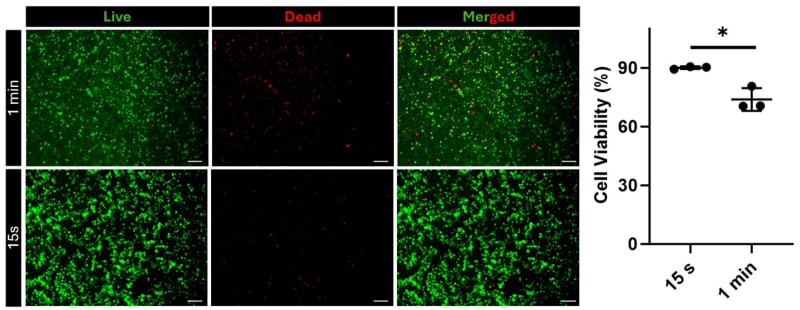
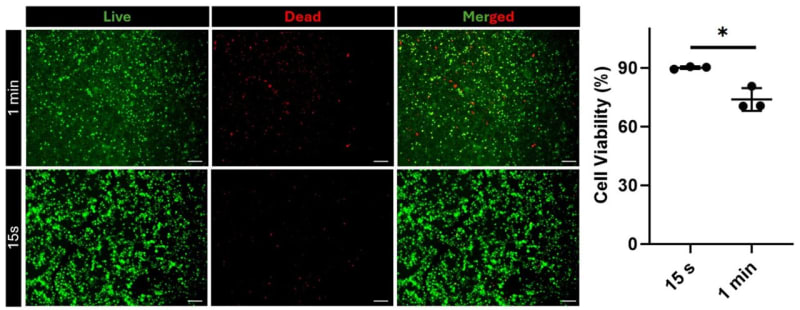
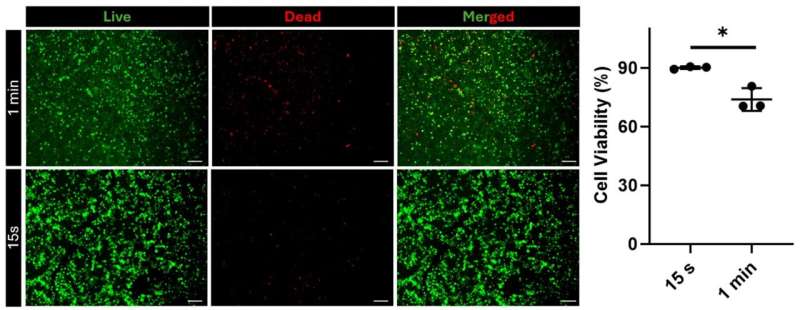
The gel's strength matches LiquiBand, a commercial tissue adhesive currently used in hospitals. Lab tests confirmed it can effectively close wounds and hold tissues together under realistic body conditions.
The Ripple Effect
This customizable approach opens doors for personalized medicine. Researchers can adjust peptide concentrations or alter molecular junctions to fine-tune the material's properties for different patients and wound types.
Alex Ross, a Ph.D. candidate and study co-author, highlights another game-changing feature: "Biodegradability is useful as it means the material doesn't have to be removed later, like getting sutures removed, and also contributes to the safety profile."
Daniel Nguyen, the paper's other primary author, explains why this matters for patients: "If you put something inside the body, you want it to be as unobtrusive as possible." Because the material mimics natural collagen, the body breaks it down using the same enzymes it uses to remodel regular tissue.
The research team, part of the BioEngineering and Therapeutic Solutions lab, published their findings in Advanced Functional Materials. Their work demonstrates that cell-friendly, biodegradable materials can perform just as well as traditional adhesives while being safer for long-term healing.
Dr. Alarcón believes this study paves the way for researchers worldwide to explore peptide-based materials as "the next generation of regenerative platforms." Wounds that once required stitches or staples could soon heal with a simple light-activated gel that disappears naturally as tissue repairs itself.
More Images

Based on reporting by Medical Xpress
This story was written by BrightWire based on verified news reports.
Spread the positivity!
Share this good news with someone who needs it