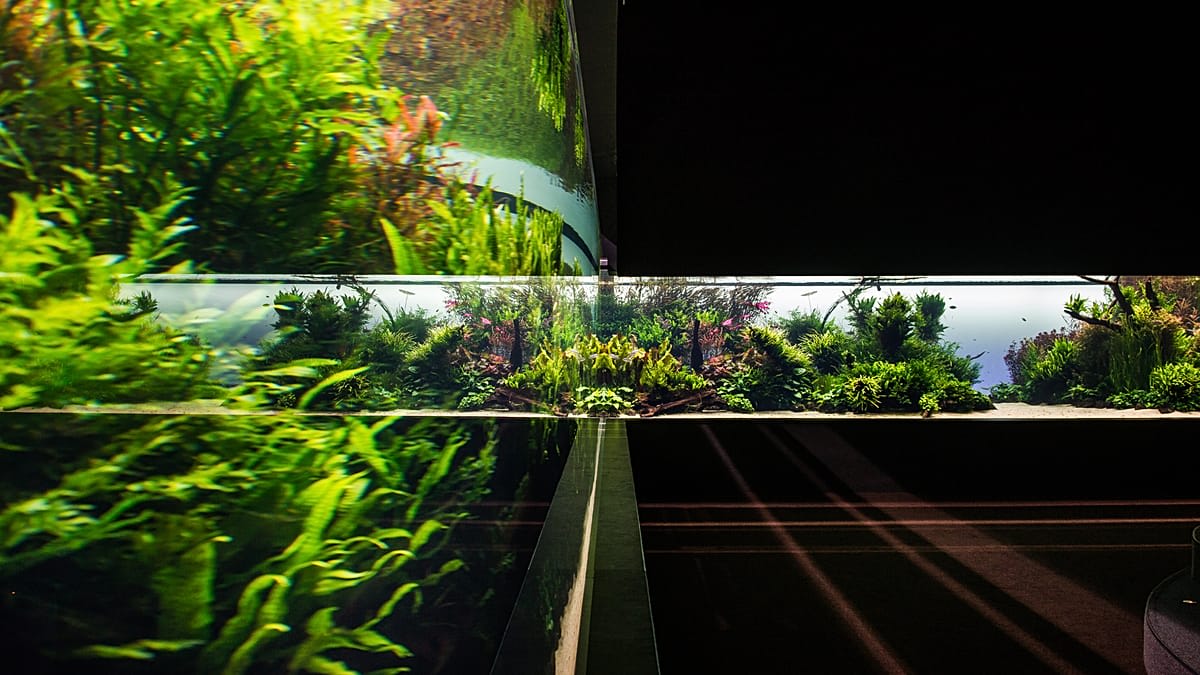
Lisbon's 11-Year Underwater Forest Closes as Planned
After 11 years and 10 million visitors, Lisbon's Oceanarium is gracefully closing its iconic "Forests Underwater" exhibition, honoring the Japanese artist's vision that nothing should last forever. The world's largest nature aquarium required 11,000 hours of underwater maintenance to preserve its beauty.
Every morning before dawn, aquarists at Lisbon's Oceanarium dove into a 40-meter living masterpiece to keep an artist's dream alive. For 11 years, they've been the caretakers of something remarkable.
Japanese artist Takashi Amano created "Forests Underwater" in 2015, designing what remains the world's largest nature aquarium. The 160,000-liter freshwater tank recreates an entire forest ecosystem, with 46 species of aquatic plants and 40 species of tropical fish living together just as they would in nature.
Amano passed away just four months after the exhibition opened, but his vision lived on through dedicated staff. Aquarists accumulated over 11,000 hours of specialized diving, pruning plants with precise cuts and smoothing sand to erase any trace of human presence before visitors arrived each day.
"No other aquarium has this many hours of work in the water," says Tiago Reis, species coordinator at the Oceanarium. Teams of three to four divers worked daily, using photographs of the original layout to maintain every detail exactly as Amano imagined it.
The exhibition was designed to last three years. It lasted nearly four times longer, welcoming more than 10 million people who experienced the tranquility of an underwater forest.
Why This Inspires
The Oceanarium team chose to close the exhibition not because it failed, but to honor its creator's philosophy. Amano embraced wabi-sabi, the Japanese concept that nothing is eternal and impermanence holds its own beauty.
"We believe that if we were to extend this aquarium any longer, we could be transgressing the vision of the author himself," explains Reis. As the ecosystem naturally evolved over time, keeping it open indefinitely would have disrespected Amano's original intention.
The closure represents new beginnings too. All 10,000 living organisms will be transferred to institutions that meet the Oceanarium's welfare standards, giving these creatures new homes where they'll continue to thrive.
Until the June 30 closing, visitors can still experience the exhibition and even watch live pruning sessions. Behind-the-scenes tours show the specialized Japanese tools and techniques that kept this underwater world pristine for over a decade.
Amano spent his lifetime traveling through forests across continents, promoting environmental awareness and the importance of preserving ecosystems. This aquarium became one of his most important legacies, teaching millions about the delicate balance of nature.
Sometimes the most respectful way to honor something beautiful is knowing when to let it go.
More Images




Based on reporting by Euronews
This story was written by BrightWire based on verified news reports.
Spread the positivity!
Share this good news with someone who needs it