Lost Hammer Search Uncovers Britain's Largest Roman Treasure
A retired gardener helping find a lost hammer instead discovered 15,000 Roman coins and priceless artifacts buried for 1,500 years. His quick call to authorities preserved one of Britain's most significant archaeological finds.
Sometimes the best discoveries happen when you're looking for something completely different.
In November 1992, retired gardener Eric Lawes grabbed his metal detector to help his friend Peter Whatling find a missing hammer in a Suffolk field. Within minutes, the device started beeping over something far more valuable than a garden tool.
Lawes began digging and found silver spoons and gold coins glinting in the soil. He immediately recognized these weren't modern objects and made the decision that would preserve history.
Instead of digging further, Lawes stopped and called local authorities. The next day, professional archaeologists arrived at the quiet field near Hoxne to take over the excavation.
The team worked carefully, removing large sections of soil intact to preserve how everything had been arranged underground. This meticulous approach meant the treasure retained its archaeological context, revealing not just what was buried but how and why.
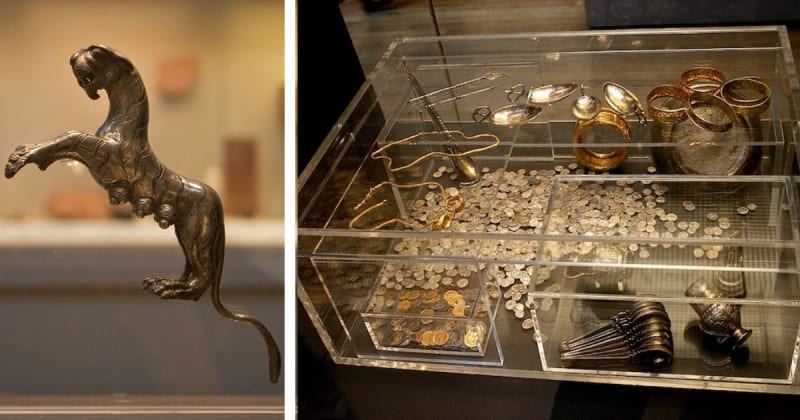
The scale of the discovery stunned everyone. The Hoxne Hoard contained more than 15,000 Roman gold and silver coins, most from the late 4th and early 5th centuries. Alongside them lay roughly 200 pieces of jewelry and silver tableware including necklaces, bracelets, ornate pepper pots, bowls, and ladles.
The Bright Side
This accidental discovery became a masterclass in responsible treasure hunting. Lawes' decision to stop digging and alert experts meant archaeologists could study how the items were packed in wooden chests and boxes, revealing that someone had carefully hidden these valuables during uncertain times.
The worn coins and luxury goods tell a story of Roman Britain's final days, when families buried their most precious possessions hoping to retrieve them later. They never returned, but their loss became our gain in understanding this pivotal period.
Today, the Hoxne Treasure anchors the British Museum's Roman Britain collection, where millions of visitors marvel at its beauty. Lawes and Whatling received a finder's reward split between them, and the hammer that started it all? It turned up eventually, though no one remembers it quite as well.
A simple act of friendship and a lost tool led to one of archaeology's greatest success stories.
More Images
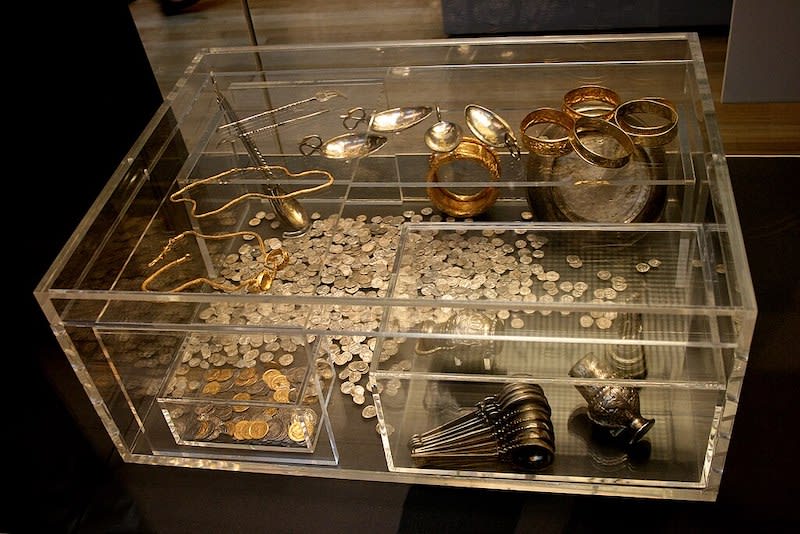

Based on reporting by Google: archaeological discovery
This story was written by BrightWire based on verified news reports.
Spread the positivity!
Share this good news with someone who needs it