
Major ADHD Brain Study Gets a Do-Over With Better Results
Scientists just discovered that a famous 20-year-old finding about ADHD brains was actually measuring something else entirely. The good news? This breakthrough shows how modern research tools are helping us understand conditions like ADHD more accurately than ever before.
A groundbreaking discovery is rewriting what we thought we knew about ADHD and giving researchers powerful new tools to understand how young brains really work.
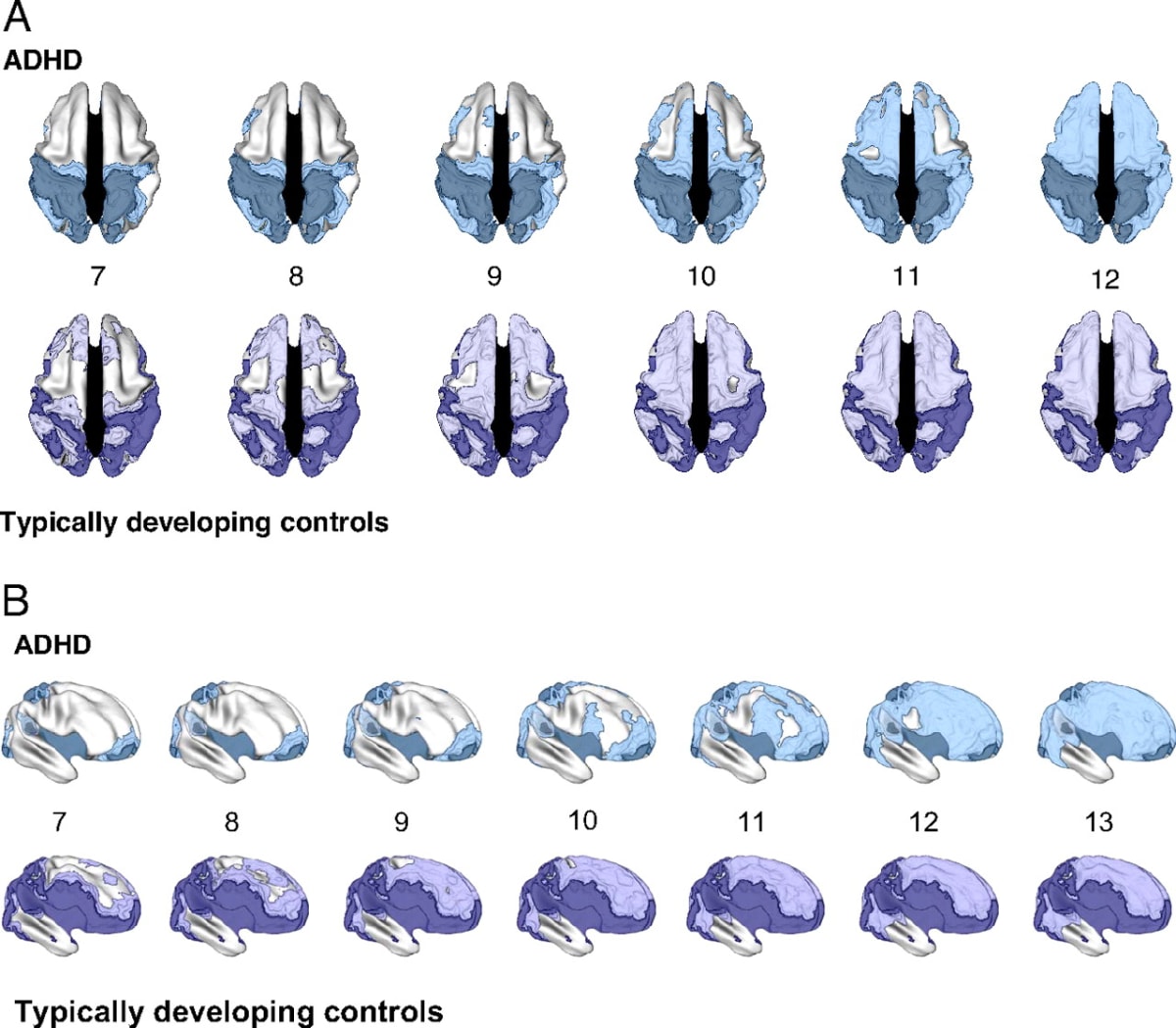
For two decades, scientists believed that children with ADHD had brains that matured more slowly than other kids. A landmark 2007 study of 223 children seemed to prove it, showing delayed development in the brain's outer layer. The finding made intuitive sense because kids with ADHD often act younger than their age.
But researchers at the University of Vermont just revealed that this widely accepted conclusion was wrong. Using data from over 11,000 children in the largest brain imaging study ever conducted in the United States, they discovered the original finding was actually capturing normal differences between how boys' and girls' brains develop.
When scientist Shannon O'Connor and her team accounted for these natural sex differences in brain development, the supposed ADHD delay completely disappeared. Testing boys and girls separately confirmed it: attention problems had no relationship to brain maturation rates at all.
Dr. Matthew Albaugh, who led the research published in PNAS, explained that earlier studies with fewer participants may have inadvertently skewed toward reflecting typical male brain development patterns. As children dropped out of those smaller studies over time, the data balance shifted without anyone realizing it.
Why This Inspires
This discovery represents something remarkable happening in modern science. Massive datasets and better research tools are giving us the power to correct old assumptions and get closer to the truth about conditions affecting millions of children.
The findings also highlight how overlooking sex differences in research can lead science astray for decades. By finally accounting for how boys' and girls' brains develop differently, researchers are opening doors to more accurate understanding of ADHD and other neurodevelopmental conditions.
Dr. Max Wiznitzer, a pediatric neurologist at Case Western Reserve University not involved in the study, called the research "well designed" and praised it for asking the right questions. The team even tested their findings using multiple approaches, including looking at children with clinical ADHD diagnoses, and got the same results each time.
While this means starting fresh on understanding ADHD brain development, it's actually great news. Science is self-correcting, and we now have the tools to get it right. Families dealing with ADHD can trust that researchers are building knowledge on increasingly solid ground, using datasets thousands of times larger than what was possible just 20 years ago.
The future of understanding ADHD looks brighter and more precise than ever before.
More Images


Based on reporting by Live Science
This story was written by BrightWire based on verified news reports.
Spread the positivity!
Share this good news with someone who needs it