
Man Climbs Kilimanjaro Using Daily 10-Minute Language App
Rob Levin never wanted to climb Africa's tallest mountain, but a simple daily habit on his phone helped him reach the summit. His story reveals how tiny routines can rewire our brains to accomplish what once seemed impossible.
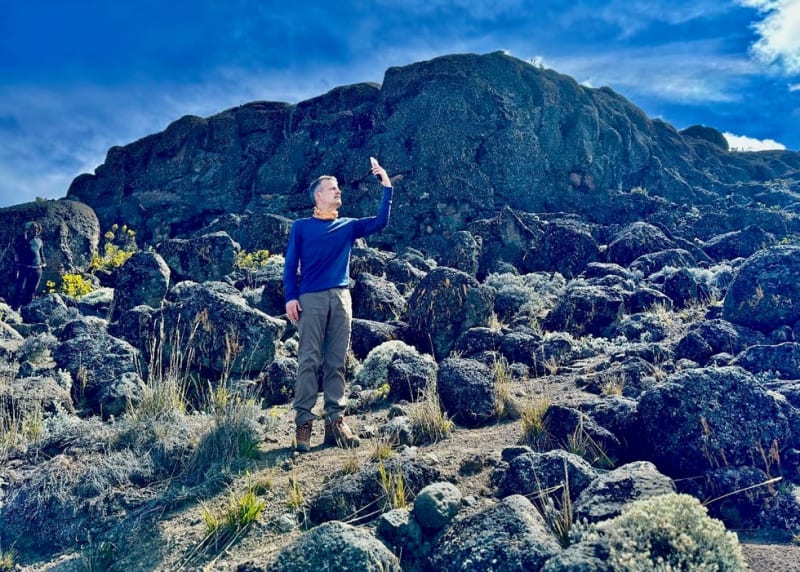
When Rob Levin saw Mount Kilimanjaro for the first time on day two of his hike, his mouth fell open like a cartoon character. The 54-year-old San Francisco performing arts center manager couldn't imagine standing on top of the massive pyramid of rock and snow looming before him.
Levin wasn't an outdoorsman. This was his first lengthy overnight trip in the woods, and his only hiking experience was a paved path in Muir Woods. He'd agreed to climb Africa's tallest mountain as a Christmas present to his husband Curtis, who had dreamed about it for years.
Feeling defeated after day one, Levin crashed into his sleeping bag and pulled out his phone. He opened Babbel, the language app he'd been using for a year to learn German, and completed his daily lesson. The familiar routine brought unexpected comfort in the alien environment.
"Everything climbing the mountain felt very foreign and different," Levin says. "Doing this lesson, it felt very familiar to me." He promised himself he'd continue the nightly German lesson for the entire nine-day hike, bringing normalcy to the impossible task ahead.
Experts call this a micro-habit, and it's a powerful tool for rewiring our brains. Lindsey Tomayko, a licensed professional clinical counselor in West Hollywood, says tiny daily tasks can change how we think about challenges we previously believed were beyond our abilities.
Changes in routine trigger our brain's fight-or-flight instinct. But make the changes small enough and they become habit after just a few repetitions. "Soon you'll realize, 'I am someone who does this,'" Tomayko says.
Levin, his husband, and their friend Kris Jarvis began their June hike with two guides, a medic, and 22 staff members. They chose the route with the highest success rate: seven days up, two days down.
The journey tested Levin's limits. The Barranco Wall featured a ledge narrower than his feet, his nose rubbing against volcanic rock. Ice sections required crampons and tiny careful steps to prevent falls.
Each night, Levin fired up his language app. He'd maintained his daily streak for about a year, working toward fluency before visiting a friend in Germany. He quickly realized the comparison: if daily habits could make him fluent over months, they could help him conquer this mountain too, one day at a time.
Why This Inspires
Levin's breakthrough wasn't about physical strength or hiking gear. It was recognizing that monumental achievements happen through small, consistent actions. The same principle that builds language fluency builds mountain climbers.
On day seven, when they reached the summit, tears streamed down Levin's face uncontrollably. The crew sang traditional Swahili songs about victory while they had lunch at the top.
When we spoke, Levin's daily German lesson streak had hit 444 days. Now when he faces difficult tasks at work or challenges he doesn't want to start, he remembers that distant mountain that looked undefeatable but fell to one small task at a time.
More Images



Based on reporting by Mens Health
This story was written by BrightWire based on verified news reports.
Spread the positivity! 🌟
Share this good news with someone who needs it


