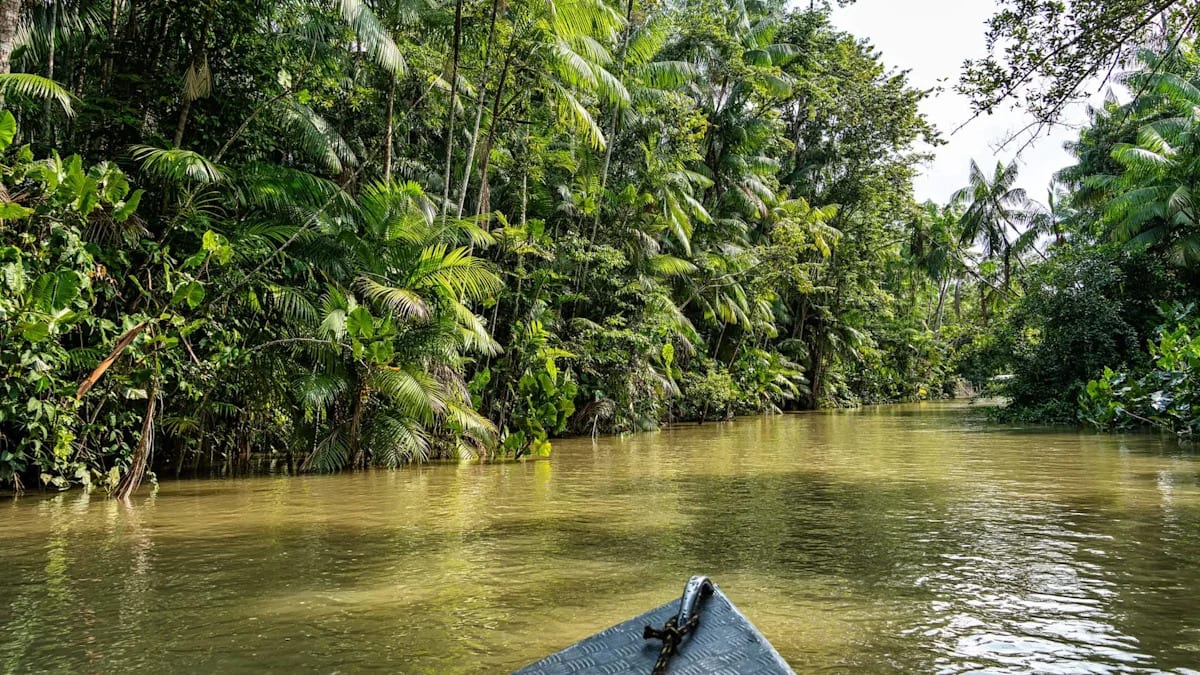
Mangrove Forests Growing Again After Decades of Losses
After losing thousands of square miles to development, the world's mangrove forests are finally recovering. New research shows these vital coastal ecosystems are not only growing back but getting healthier and denser too.
The trees that guard our coastlines are making a comeback. New research from Tulane University reveals that global mangrove coverage is increasing for the first time in decades, with forests becoming thicker and more resilient than before.
Scientists tracking mangrove coverage over 40 years discovered a dramatic turnaround. Between the 1980s and 2010, the planet lost nearly 1,120 square miles of mangrove forest as coastal areas were cleared for fish farms, housing, and development.
But something changed around 2007. Over the past 16 years, mangrove gains have exceeded losses worldwide, bringing the total net decline across four decades to just 1 percent.
Even more encouraging, researchers found significant growth in "closed canopy" mangroves. These older, thicker forests are the powerhouses of coastal protection, storing more carbon and standing stronger against storms.
"What we're seeing now is a real shift," said researcher Daniel Friess. "Mangroves are now showing a net increase globally, and the rate of degradation is slowing."
The Ripple Effect
These coastal forests punch far above their weight. Mangroves absorb up to five times more carbon than land-based trees while filtering pollutants from water and providing nursery habitat for fish and other marine life.
Their protective power became impossible to ignore after the 2004 Indian Ocean tsunami. In Indonesia, islands with intact mangrove forests suffered far less damage than those where trees had been cleared, showing communities firsthand what they stood to lose.
For coastal residents, healthier mangroves mean safer homes during storms, more productive fisheries, and cleaner water. The forests weaken storm surges and reduce flood damage, protecting roads, businesses, and infrastructure from extreme weather.
Conservation policies and restoration programs deserve much of the credit for this turnaround. Degradation rates have dropped sharply since the 1980s, proving that protection efforts can work when communities commit to them.
Public awareness grew after the tsunami, as people gained clearer understanding of mangroves' protective value. That shift in perception has helped slow destruction and support replanting efforts across coastal regions.
Still, development pressure continues in many areas. Lead author Zhen Zhang emphasized that protecting existing mature forests delivers the biggest climate benefits right now, avoiding emissions and preserving the strongest natural defenses.
This recovery offers something rare in conservation news: proof that damaged ecosystems can bounce back when we give them a chance.
More Images
Based on reporting by Google News - Conservation Success
This story was written by BrightWire based on verified news reports.
Spread the positivity!
Share this good news with someone who needs it
%2Ffile%2Fattachments%2Forphans%2FiStock-922735808_898102.jpg)