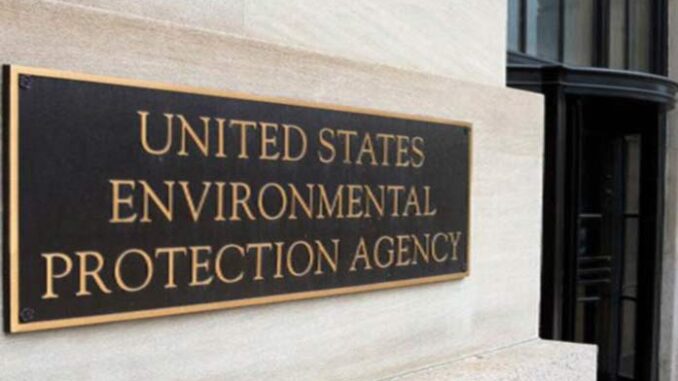
Maricopa County's Cleaner Air Plan Wins EPA Approval
Arizona's most populous county just got federal approval for an innovative plan that rewards businesses for choosing cleaner equipment. The voluntary approach has already helped cut statewide emissions by 70% since 1990, even as the population more than doubled.
Maricopa County found a way to clean the air without forcing businesses to shut down or slow their growth, and the EPA just gave it the green light.
The county's new Rule 204 offers incentives to railroad and construction companies that voluntarily upgrade their equipment to cleaner technologies. Instead of punishing industries, the plan rewards them for making environmental improvements that benefit everyone.
The approach is already working. Since 2000, Maricopa County has reduced local air pollutant emissions by 50%. Statewide, emissions have dropped more than 70% since 1990, even though Arizona's population more than doubled during that time.
EPA Administrator Lee Zeldin praised the county's strategy at a Tuesday press conference. "They aren't increasing emissions," he said. "They are finding new, innovative ways to work within their circumstances."
The timing matters. In 2024, the EPA considered reclassifying the Phoenix area as a serious non-attainment zone for ozone standards, which would have piled on new regulations and potentially reversed industry growth. But earlier this year, the EPA determined that Maricopa County would have met air quality standards if not for international emissions from Asia and Mexico.
Modeling with the EPA revealed that roughly 80% of regional ozone comes from natural sources or outside Arizona. This finding spared local businesses from crushing new restrictions while still pushing toward cleaner air.
The Ripple Effect
Board of Supervisors Chair Kate Brophy McGee sees the plan as proof that environmental health and economic growth don't have to be enemies. "By incentivizing rather than punishing job creators, implementing Maricopa County's Rule 204 will improve the quality of the air we breathe while enabling key industries to continue investing in our community," she said.
Danny Seiden, president and CEO of the Arizona Chamber of Commerce, called it "smart policy" that creates a win-win. When businesses voluntarily replace older equipment with cleaner technology and achieve measurable emissions reductions, those improvements help make continued economic growth possible.
The county piloted this collaborative approach earlier this year with Rule 205, which the EPA approved in April. That rule provides emission reduction credits to fleet owners who upgrade on-road vehicles with cleaner technologies.
Other growing cities facing similar air quality challenges now have a roadmap for progress that doesn't sacrifice jobs or growth.
Based on reporting by Google News - Emissions Reduction
This story was written by BrightWire based on verified news reports.
Play Today’s BrightWire Positive Mini Crossword & Word Game
Keep your mind sharp with our free 5-minute uplifting daily crossword and positivity word puzzle.
Spread the positivity!
Share this good news with someone who needs it


