Mars Rover Finds Large Organic Molecules That Could Mean Life
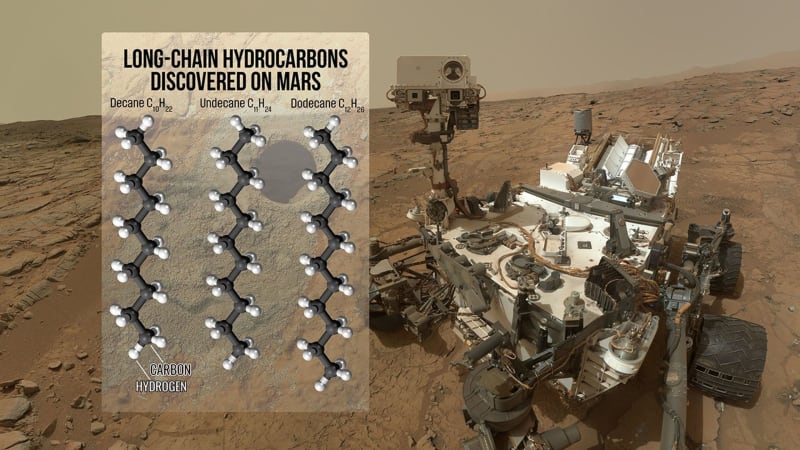
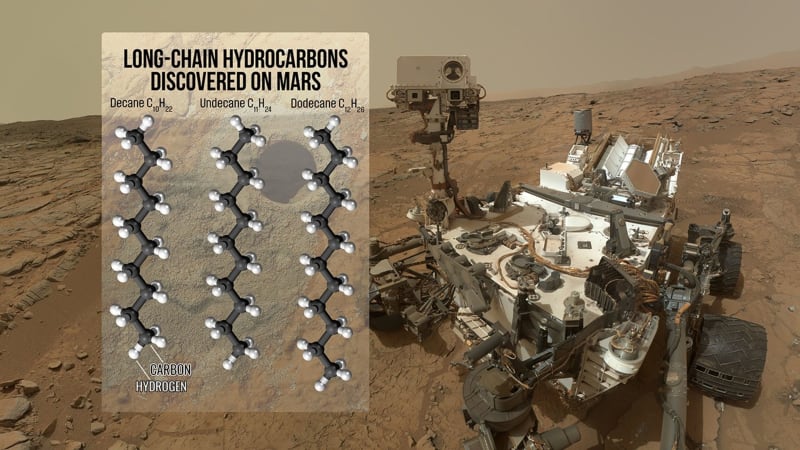
NASA's Curiosity rover discovered the longest organic molecules ever found on Mars, and scientists say they can't explain them without considering the possibility of ancient life. The fatty acid fragments found in ancient mudstone are the kind of molecules living things create.
Scientists just found the strongest hint yet that Mars once hosted life, hidden in rocks from an ancient lake bed.
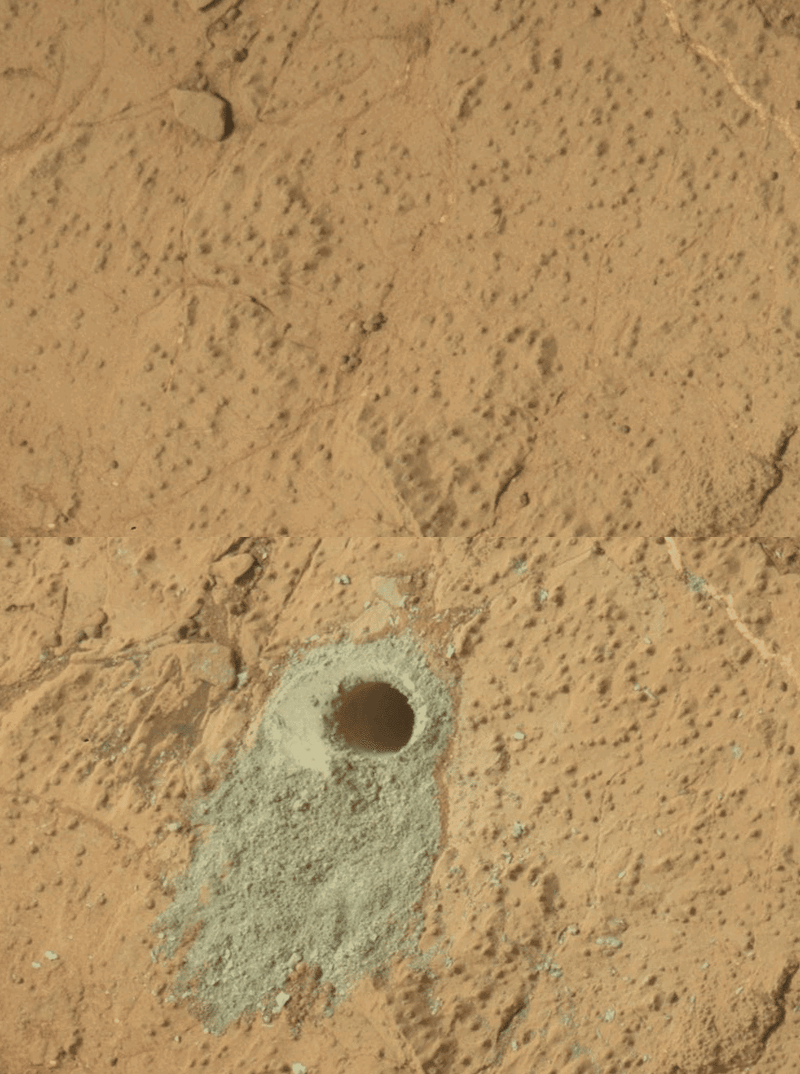
NASA's Curiosity rover discovered massive organic molecules embedded in Martian mudstone back in 2013, but researchers only identified them last year after heating the sample to over 2,000 degrees Fahrenheit. These chains of 10 to 12 carbon atoms are fragments of fatty acids, the exact type of molecules that biological processes create.
The discovery gets even more exciting. Scientists published a study in February 2025 showing they can't fully explain these molecules through non-living processes alone. After testing every possible non-biological explanation, from meteorite impacts to atmospheric chemistry to water-rock interactions, none adequately account for what Curiosity found.
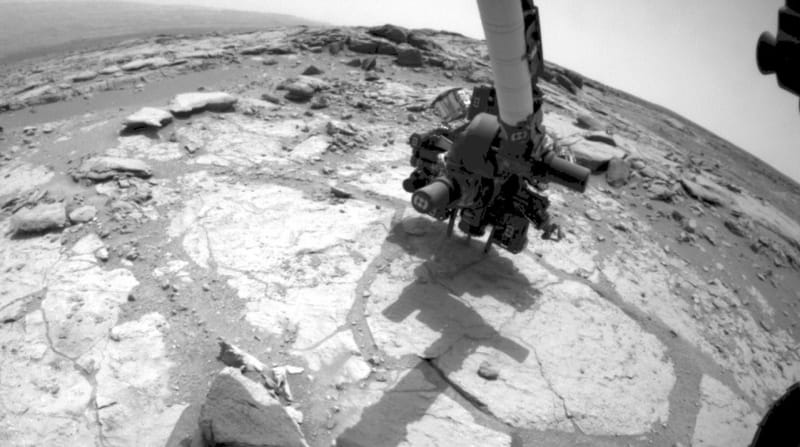
The molecules came from a spot called Yellowknife Bay, an ancient Martian lake bed. The mudstone there has been bombarded by radiation for 80 million years, breaking down organic material the entire time. That means what Curiosity found is just a tiny fraction of what originally existed.
Researchers rewound the clock using mathematical models and radiation experiments. They calculated that billions of years ago, when these molecules first settled into the mudstone, they were hundreds or thousands of times more abundant than today. The original amount would have been between 120 to 7,700 parts per billion, far more than meteorites or atmospheric processes could deliver.
These aren't just any organic molecules. Chains of 12 or more carbon atoms are particularly special because biology creates them much more readily than non-living processes. Think of them as distant cousins to the propane in your grill, but much longer and more complex.
The team tested whether space dust, atmospheric haze, or chemical reactions in water could explain the abundance. None fit. Interplanetary dust can't penetrate rock. Mars' ancient atmosphere wasn't thick enough to produce these quantities. Water-based chemistry typically makes smaller molecules, and the high-temperature pathway for creating fatty acids would have left evidence in the rock.
Why This Inspires
This discovery represents more than a decade of patient scientific detective work. Curiosity collected the sample in 2013, but researchers needed years of experiments and modeling to understand what they'd found. The team didn't jump to conclusions or sensationalize their findings. Instead, they methodically ruled out every other explanation first.
Their careful approach shows science at its best. They're not claiming definitive proof of Martian life, just acknowledging that biological processes offer a reasonable explanation that fits the evidence. It's honest, rigorous, and thrilling.
The possibility that life once thrived in Martian lakes billions of years ago transforms our understanding of our planetary neighbor. If these molecules came from living things, Mars wasn't always the barren red desert we see today. It was a world with water, chemistry, and perhaps the same spark of biology that makes Earth so special.
This finding opens doors rather than closing them, inviting more questions and deeper exploration of what Mars might reveal next.
More Images

Based on reporting by Live Science
This story was written by BrightWire based on verified news reports.
Spread the positivity!
Share this good news with someone who needs it
%2Fhttps%3A%2F%2Ftf-cmsv2-smithsonianmag-media.s3.amazonaws.com%2Ffiler_public%2F7c%2Fa4%2F7ca45b97-a5b6-4cdb-9391-d20dd31bd01d%2Fmit-blackholestar-01-press_0.jpg)