Mathematician Creates Dice That Guarantee Fair Turn Order
A math lecturer spent years designing special 60-sided dice that ensure no two players ever roll the same number, eliminating the frustration of having to reroll. Auburn University just honored his breakthrough with a massive wooden sculpture.
Game night just got a mathematical makeover, and it might end one of board gaming's most annoying problems: deciding who goes first without endless rerolls.
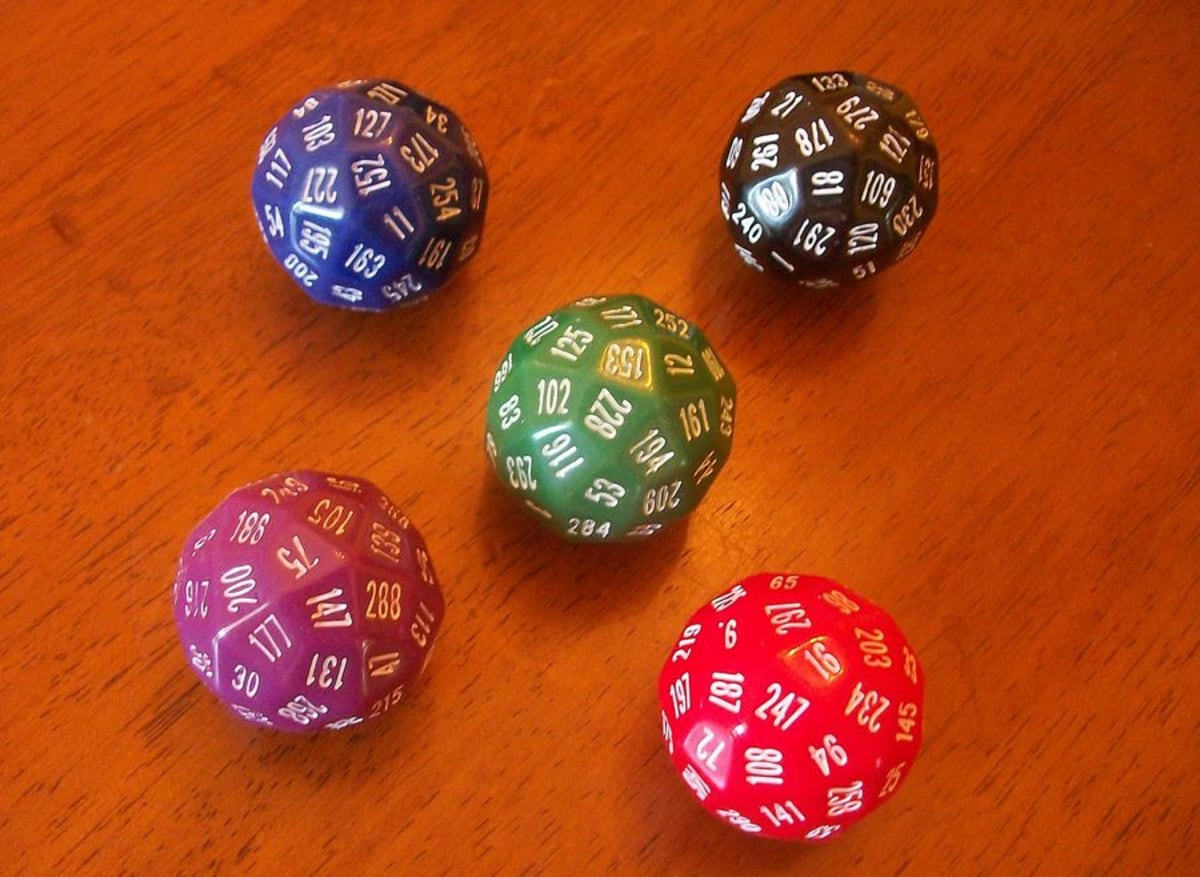
Eric Harshbarger, a lecturer at Auburn University, has spent over a decade perfecting what he calls "Go First Dice." These aren't your average cubes. His latest creation features five 60-sided dice that collectively display every number from 1 to 300, with no repeats across the entire set.
The brilliance lies in the math. When five players each roll one die, someone always gets the highest number, someone always gets the lowest, and there are never any ties. No arguments, no rerolls, just instant turn order.
But Harshbarger didn't stop at eliminating ties. He wanted something much harder: "permutation fairness." This means every possible turn order has an equal chance of happening. Player three has the same odds of going first as player one, and every combination in between is equally likely.
The mathematical challenge stumped him for years. His early attempts for five players required 120-sided dice so round they looked like tennis balls and could barely roll. The breakthrough to 60-sided dice made them practical enough to manufacture and sell to game enthusiasts.
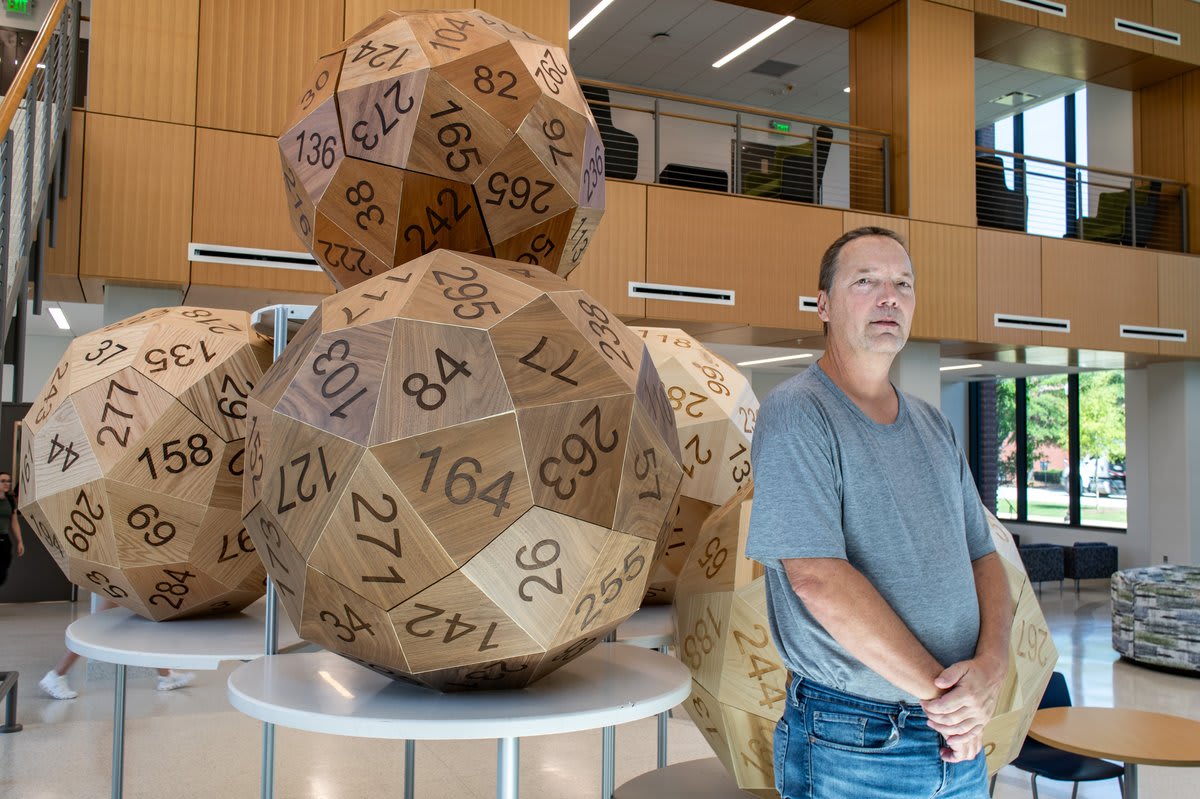
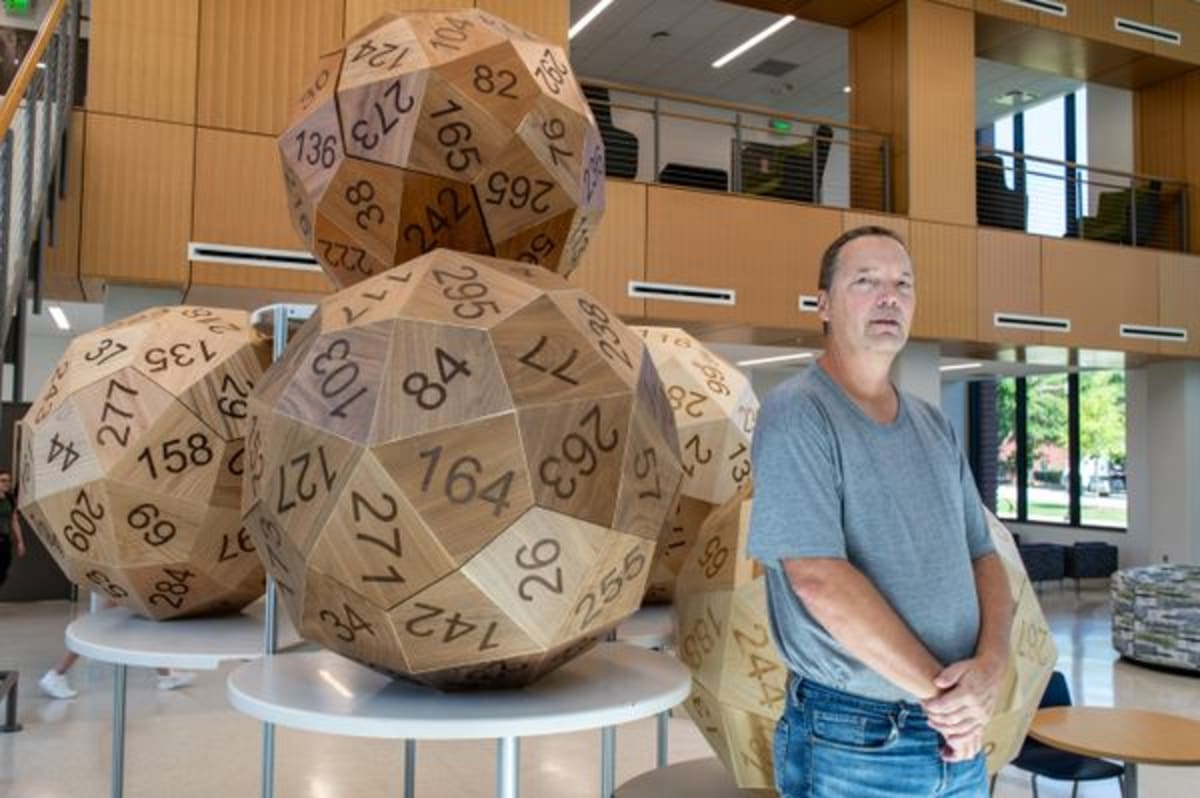
Before becoming a lecturer, Harshbarger made his living building sculptures from LEGO bricks. When Auburn opened a new science and agriculture complex, he saw his chance to commemorate the achievement. He hand carved three-foot-wide replicas of all five dice, each from different wood—pine, poplar, red oak, walnut, and mahogany.
Why This Inspires
Harshbarger's dice prove that even small frustrations can inspire elegant solutions. He took a problem most people accept as unavoidable and refused to settle until the math worked perfectly.
His collaborators spent years wrestling with probability equations that grew exponentially complex. Getting fairness for two players is simple, but five players means accounting for 120 different possible turn orders, each requiring equal probability.
The sculpture now welcomes students into Auburn's STEM complex, a three-dimensional reminder that persistence and creativity can crack problems that seem impossible. The dice themselves have found homes with board game fans who appreciate that someone cared enough to make game night just a little bit fairer.
Sometimes the best innovations come from paying attention to life's minor annoyances and refusing to accept "that's just how it is" as an answer.
More Images


Based on reporting by Scientific American
This story was written by BrightWire based on verified news reports.
Spread the positivity!
Share this good news with someone who needs it


