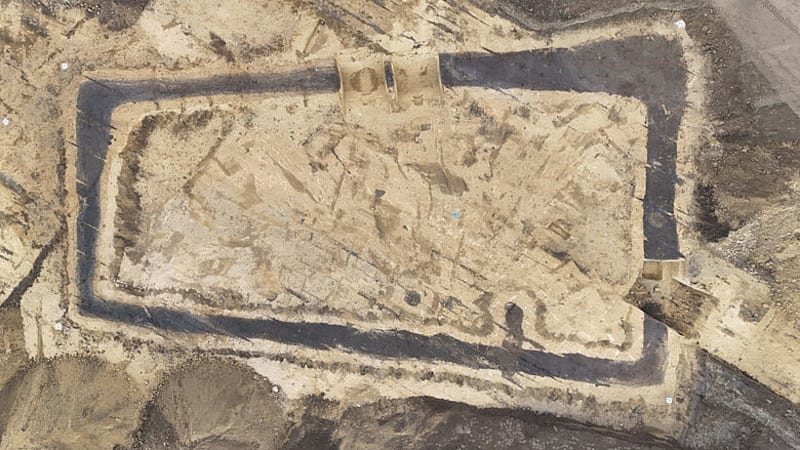
Medieval Tunnel Found Hidden in 6,000-Year-Old German Tomb
Archaeologists in Germany just uncovered a medieval underground tunnel carved directly into a prehistoric burial site that's 4,000 years older. The discovery shows how ancient landmarks guided human activity across millennia.
Workers preparing a wind farm site in central Germany stumbled upon something extraordinary: a hand-carved medieval tunnel hidden inside a 6,000-year-old burial monument.
The discovery happened near Reinstedt village in Saxony-Anhalt, where archaeologists were surveying land before construction. What they found was an "Erdstall," a rare underground passage system from the late Middle Ages, carved directly into a Neolithic trapezoidal ditch from 4000 BCE.
The site on Dornberg hill had been special to humans for thousands of years. Evidence shows the spot hosted Neolithic burials, possible Bronze Age burial mounds, and ritual activities spanning over four millennia before medieval people chose it for their secret tunnel.
The tunnel itself curves northwest and measures just over three feet high and two feet wide. Medieval builders carved a pointed ceiling, added a step at the entrance, and even included a small wall niche. Inside, archaeologists found a horseshoe, pottery fragments, a fox skeleton, and small mammal bones.
Large stones stacked at the entrance suggest someone deliberately sealed the tunnel after its final use. A thin charcoal layer at the lowest point shows a brief fire burned there, though the surrounding soil shows no signs of prolonged heat.
The big mystery? Why dig a medieval tunnel inside an ancient grave. Archaeologists have two theories: either the prehistoric monument was still visible above ground and served as a perfect landmark for finding the hidden tunnel, or locals avoided the "pagan" burial site, making it the ideal secret refuge during dangerous times.
The Ripple Effect
This accidental discovery reminds us that landscapes hold stories layered across time. What began as a routine construction survey became a window into how communities across 6,000 years used the same special place for entirely different reasons.
The find also highlights why archaeological surveys matter before development projects break ground. Without that wind farm assessment, this rare glimpse into how medieval people interacted with ancient monuments might have been lost forever.
Erdställe remain puzzling to scholars who debate whether they served as hiding places during conflicts or held ritual significance. Only a few dozen exist in northern Germany, making each discovery valuable for understanding medieval life.
The team continues analyzing artifacts and soil samples from the site, adding crucial data about medieval underground architecture and how humans reuse sacred spaces across generations.
Based on reporting by Google: archaeological discovery
This story was written by BrightWire based on verified news reports.
Spread the positivity!
Share this good news with someone who needs it
%2Fhttps%3A%2F%2Ftf-cmsv2-smithsonianmag-media.s3.amazonaws.com%2Ffiler_public%2F75%2F34%2F75342ac4-0f4b-4563-a63d-3012f0feae31%2Fgettyimages-2293659629.jpg)
%2Fhttps%3A%2F%2Ftf-cmsv2-smithsonianmag-media.s3.amazonaws.com%2Ffiler_public%2Fef%2F5b%2Fef5b9055-962e-483d-b70c-ed912c2a6481%2Fviikinkaikainen_rahakatko.jpeg)