Metal Tubes That Won't Sink, Even Full of Holes
Scientists at the University of Rochester have created aluminum tubes that stay afloat even when riddled with holes or submerged for weeks. The breakthrough could lead to nearly unsinkable ships, floating platforms, and wave-powered energy systems.
More than a century after the Titanic sank, scientists have brought us closer to truly unsinkable ships. Researchers at the University of Rochester have engineered metal tubes that refuse to sink, no matter how damaged they become.
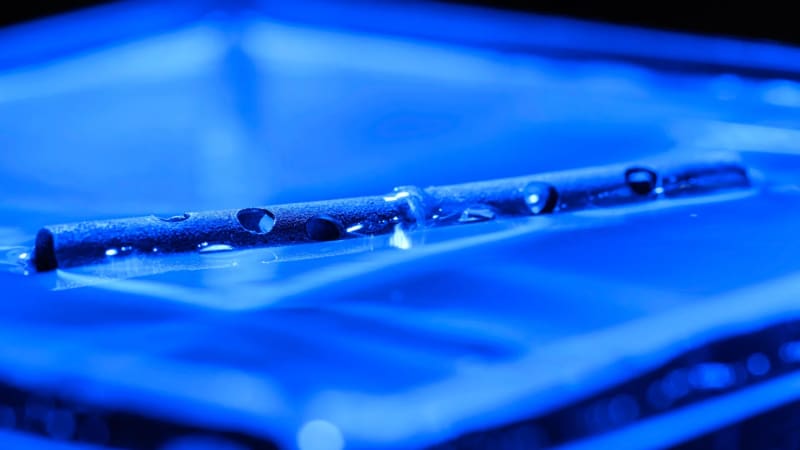
The secret lies in the surface of ordinary aluminum tubes. Professor Chunlei Guo and his team etch the inside with microscopic pits that create a texture so water-repelling, it traps air inside permanently.
When placed in water, these treated tubes capture stable air pockets that prevent them from filling and sinking. The design mimics nature's own solutions, like diving bell spiders that carry air bubbles underwater and fire ants that form floating rafts with their water-resistant bodies.
"If you severely damage the tubes with as many holes as you can punch, they still float," says Guo. His team tested the tubes in rough conditions for weeks and found zero loss of buoyancy.
This newest design improves on the team's 2019 version, which used water-repelling disks that could fail when tilted at extreme angles. The tubes offer much greater stability, especially in turbulent ocean-like environments.
The researchers connected multiple tubes to form floating rafts in their lab, using tubes nearly half a meter long. Guo says the design can scale up to sizes large enough to support ships, buoys, and floating platforms.
The Ripple Effect
The applications extend far beyond safer ships. The team demonstrated that rafts made from these tubes could capture energy from moving water, opening doors for wave-powered electricity generation.
This means coastal communities could potentially harness ocean waves for renewable energy while benefiting from more resilient maritime infrastructure. The technology could make rescue vessels more reliable, create unsinkable emergency platforms, and support offshore wind farms that need stable floating bases.
Multiple major organizations are backing this work, including the National Science Foundation and the Bill and Melinda Gates Foundation. Their support signals confidence that this breakthrough could reshape how we interact with water.
The tubes' durability matters most in emergencies. Traditional flotation devices can fail when punctured, but these engineered surfaces maintain buoyancy even when severely damaged, potentially saving lives at sea.
From preventing maritime disasters to powering homes with wave energy, these remarkable tubes prove that sometimes the best solutions come from learning what nature already knows.
Based on reporting by Science Daily
This story was written by BrightWire based on verified news reports.
Spread the positivity!
Share this good news with someone who needs it