Michigan Invests $7.5M to Tap Underground Clean Energy
Michigan is pouring $7.5 million into researching geologic hydrogen buried beneath the state, a zero-emission fuel that could power trucks and factories without creating pollution. When burned, this natural hydrogen releases only water, offering hope for cleaning up some of the dirtiest industries.
Deep beneath Michigan's surface lies a potential game-changer: naturally occurring hydrogen that burns completely clean, leaving nothing behind but water.
The state just committed $7.5 million to find out if this underground treasure can help replace fossil fuels. Governor Gretchen Whitmer greenlit the research after a 2025 U.S. Geological Survey study ranked Michigan among the most promising states for geologic hydrogen deposits.
Unlike traditional fuels, hydrogen releases zero greenhouse gases or air pollutants when it burns. That makes it especially valuable for heavy industries like trucking, steel production, and cement manufacturing, which struggle to find clean alternatives.
"It's a major decarbonization tool, I think one of the strongest that we have come across," said Kevin Mehren, director of the Michigan Infrastructure Office. "It has massive potential across all aspects of our economy."
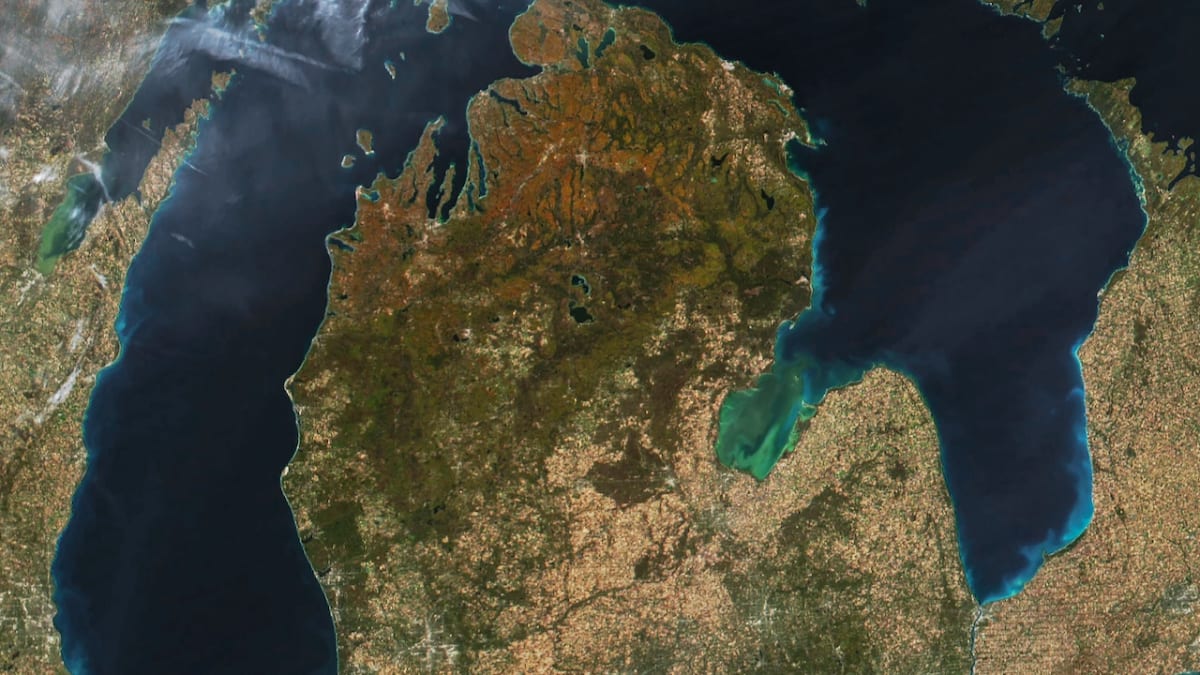
Michigan sits atop the Midcontinent Rift, where North America started splitting apart over a billion years ago before stopping. That ancient geological event created conditions that may have trapped vast amounts of hydrogen, particularly around Detroit and Traverse City.
The timing couldn't be better for practical reasons. Northern Michigan already has extensive drilling infrastructure from oil and natural gas operations, complete with wells that researchers can examine for hydrogen clues.
"We haven't typically been looking for hydrogen in the past when we've drilled these wells," said Brian Ellis, associate professor at the University of Michigan. "So there's opportunity to potentially data mine information that we already have."
The initial funding will map where hydrogen concentrations might be highest, especially in the northern Lower Peninsula. Researchers hope state investment will attract additional federal dollars, building on the $20 million the Department of Energy already allocated for geologic hydrogen projects in 2024.
The Ripple Effect
This research could birth an entirely new industry in Michigan while tackling the state's biggest pollution sources. Energy production and transportation currently generate the most greenhouse gas emissions statewide, according to state data.
The bipartisan appeal adds another layer of promise. Geologic hydrogen extraction uses drilling techniques familiar to oil and gas workers, potentially creating jobs while advancing clean energy goals.
"You are ostensibly drilling for zero-emission energy," Mehren explained. "It's a domestic resource, but you are providing a new clean resource that could be an economic driver, decarbonize industry, help fight climate change."
Even if only a fraction of Michigan's potential hydrogen proves accessible, it could provide reliable clean fuel for industries where batteries and solar panels fall short.
A billion years of geology might just power the next century of progress.
Based on reporting by Google News - Clean Energy
This story was written by BrightWire based on verified news reports.
Spread the positivity!
Share this good news with someone who needs it