Microsoft Glass 'Books' Store Data for 10,000 Years
Scientists at Microsoft Research created tiny glass rectangles that can store massive amounts of data for millennia using lasers. The technology could preserve humanity's most important knowledge far longer than any current storage system.
Imagine storing the world's knowledge in a library made of glass, where information stays perfectly preserved for 10,000 years.
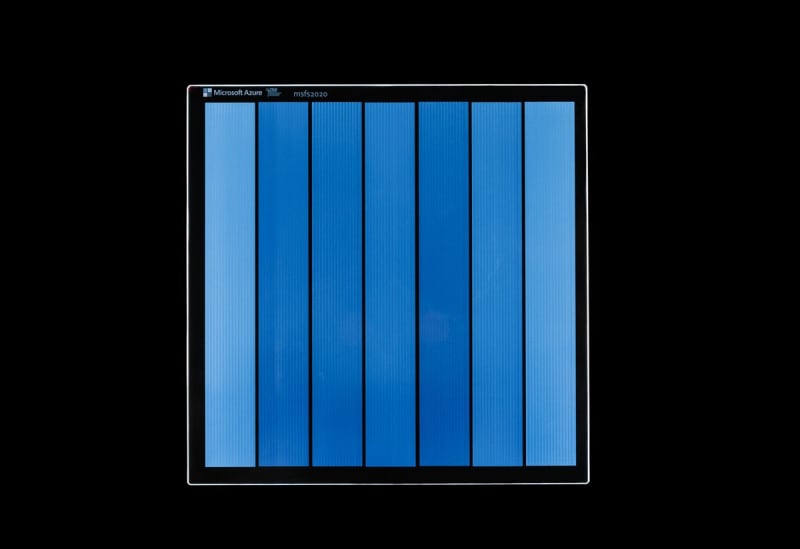
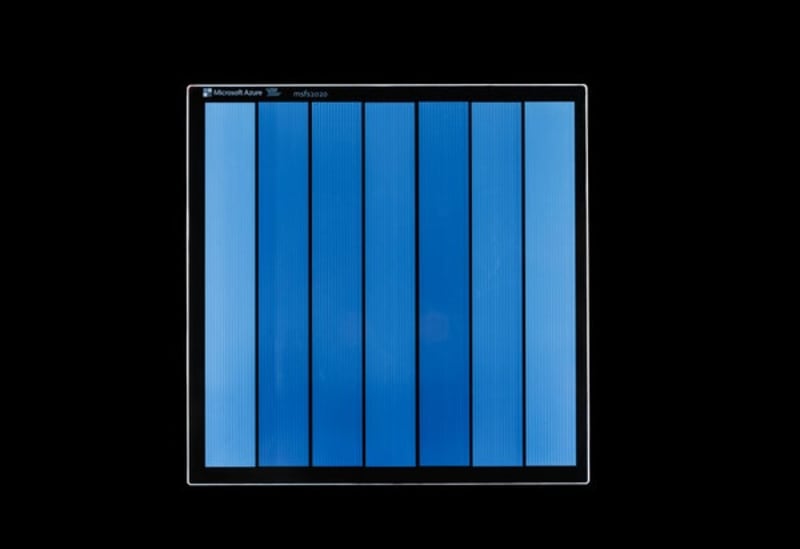
Microsoft Research scientists just turned that vision into reality. Their new system uses lasers and machine learning to etch data into tiny glass rectangles smaller than a smartphone, creating archives that could outlast civilizations.
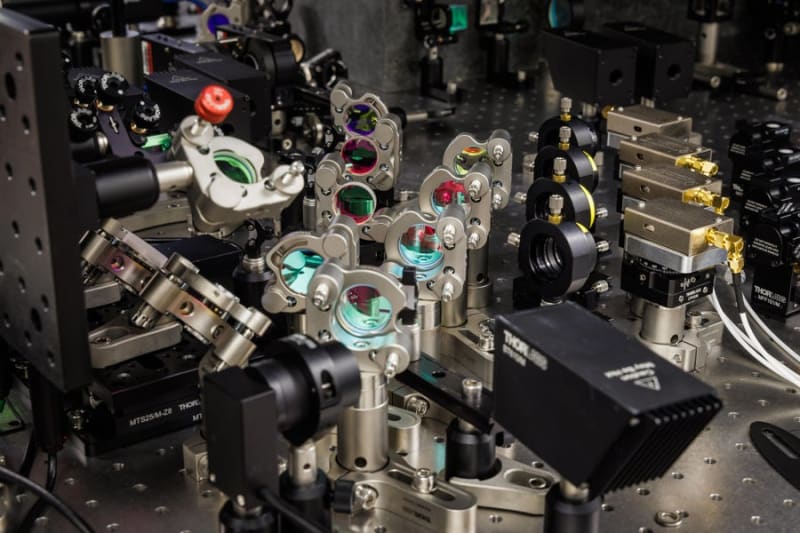
The technology works by zapping information into glass using ultra-fast laser pulses. Each pulse lasts just one quadrillionth of a second, creating 301 layers of tiny holes stacked inside the glass. A single two-millimeter-thick piece can hold 4.8 terabytes of data, enough for thousands of movies or millions of books.
The best part? Writing all that information uses about as much energy as half a brussels sprout contains.
Reading the data requires focusing a microscope on each layer, then using machine learning to decode the symbols. It's more complex than clicking a file on your laptop, which is exactly the point. This system targets archives that don't need frequent access, like climate records, historical documents, and reference materials that future generations will need.
The longevity is what makes this breakthrough special. Current hard drives last maybe a decade or two before breaking down. These glass books remain stable at room temperature for more than 10,000 years, twice as long as humans have been writing things down.
Researchers proved the durability by heating the glass to 500 degrees Celsius in a furnace. Even at extreme temperatures, the data stayed intact far longer than any existing storage system.
Why This Inspires
This technology solves a problem most people don't think about: how do we preserve what matters for future generations? Every year, priceless historical records, scientific data, and cultural knowledge disappear because storage systems fail.
Glass libraries could change that equation completely. Unlike magnetic tapes that degrade or hard drives that crash, these tiny books can survive natural disasters, electromagnetic pulses, and the simple passage of time.
Doris Möncke, a glass science professor at Alfred University who reviewed the research, believes the cavities etched by lasers are "indeed long-term stable." The laser writing creates permanent changes deep inside the glass, protected from the outside world and unlikely to cause cracks.
The system still needs refinement before becoming mainstream. Scientists haven't fully tested how mechanical stress or corrosion might affect readability over centuries. And obviously, someone needs to remember where they put the glass and not mistake it for fancy coasters.
But the potential stretches beyond just data storage. This could preserve indigenous languages, document climate change for future scientists, or safeguard cultural heritage that might otherwise vanish. Every DNA sequence, every historical photograph, every scientific discovery could have a permanent home.
The research team published their findings in Nature, marking a major step forward in humanity's quest to remember its own story across the ages.
More Images


Based on reporting by Scientific American
This story was written by BrightWire based on verified news reports.
Spread the positivity!
Share this good news with someone who needs it