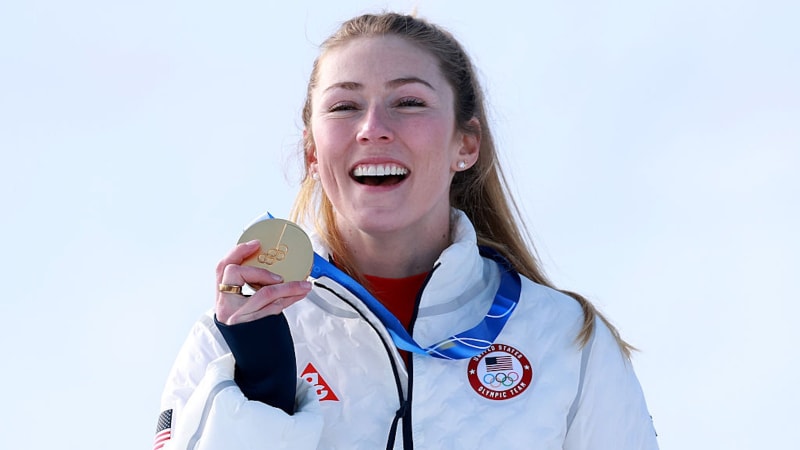
Mikaela Shiffrin Wins Gold at 30, Rewrites Olympic Legacy
American ski legend Mikaela Shiffrin dominated the slalom event at the 2026 Winter Olympics, claiming her fourth Olympic medal and third gold. The victory transforms her story from Beijing disappointment to redemption, cementing her place among America's greatest winter athletes.
At 30 years old, Mikaela Shiffrin just proved that comebacks can be even sweeter than first victories.
The American skiing superstar blazed down the mountain in Cortina d'Ampezzo, Italy, winning Olympic gold in the slalom event on February 18, 2026. Her commanding performance in both runs secured her fourth career Olympic medal and third gold, making her the most decorated female American skier in Olympic history.
The win carries extra weight after what happened four years ago in Beijing. Shiffrin competed in six events at the 2022 Olympics and left without a single medal, a heartbreaking outcome that sparked intense public discussion about pressure and mental health in elite sports.
But champions write their own endings. Shiffrin's gold in Cortina completes a classic redemption arc that sports fans recognize and celebrate: rise to greatness, face crushing setback, return stronger than before.
Her Olympic success now matches her extraordinary World Cup career, where she's racked up 108 victories and eight World Championship wins. Those numbers make her the most accomplished Alpine skier on the planet, though her Olympic story finally reflects that dominance.
Why This Inspires
Shiffrin's journey reminds us that one bad chapter doesn't define the whole story. After Beijing, critics questioned whether she could handle Olympic pressure, but she answered with her skis instead of her words.
Her victory also showcases the power of persistence at an age when many athletes have retired. At 30, Shiffrin isn't slowing down but speeding up, showing that experience and determination can overcome youth and raw talent.
The gold medal places her alongside legendary American Olympians like speedskater Bonnie Blair and runner Allyson Felix, athletes who dominated across multiple Games and became permanent fixtures in Olympic history. Shiffrin now has medals from three different Olympics, a feat that requires both exceptional skill and remarkable longevity.
What makes her story even more inspiring is how she handled the setback. Rather than letting Beijing define her legacy, Shiffrin used it as fuel to come back stronger and write a better ending.
Sports narratives may simplify complex human experiences, but sometimes they capture something true: that resilience matters more than perfection, and that how we respond to failure often defines us more than how we handle success.
Shiffrin's gold medal proves that the best stories aren't about never falling down but about getting back up and finishing the race.
Based on reporting by Google News - Sports
This story was written by BrightWire based on verified news reports.
Spread the positivity!
Share this good news with someone who needs it