Milky Way's Black Hole Caught Exhaling After 50-Year Search
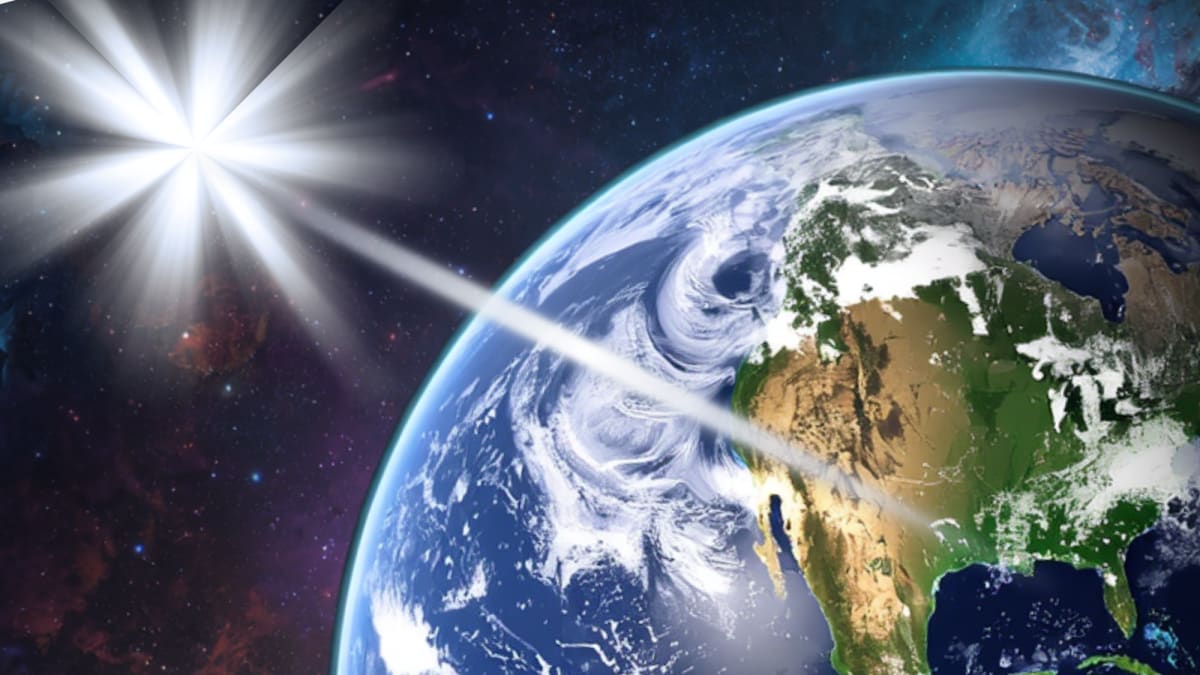
Scientists finally spotted a gentle wind blowing from the supermassive black hole at our galaxy's center, proving a theory that's been waiting half a century for evidence. The discovery shows that even our quiet galactic anchor behaves like black holes across the universe.
After 50 years of searching, astronomers have finally caught our galaxy's giant black hole taking a breath.
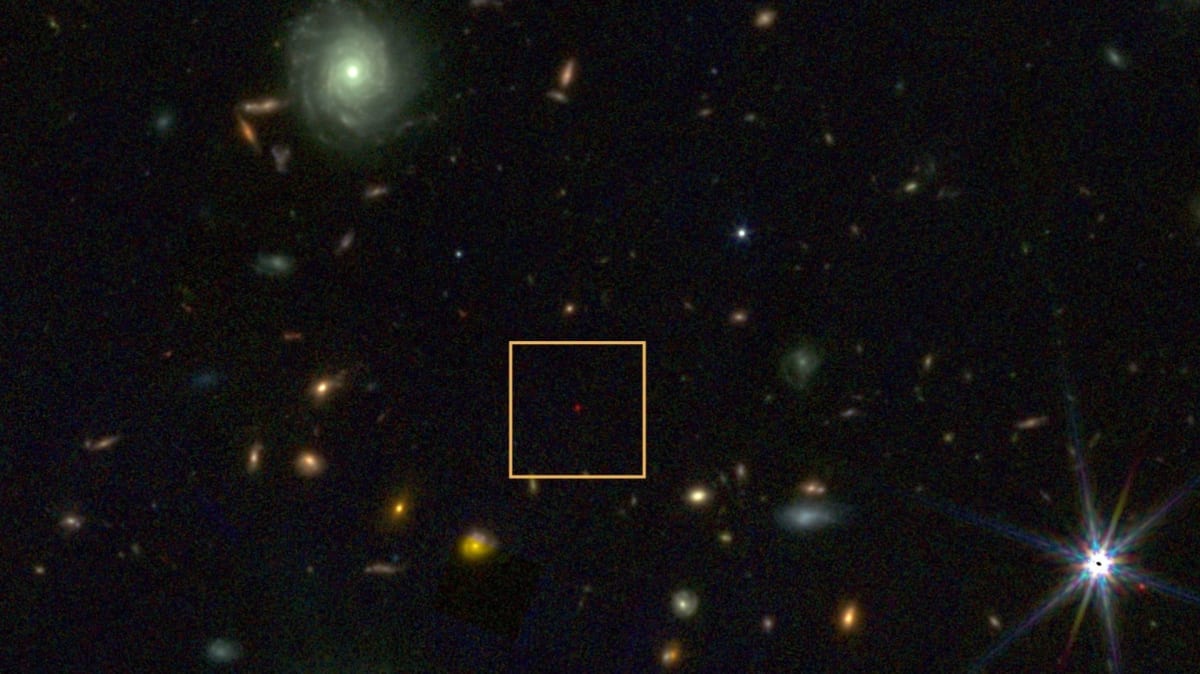
A team from Northwestern University spotted a wind streaming from Sagittarius A*, the four-million-solar-mass black hole sitting at the Milky Way's center. It's a discovery that confirms what scientists have insisted must be true for decades, even when the evidence stubbornly refused to show up.
The breakthrough came from 100 hours of telescope observations gathered between 2017 and 2021 using the Atacama Large Millimeter Array in Chile. Astrophysicists Mark Gorski and Lena Murchikova developed a new technique that filtered out the black hole's own glow, revealing details 100 times clearer than any previous survey.
What they found was a cone-shaped gap in the cold gas surrounding the black hole, stretching nearly three light-years with a perfect 45-degree opening angle. The geometry tells the story: hot material streaming from Sagittarius A* is either pushing the cold gas away or heating it up entirely.
"Unless a black hole exists in a perfect vacuum, it must blow a wind somehow," Gorski explained. "And there is no perfect vacuum in the universe."
The team checked whether nearby massive stars could have carved the gap instead. The energy simply didn't add up. Only the black hole itself had enough directed power to shape a cone this precise.
Why This Inspires
This gentle breeze from a sleeping giant changes how we understand our place in the cosmos. Sagittarius A* consumes just a trickle of matter compared to the ferocious black holes powering distant quasars, which is exactly why this discovery matters so much.
Most supermassive black holes spend most of their lives in this quiet mode. If even a dozing black hole like ours produces a steady wind, then these cosmic anchors are quietly shaping galaxies throughout the universe for billions of years.
The wind has been blowing for at least 20,000 years, based on how far its effects reach. It can choke off star formation in some regions by dispersing the cold gas stars need to form, while simultaneously compressing nearby clouds and triggering new stellar nurseries. The same breath that starves one neighborhood feeds the next.
For decades, our black hole seemed like an awkward outlier in the family of well-studied cosmic giants. It was close enough to examine in extraordinary detail yet frustratingly silent in ways that made comparisons difficult.
"The wind is not powerful, and its direction probably wanders with time," Murchikova said. "It shows that our black hole is not unique, and our place in the universe is not unique."
That simple statement carries profound weight. The entire solar system orbits this anchor at roughly 514,000 miles per hour, and now we know it behaves just like its cousins across the cosmos.
Half a century of waiting ended with proof that even the quietest giants shape the galaxies they call home.
More Images


Based on reporting by Google News - Science
This story was written by BrightWire based on verified news reports.
Spread the positivity!
Share this good news with someone who needs it