Million Flamingos Find Safe Haven in Namibia's Salt Pan
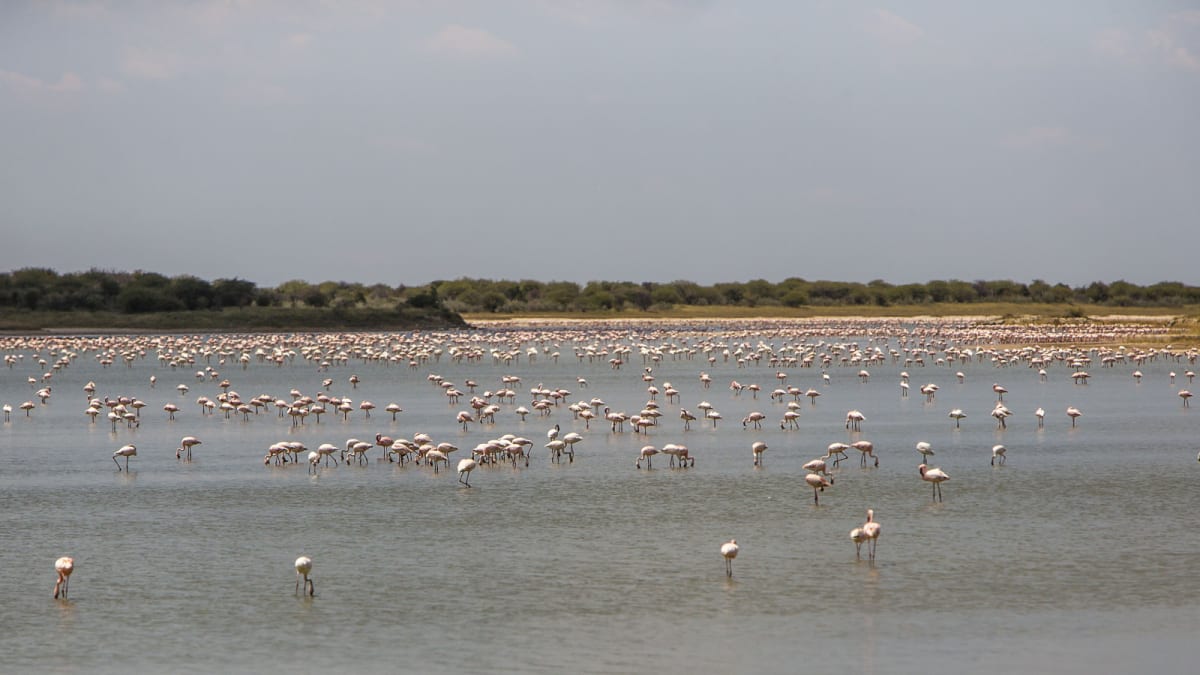
Up to one million flamingos breed safely each year in Namibia's Etosha National Park, a protected wildlife sanctuary spanning nearly 9,000 square miles. The ancient salt flats and surrounding grasslands shelter lions, elephants, rhinos, and countless other species behind protective fencing that keeps poachers out.
One million pink flamingos gathering in one place sounds like a fantasy, but it happens every year in the heart of Namibia's driest landscape.
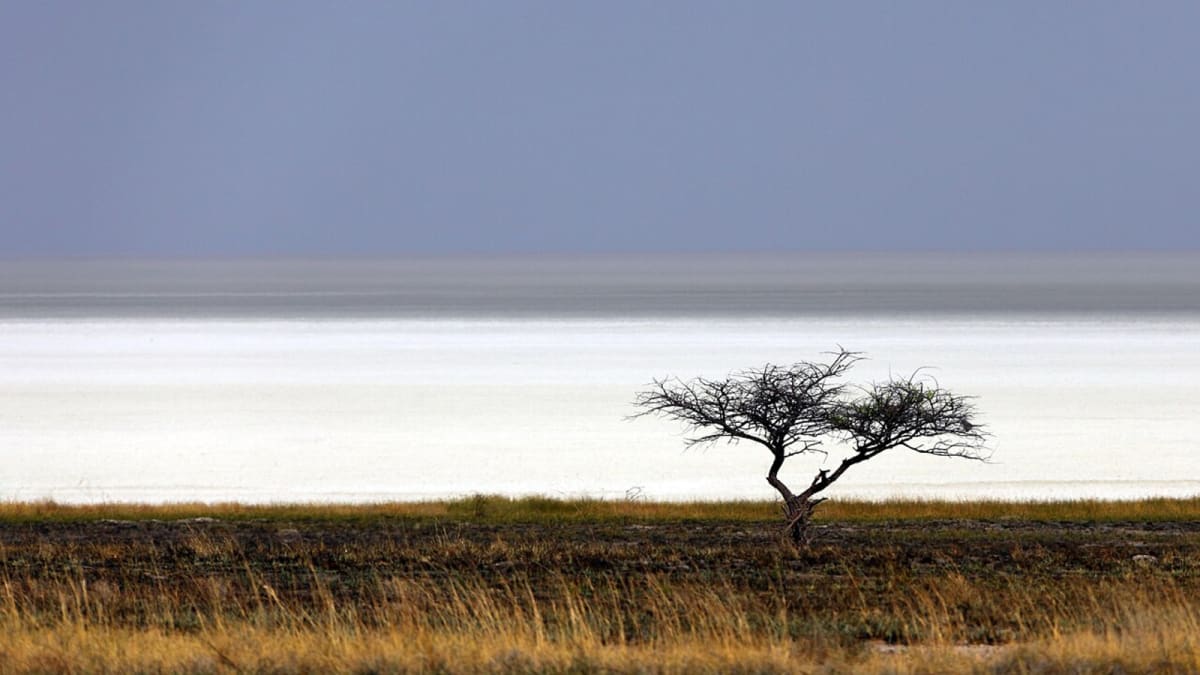
Etosha National Park protects nearly 9,000 square miles of diverse ecosystems centered around Africa's largest salt flat. The ancient pan, which translates to "Great White Place," serves as a critical breeding ground for flamingos and home to lions, giraffes, zebras, elephants, and rhinos.
The park's 10-foot-tall fencing system runs for miles across the landscape, creating a safe barrier between protected wildlife and potential poachers. This boundary allows animals to thrive in rich grasslands and woodlands surrounding the salt flats without wandering into danger zones.
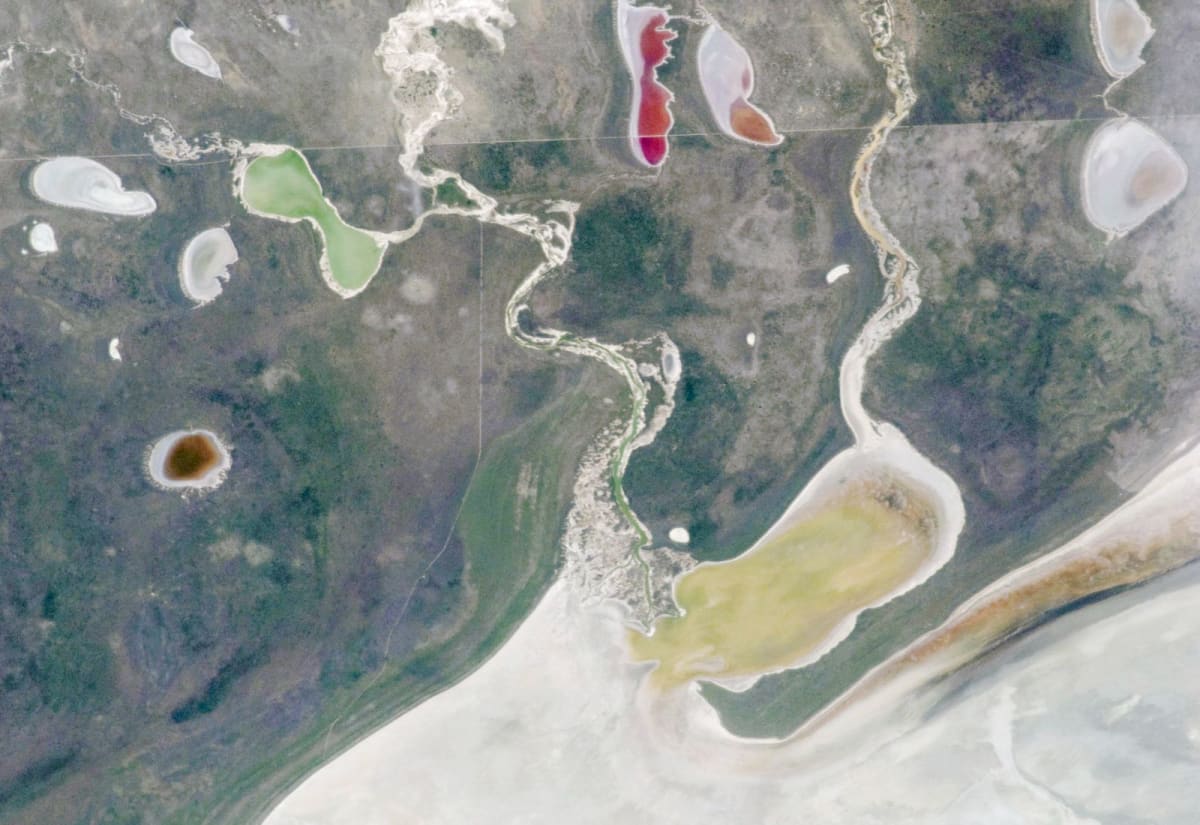
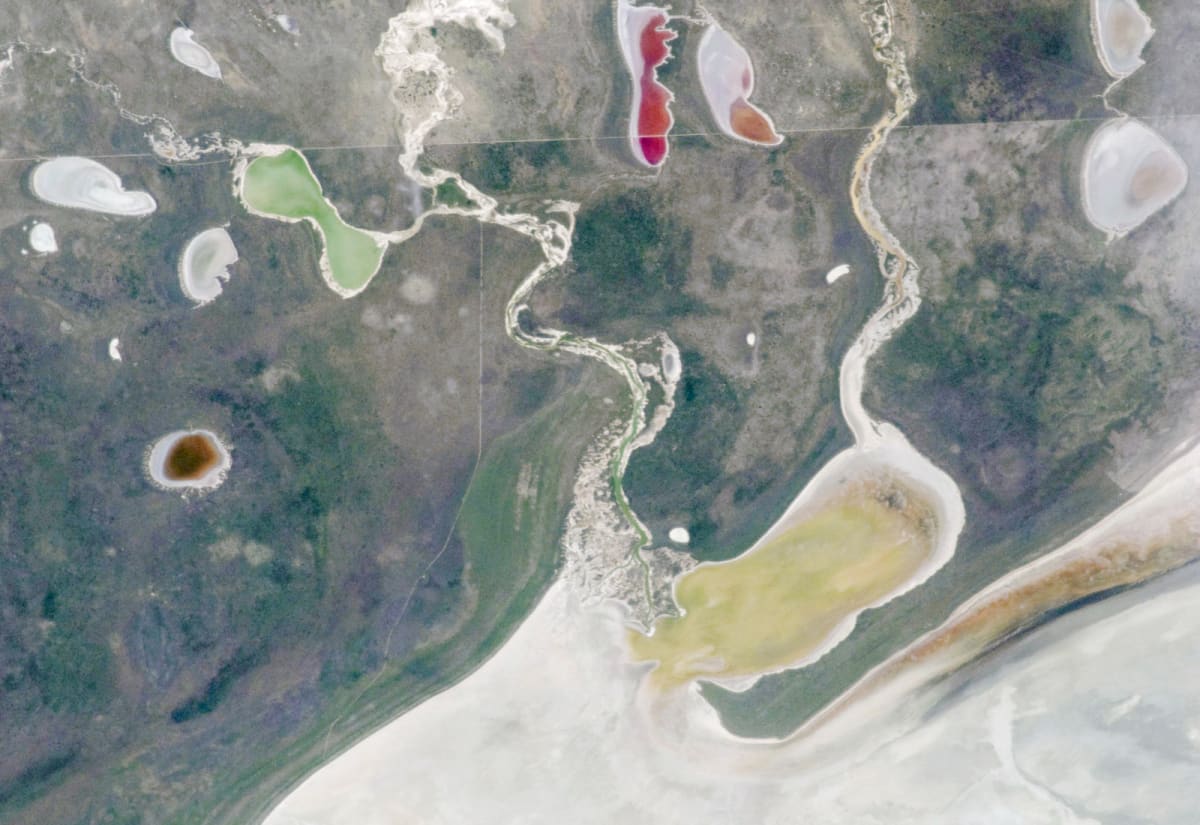
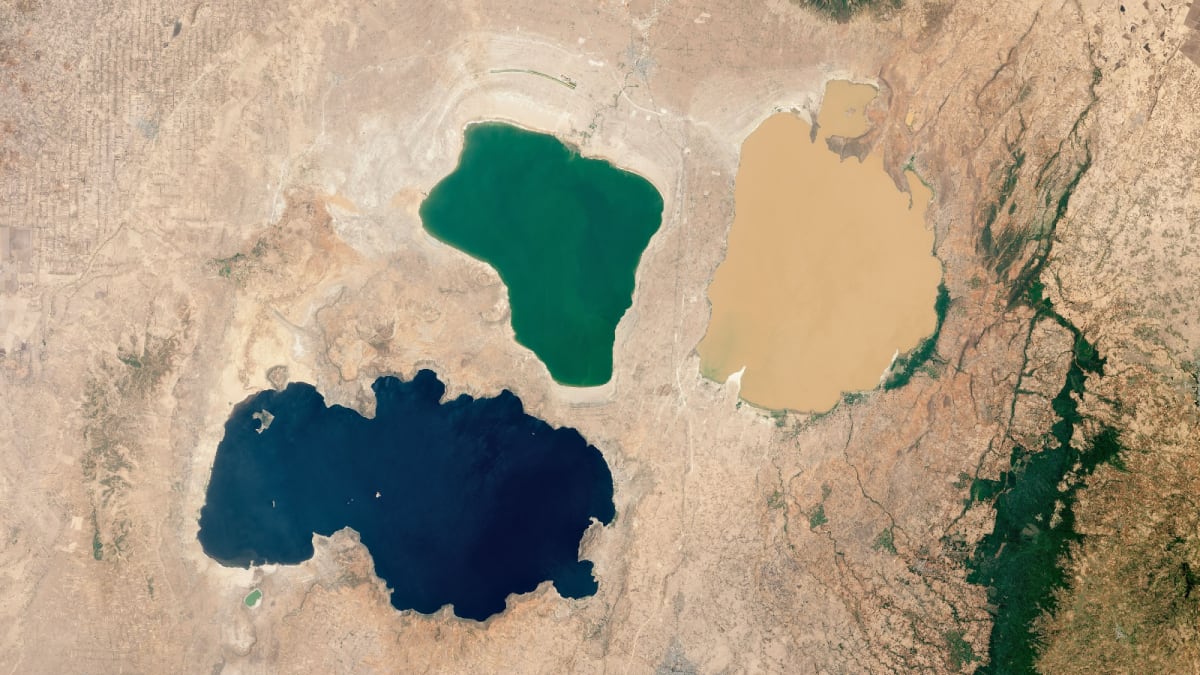
When rare floods occur, the normally dry pan transforms into a shallow lake system filled with colorful algae blooms. These temporary water sources create feeding opportunities for countless species in an otherwise harsh environment.
The dramatic color differences in each flooded depression come from different algae species blooming in the mineral-rich waters. In 2011, astronauts aboard the International Space Station captured five vividly colored lakes appearing simultaneously in shades of yellow, green, brown, red, and pink.
The Ripple Effect
Etosha's protection extends beyond its borders, supporting Namibia's growing eco-tourism industry and providing employment for local communities. The park demonstrates how dedicated conservation efforts can preserve entire ecosystems even in challenging climates.
The salt pan itself has existed for 10 million years, serving as a freshwater lake until geological shifts dried it out 16,000 years ago. Today's protected status ensures it will remain a wildlife sanctuary for generations to come.
Thousands of flamingos continue choosing Etosha as their breeding site, proof that conservation works when given space and protection.
More Images
Based on reporting by Live Science
This story was written by BrightWire based on verified news reports.
Spread the positivity!
Share this good news with someone who needs it