Minnesota Drops Pine Seeds From Helicopters in 19 Forests
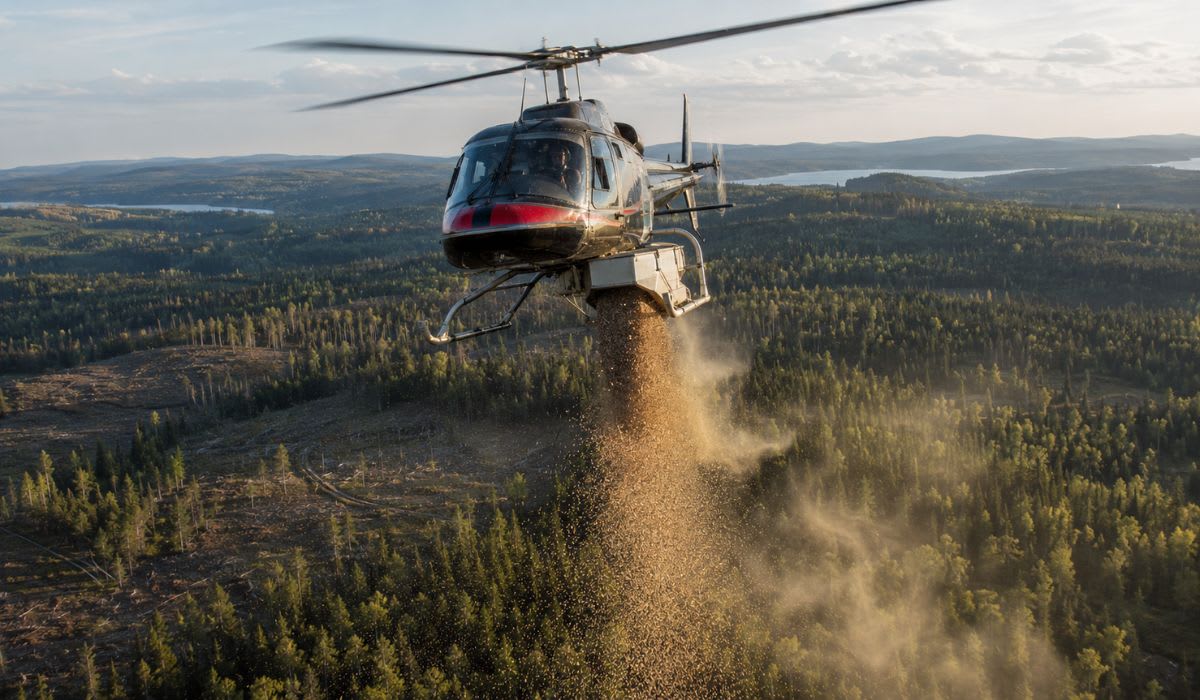
Minnesota's Department of Natural Resources used helicopters to scatter tree seeds across 19 remote forest areas where ground crews couldn't reach. The aerial seeding effort completed in fall 2025 planted jack pine, white pine, and black spruce across hard-to-access state lands.
Helicopters are bringing new life to Minnesota's most remote forests, dropping thousands of tree seeds where human hands can't reach.
The Minnesota Department of Natural Resources completed an aerial seeding operation in fall 2025, scattering seeds across 19 hard-to-access forest areas throughout the state. The helicopters distributed jack pine, white pine, and black spruce seeds over terrain too difficult for ground crews to plant on foot.
Aerial seeding solves a challenging problem in forest management. Some areas need replanting after natural disturbances or harvesting, but swamps, steep slopes, and remote locations make traditional planting methods impractical or impossible.
The technique works by spreading seeds from above, letting them fall naturally into the soil below. While not every seed will sprout, the method covers large areas quickly and reaches places where boots-on-the-ground efforts would take months or be too dangerous to attempt.
Minnesota's forests play a vital role in the state's ecosystem and economy. Pine trees filter air, prevent soil erosion, provide wildlife habitat, and support the timber industry. Keeping these forests healthy requires ongoing management, especially as climate change and natural disturbances create new challenges.
The DNR has used aerial seeding as part of its forest management toolkit for years. The fall 2025 operation represents one of the larger recent efforts, targeting multiple sites in a coordinated campaign to restore tree cover where it's most needed.
The Ripple Effect
This project does more than plant trees in empty spaces. The restored forests will capture carbon, improve water quality in nearby streams, and create habitat corridors that help wildlife move between protected areas.
As these seedlings grow over the coming decades, they'll provide resources for future generations. Young forests become homes for birds, mammals, and countless insects. They stabilize soil that might otherwise wash away during heavy rains. They turn barren patches back into living ecosystems.
The helicopters that dropped seeds in 2025 essentially planted the forests of 2050 and beyond. Those trees will clean the air Minnesotans breathe, filter the water they drink, and offer shade and beauty to hikers who explore state forests years from now.
Minnesota's approach shows how technology can help nature heal in places humans struggle to reach. Sometimes the best way to help the environment is to give it what it needs and let it do the rest.
Based on reporting by Google News - Reforestation
This story was written by BrightWire based on verified news reports.
Spread the positivity!
Share this good news with someone who needs it