MIT Chip Detects Pneumonia in 10 Minutes via Breath Test
MIT engineers created a portable chip that diagnoses pneumonia through breath analysis in just 10 minutes, potentially replacing hours of waiting for X-rays and lab results. The technology could soon bring fast, accurate lung disease diagnosis to any doctor's office or even your home.
Imagine diagnosing pneumonia as easily as blowing into a tube and getting results before your doctor's appointment ends.
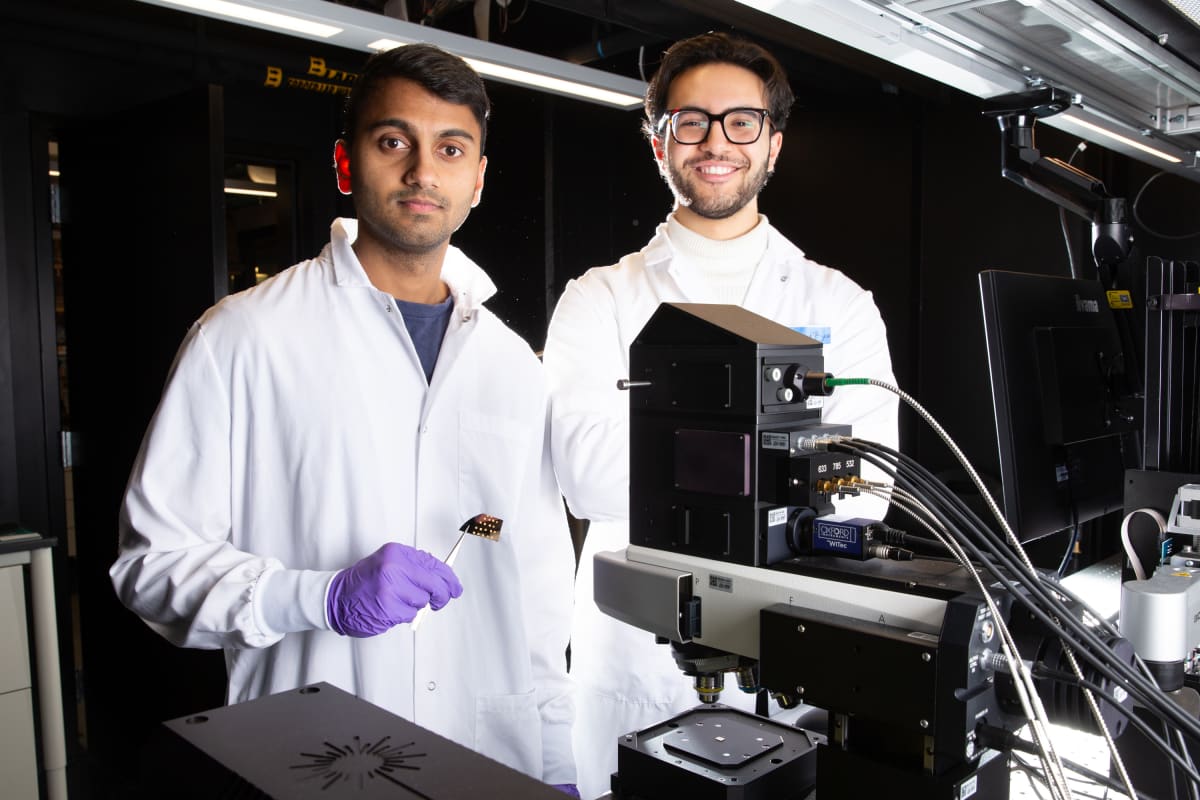
MIT engineers just made that possibility real with PlasmoSniff, a coin-sized chip that detects lung diseases through your breath. The technology could replace the current process of chest X-rays and lab tests that take hours or even days to confirm pneumonia.
Here's how it works: patients first inhale special nanoparticles, similar to using an asthma inhaler. If you're healthy, those particles eventually leave your body unchanged. But if pneumonia is present, enzymes produced by the infection act like tiny scissors, snipping off molecular tags called biomarkers from the nanoparticles.
When you exhale 10 minutes later, the chip detects these freed biomarkers at concentrations as low as 10 parts per billion. That's like finding a single drop in an Olympic swimming pool.
"In practice, we envision that a patient would inhale nanoparticles and, within about 10 minutes, exhale a synthetic biomarker that reports on lung status," says Aditya Garg, a postdoctoral researcher who led the project. The team plans to build the sensor into a handheld device for clinics and homes.
The breakthrough solves a critical problem. Previous breath tests for pneumonia required massive, expensive lab equipment found only in research facilities. PlasmoSniff delivers the same accuracy in a portable format that could fit in any exam room or emergency response kit.
The technology builds on earlier work by MIT professor Sangeeta Bhatia, who developed the special nanoparticles. Her team proved in 2020 that these particles could detect pneumonia in mice, but only using room-sized instruments that cost hundreds of thousands of dollars.
Why This Inspires
Pneumonia kills more than 700,000 children under five worldwide each year, many in areas without access to X-ray machines or advanced labs. A portable breath test could save countless lives by enabling fast diagnosis anywhere, from rural clinics to disaster zones.
The same technology could extend beyond pneumonia to detect other lung conditions, potentially transforming how we diagnose respiratory diseases. The research team published their findings in the journal Nano Letters and continues refining the device for clinical trials.
Fast, accurate diagnosis without needles, radiation, or waiting rooms could soon become medicine's new normal.
Based on reporting by MIT News
This story was written by BrightWire based on verified news reports.
Spread the positivity!
Share this good news with someone who needs it