MIT Creates Living Bacterial Computers to Protect Plants
Scientists have turned bacteria into tiny biological computers that work like electronic circuits, opening the door to crops that can detect threats and defend themselves automatically. These living transistors could one day coat plant roots and leaves to help feed the world.
Imagine a tomato plant that senses a drought before its leaves wilt, or corn that detects pests and triggers its own defenses before damage happens. MIT researchers just made that future possible by turning bacteria into living transistors.
The team engineered bacterial cells to act like the switches in your phone or computer. Instead of controlling electricity, these microscopic components regulate chemical signals that carry information through biological circuits.
Scientists created five different bacterial strains that work together like modular building blocks. Two types act as switches that turn on or off when they detect specific molecules, while three others serve as relay stations passing signals between components.
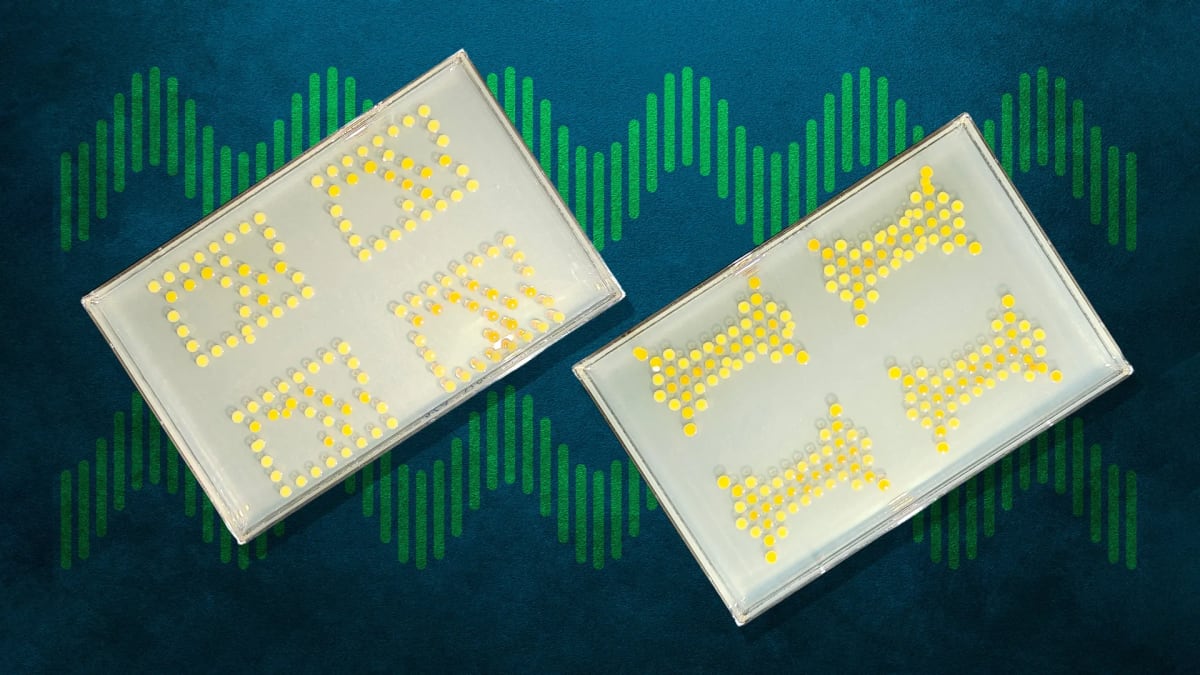
The researchers printed these bacterial colonies onto growth plates, spacing them about 5 millimeters apart. Chemical signals travel from one colony to the next in a single direction, just like current flowing through wires on a circuit board.
The system can already perform basic computing operations. The largest circuit demonstrated contained 24 connected bacterial colonies that could add two inputs together. Other arrangements could process multiple signals simultaneously or route information to different destinations based on control signals.
The Ripple Effect: This breakthrough addresses a fundamental challenge in synthetic biology. Previous attempts to build biological computers packed too many functions into single cells, overwhelming their natural machinery. By distributing the work across multiple specialized cells, researchers can now create circuits of practically unlimited complexity.
The most exciting application involves placing these living circuits directly onto plants. Bacteria naturally grow on roots and leaves, making them perfect biological sensors. They could continuously monitor for drought conditions, nutrient deficiencies, or pest attacks.
When the bacterial computer detects a threat, it could trigger the plant's own defense mechanisms automatically. No human intervention needed. No chemical sprays required.
"Computationally, there's nothing that your iPhone can do that these circuits couldn't do," says Christopher Voigt, who leads MIT's Department of Biological Engineering. The main difference is speed. Electronic circuits operate in milliseconds, while these biological versions work over hours as chemical signals diffuse between colonies.
But speed doesn't matter for many agricultural applications. Plants face threats that develop over days or weeks, giving biological computers plenty of time to respond.
The modular design means researchers can arrange the five bacterial strains into countless different configurations. Each arrangement creates a circuit that performs different logic operations, just like rearranging electronic components on a circuit board.
This technology could help farmers grow more food with fewer resources while making crops more resilient to climate change.
Based on reporting by Science Daily
This story was written by BrightWire based on verified news reports.
Spread the positivity!
Share this good news with someone who needs it