MIT Creates Tool to Cut Building Emissions by 90%
Engineers at MIT developed software that designs bridges and buildings using up to 90% less material while staying easy to build. The breakthrough could eliminate billions of tons of construction carbon emissions.
Imagine if every building and bridge in the world could be just as strong but use only a fraction of the materials we currently pour into them.
MIT researchers just made that vision possible. They've created software that designs structures using up to 90% less material without sacrificing strength or safety.
Here's the problem they solved: Construction materials account for more than 7% of global carbon emissions. A design technique called topology optimization has existed for years that could dramatically reduce material use, but engineers rarely use it because the resulting designs are too complex to actually build on time and budget.
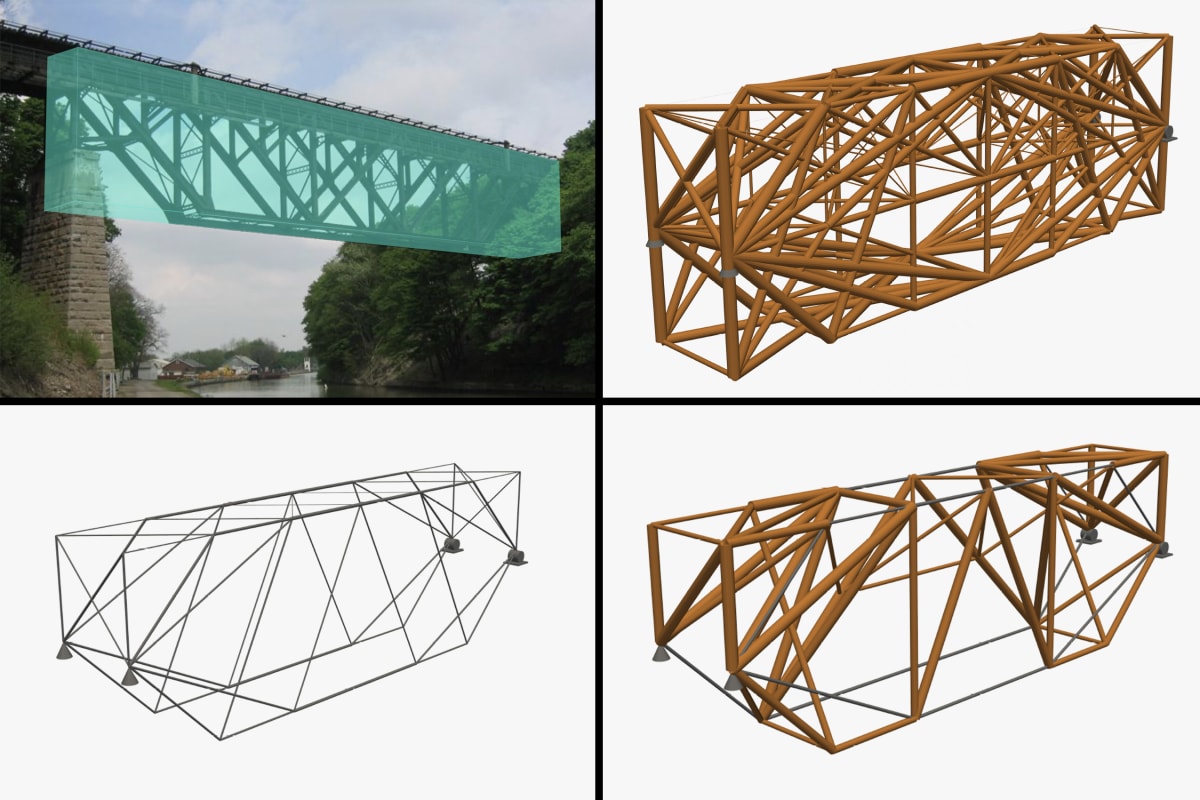
The MIT team, led by Professor Josephine Carstensen and PhD student Zane Schemmer, found a way to make these optimized designs practical. Their new framework lets builders set real-world constraints like limiting how many parts connect at each joint or how small components can be.
The software works with multiple materials at once, something previous systems struggled with. It considers whether you're working with steel, timber, or both, and accounts for each material's unique properties. Steel cables can't handle compression the way steel beams can, for example, so the system makes smarter material choices.
The researchers tested their approach on truss structures, the frameworks that support loads in buildings and bridges. They designed versions using only steel, only timber, and combinations of both materials. Each variation showed significantly different carbon footprints depending on which constraints were applied.
The Ripple Effect
If this technology reaches widespread adoption, it could eliminate multiple gigatons of carbon emissions from construction worldwide. That's equivalent to taking hundreds of millions of cars off the road permanently.
The breakthrough also opens doors for using sustainable materials more effectively. Builders could make better decisions based on local material availability and regional carbon costs rather than defaulting to conventional designs.
Most importantly, the framework bridges the gap between laboratory innovation and construction sites. Previous optimization tools created designs that looked great on computer screens but intimidated actual builders. This system ensures every design that emerges can realistically be built with conventional methods.
The research appears in the journal Automation in Construction, bringing the technology one step closer to industry adoption.
Buildings and bridges that are just as strong but carry a fraction of the environmental cost might soon become the new normal.
Based on reporting by MIT News
This story was written by BrightWire based on verified news reports.
Spread the positivity!
Share this good news with someone who needs it