MIT Method Reveals Hidden Bacterial Protein Secrets
Scientists at MIT discovered a faster, cheaper way to study tiny cellular machinery in bacteria, revealing surprises even in processes studied for 50 years. The breakthrough could accelerate our understanding of how cells make proteins and regulate their activity.
Sometimes the best discoveries happen by accident, and that's exactly what graduate student Mira May found while studying bacterial cells at MIT.
May was working on imaging ribosomes, the tiny machines inside cells that build proteins. She set up a negative control experiment that she expected to produce fuzzy, useless images. Instead, she got crystal-clear views of ribosomes interacting with their natural partners, something that usually requires months of painstaking work.
That happy accident became cryoPRISM, a new imaging technique that lets scientists peek inside freshly burst bacterial cells. The method captures molecular structures in their natural environment without the expensive, time-intensive process of traditional in-cell imaging.
"We think that the cryoPRISM method is a sweet spot where we preserve much of the native cellular contacts, but still have the resolution that lets us actually see molecular details," says MIT biology professor Joey Davis, who led the study with May and fellow graduate student Gabriela López-Pérez.
The team compared their approach to studying the blobfish, once called the world's ugliest animal. When pulled from its deep-sea home, extreme pressure changes turn the fish into a blob. In its natural habitat 4,000 feet underwater, it looks perfectly normal. Scientists face similar challenges when extracting molecules from cells to study them.
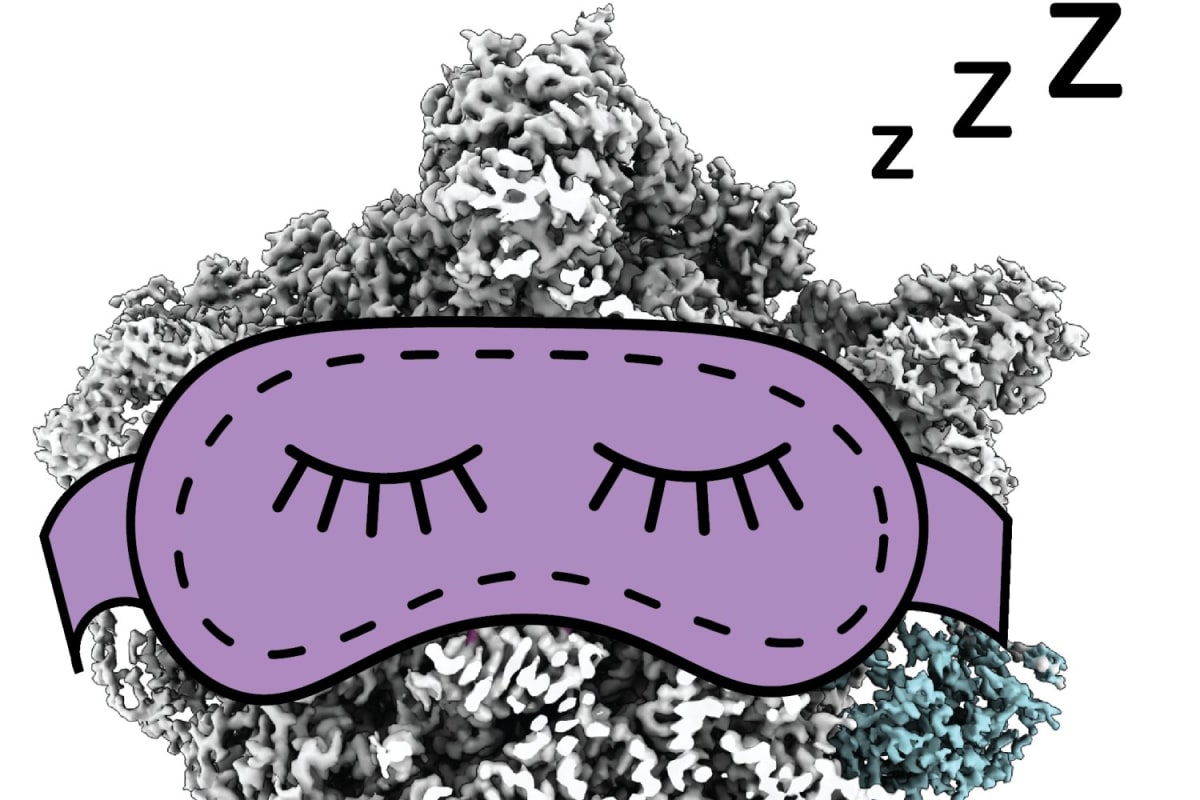
Using cryoPRISM, the researchers made an unexpected discovery about bacterial ribosomes. When bacteria face stressful conditions like cold temperatures, idle ribosomes get blocked by a protein called RaiA, like a sleeping mask preventing someone from waking up to light.
May found something surprising. Some sleeping ribosomes were also interacting with EF-G, a helper protein previously thought to only work with active ribosomes in bacteria. Scientists had seen this in complex organisms before, but finding it in simple bacteria suggests this regulatory system evolved earlier than previously believed.
The Ripple Effect
The technique validated in just days what would normally take months to confirm. For researchers studying how cells work, this speed and accuracy opens new doors for understanding not just bacteria, but potentially all living organisms.
Even in translation, a process scientists have studied in E. coli for over 50 years, cryoPRISM revealed hidden states that escaped detection. The method proves that even well-explored biological systems still hold secrets waiting to be discovered with the right tools.
This breakthrough matters because understanding how bacteria regulate protein production could lead to better antibiotics and insights into cellular processes across all life forms. Sometimes looking at familiar things in a new way reveals the most exciting surprises.
Based on reporting by MIT News
This story was written by BrightWire based on verified news reports.
Spread the positivity!
Share this good news with someone who needs it