MIT Running Shoe Adapts to Your Feet as You Run
MIT researchers developed a running shoe that customizes itself to your unique running style through a clever physics trick. The shoe gets more comfortable with every step you take, bringing elite athlete performance to everyone.
Imagine a running shoe that learns your feet and gets better every time you lace up. MIT researchers just made it real.
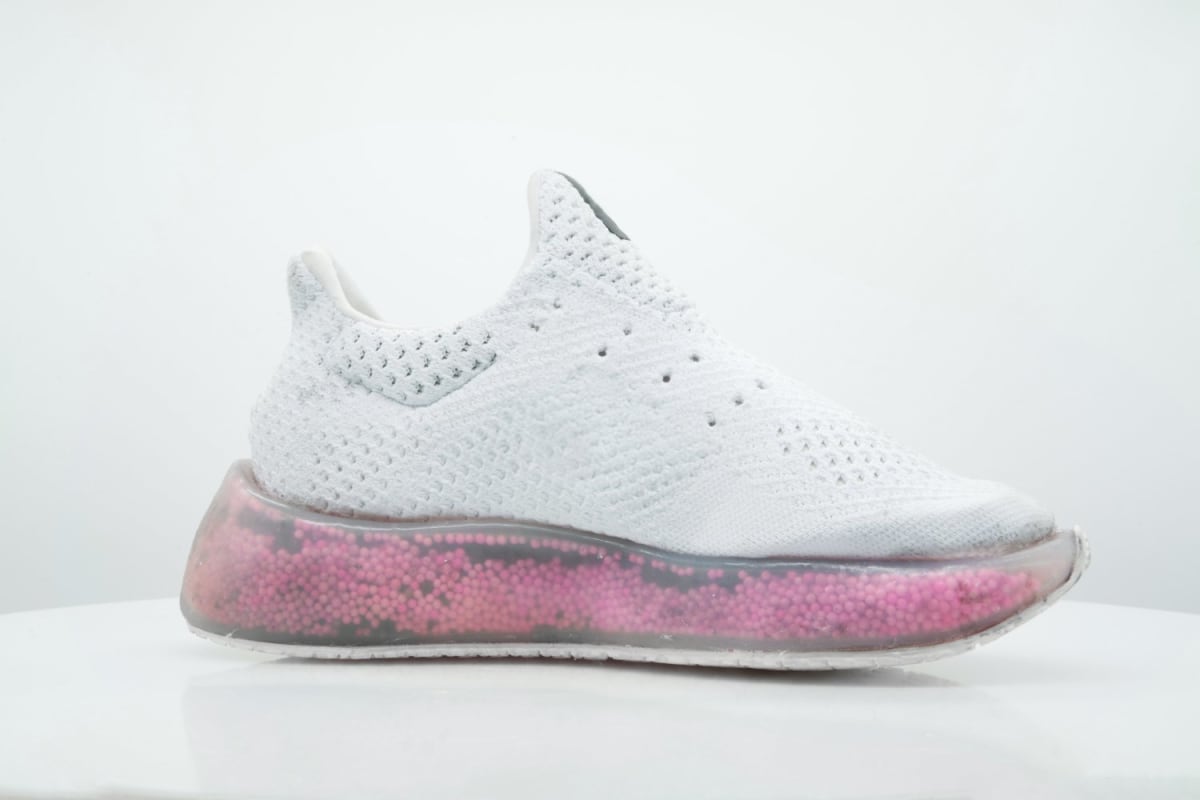
Professor Skylar Tibbits and his team at the MIT Self-Assembly Lab created a shoe that automatically adjusts to each runner's needs. The secret lies in the middle layer of the shoe, which contains different sized particles that naturally rearrange themselves as you run.
The technology uses something called granular convection, the same physics that makes Brazil nuts rise to the top of a mixed nut jar. Larger, softer particles float upward to cushion your foot where you need it most. Smaller, stiffer particles sink to the bottom to provide support and durability.
The shoe adapts in about 20,000 steps, roughly the distance of a marathon. After testing the prototype with a robotic foot that completed a full marathon's worth of steps, black soft particles appeared exactly where cushioning was needed most.
Right now, only elite athletes get custom shoes designed for their specific foot shape and running style. Those personalized shoes cost a fortune and require individual manufacturing. Everyone else gets stuck with one size fits all footwear that never quite feels perfect.
This new approach changes everything about how custom shoes reach people. Every shoe starts identical on the factory line, but each one evolves uniquely based on how its owner runs. No special manufacturing required, no premium price tag, just shoes that learn.
The Ripple Effect
The technology could transform more than running shoes. Any product that needs cushioning could benefit from materials that improve over time instead of breaking down.
Tibbits envisions packaging that molds itself around fragile items during shipping, then gets reused instead of thrown away. Furniture cushions could adapt to where people actually sit. Medical devices could customize themselves to individual patients without expensive custom manufacturing.
The research shows that personalization doesn't have to mean expensive, wasteful, or complicated. Sometimes the smartest solutions come from letting physics do the work while we focus on moving forward.
Your next pair of running shoes might just run alongside you, learning every step of the way.
Based on reporting by MIT News
This story was written by BrightWire based on verified news reports.
Spread the positivity!
Share this good news with someone who needs it