MIT Spinout Cuts Industrial Energy Use by 15% With New Tech
A startup born from MIT labs just created a breakthrough that could slash the chemicals industry's massive energy footprint. Their new membrane technology replaces heat-based processes that currently consume up to 15% of the world's total energy.
Making the plastics, fuels, and chemicals that power modern life takes an enormous amount of energy, but a breakthrough from MIT could change that dramatically.
Industrial chemical separation accounts for 10% to 15% of all energy used worldwide. Most of that energy goes into heating materials to boiling points so unwanted compounds can be separated out, a process that's remained largely unchanged for decades.
Now, MIT spinout Osmoses has developed a membrane technology that filters gases without all that heat. The company was founded by former MIT researchers Francesco Maria Benedetti, Katherine Mizrahi Rodriguez, Professor Zachary Smith, and Holden Lai after years of fundamental research in chemical engineering.
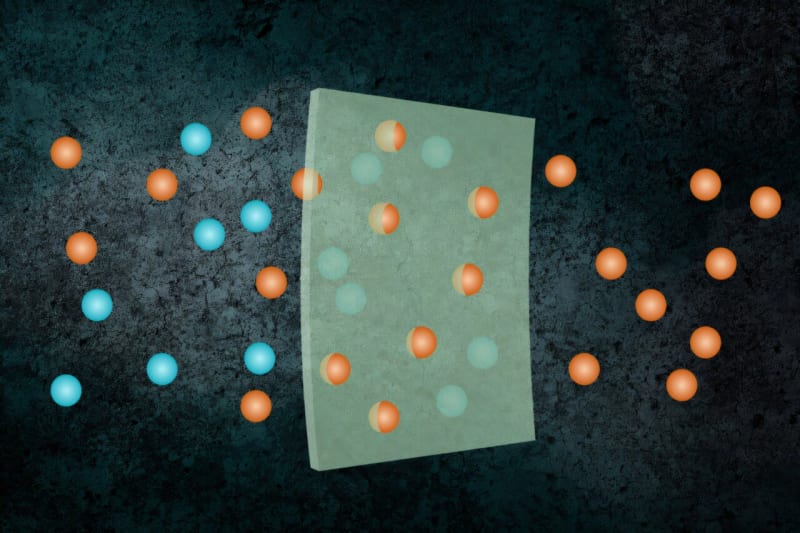
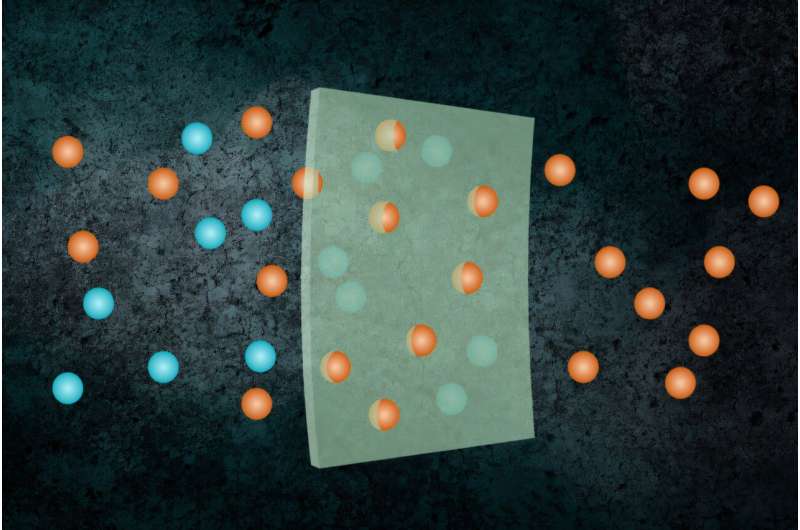
Their innovation centers on a class of molecules called hydrocarbon ladder polymers. These membranes can filter some of the smallest molecules in existence with unprecedented accuracy, making gas separation possible at industrial scale without thermal processes.
The team spent years refining their approach in MIT labs, gradually improving performance until they broke records for gas separation selectivity in 2020. They published their results in the journal Science in 2022 and decided they couldn't wait for someone else to commercialize their discovery.
Before launching the company, the founders interviewed more than 100 industry stakeholders through the National Science Foundation's I-Corps Program. Those conversations confirmed the massive need for their technology and revealed the scale of the challenge facing the chemicals industry.
Osmoses is already working with partners on real-world applications. Current projects include upgrading biogas by separating carbon dioxide and methane, recovering hydrogen from large chemical facilities, and partnering with the U.S. Department of Energy to extract helium from underground hydrogen wells.
The technology shrinks the physical size of separation systems, making it easier to retrofit existing facilities and lowering upfront costs for customers. Companies can increase production while using less energy and operating in smaller spaces than conventional heat-based methods require.
The Ripple Effect
The impact could reshape global energy use. One study in Nature found that replacing thermal distillation could reduce annual U.S. energy costs by $4 billion and prevent 100 million tons of carbon dioxide emissions every year.
The founders have already scaled production dramatically from their lab days, when they made single grams of membrane material for experiments. They're now focused on reducing costs while preparing for commercial-scale manufacturing.
The chemicals industry faces enormous pressure to reduce its carbon footprint while meeting growing global demand, and this innovation offers a path forward that delivers both environmental and economic benefits.
What started as high-risk academic research could soon help one of the world's most energy-intensive industries finally break free from its dependence on heat.
More Images


Based on reporting by Phys.org - Technology
This story was written by BrightWire based on verified news reports.
Spread the positivity!
Share this good news with someone who needs it