MIT Study Shows How Trees Could Cool Cities for Everyone
A new global study reveals a simple solution to urban heat: plant more trees where people take buses and trains. Researchers found wealthy neighborhoods have far more shade, but linking tree planting to public transit could help everyone stay cool.
Scientists just mapped the shade in nine cities around the world and discovered something both troubling and fixable: the people who need trees most have access to them least.
MIT researchers examined cities from Stockholm to Sydney, measuring how much shade covers sidewalks on the hottest days of summer. They found that in every city, wealthier neighborhoods enjoy significantly more tree cover than lower-income areas.
"Shade is the easiest way to counter warm weather," says Fabio Duarte, an urban studies scholar at MIT's Senseable City Lab. "Strictly by looking at which areas are shaded, we can tell where rich people and poor people live."
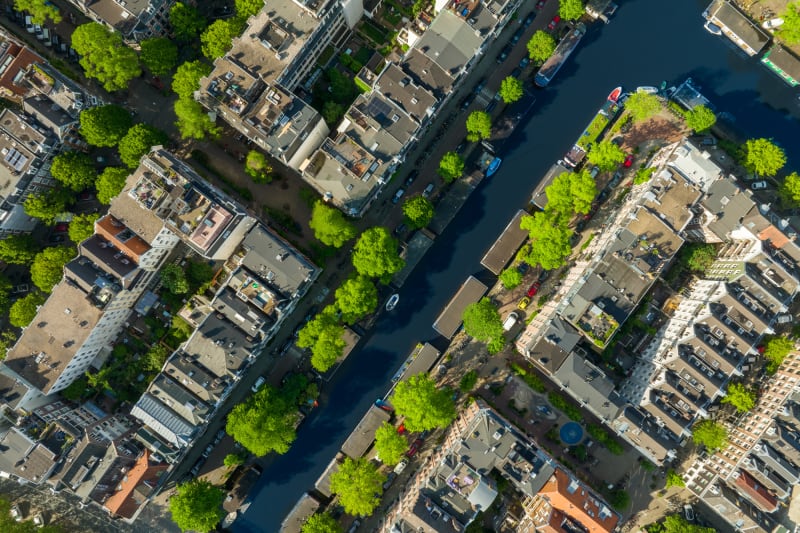
The pattern held true even in cities with completely different climates and tree coverage levels. Stockholm has far more trees overall than Belem, Brazil, but both cities show the same disparity between rich and poor neighborhoods. Even Amsterdam, with its generally good shade coverage, shows distinct patterns of fewer trees in lower-income areas.
The research team studied nine cities across four continents: Amsterdam, Barcelona, Belem, Boston, Hong Kong, Milan, Rio de Janeiro, Stockholm, and Sydney. They used satellite data to rate sidewalk shade on a scale from 0 to 1, focusing on summer's hottest days.
The results varied dramatically by city. Much of Stockholm scored between 0.6 and 0.9, while large areas of Rio de Janeiro fell below 0.1. Boston ranged mostly from 0.15 to 0.4.
The Bright Side
Here's where the good news comes in: the researchers identified a straightforward solution. Plant trees along public transportation routes.
"In each city, from Sydney to Rio to Amsterdam, there are people who, regardless of the weather, need to walk," Duarte explains. "And it's those people who also take public transportation."
The strategy works on two levels. Transit stops naturally generate pedestrian traffic, so trees there help the most people. Plus, public transit users tend to be the medium and lower-income residents who currently have less shade in their neighborhoods.
The approach doesn't require complicated planning or expensive infrastructure. Cities already know where their bus stops and train stations are located. Simply following transit lines with tree-planting programs could dramatically reduce heat exposure for the people most vulnerable to it.
Several cities in the study, including Milan and Barcelona, already have some lower-income neighborhoods with abundant shade, proving the disparity isn't inevitable.
With urban heat islands becoming more intense as temperatures rise, this research offers cities a clear, actionable path forward: follow the transit lines, plant the trees, and create cooler, more equitable communities for everyone who calls them home.
Based on reporting by MIT News
This story was written by BrightWire based on verified news reports.
Spread the positivity!
Share this good news with someone who needs it