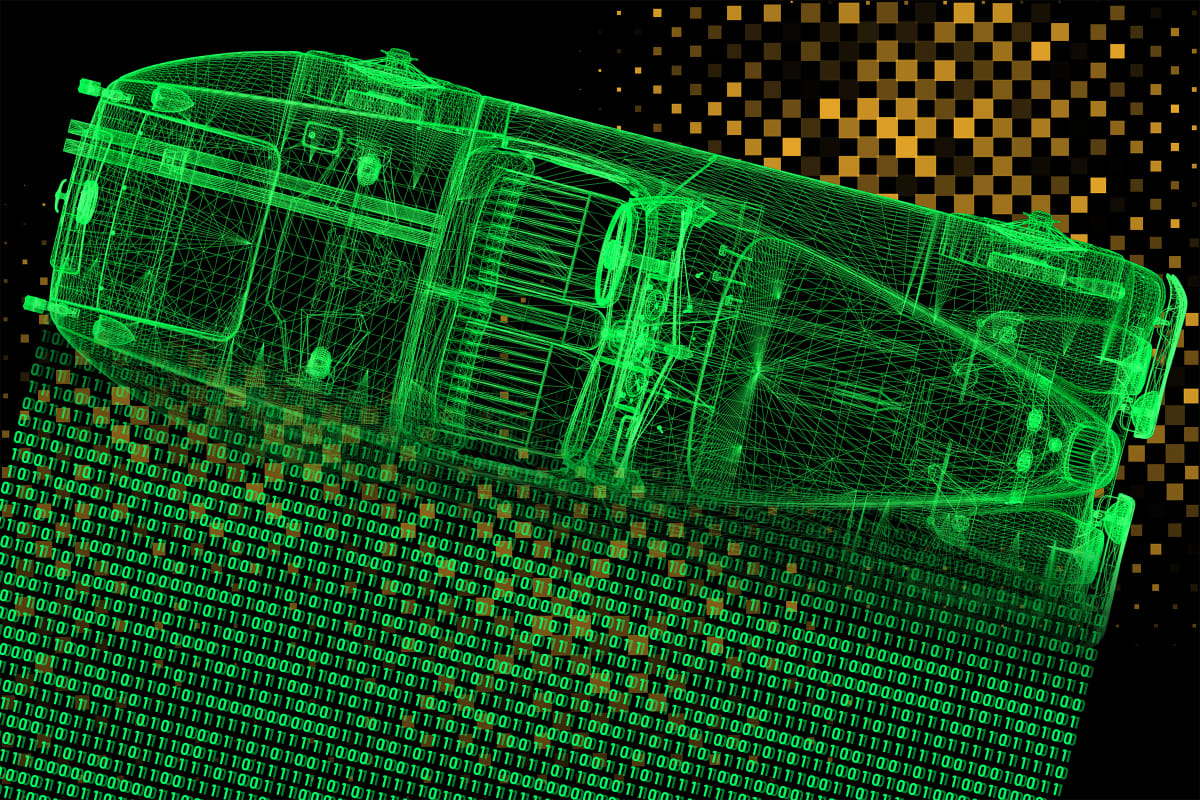
MIT Teaches AI to Turn 2D Sketches Into 3D Models Fast
Engineers can now convert simple drawings into testable 3D prototypes in seconds, thanks to a new MIT system that teaches AI to learn from its own mistakes. The breakthrough could slash design costs and speed up innovation across industries.
Creating a new airplane part or car component just got dramatically faster and cheaper.
MIT researchers have developed a system called GIFT that teaches AI models to automatically transform 2D sketches into accurate 3D computer models ready for testing. The breakthrough addresses one of engineering's biggest bottlenecks: turning design ideas into virtual prototypes that can be crash-tested and stress-tested before anything gets built in real life.
The secret? GIFT teaches AI to learn from its failures instead of just its successes.
Lead researcher Giorgio Giannone and his team at MIT's Design Computation and Digital Engineering Lab discovered that most AI models struggled to generate the precise computer code needed for professional design software. So they built a system that watches the AI work, identifies where it goes wrong, and turns those near-misses into teaching moments.
"We want engineers to be able to point our framework at an underperforming CAD model, set a compute budget, and let the system take over," says Giannone, who also works on AI innovation at Red Hat.
Here's how it works in practice. GIFT asks the AI to solve the same design problem 10 times simultaneously. Some attempts fail completely, but others get close. The system captures those almost-correct solutions, fixes them, and feeds them back to the AI as examples of how to improve.
The result is an AI that gets dramatically better at converting simple images into functional 3D models, using only a fraction of the computing power other methods require.
The Ripple Effect
The implications stretch far beyond faster prototyping. When design cycles shrink from weeks to minutes, engineers can explore more creative solutions they might otherwise skip due to time constraints.
Professor Faez Ahmed, who leads the lab, puts it in perspective: "Nearly every physical product around us, from airplanes to appliances, begins its life as a CAD model." Faster, cheaper prototyping means more innovation across every industry that builds physical things.
The team presented their findings at the International Conference on Machine Learning in 2026, and the response from industry teams has been enthusiastic. Companies are eager for AI tools that can genuinely accelerate the design process without sacrificing accuracy.
What makes GIFT particularly promising is its efficiency. Other AI systems need massive datasets and enormous computing power to improve, but GIFT generates its own training data based on the specific problems each model faces.
This self-improvement approach could democratize advanced design tools, making sophisticated prototyping accessible to smaller companies and independent inventors who lack big budgets. Every breakthrough product starts with a sketch, and now that sketch can become a testable prototype before lunch.
Based on reporting by MIT News
This story was written by BrightWire based on verified news reports.
Spread the positivity!
Share this good news with someone who needs it