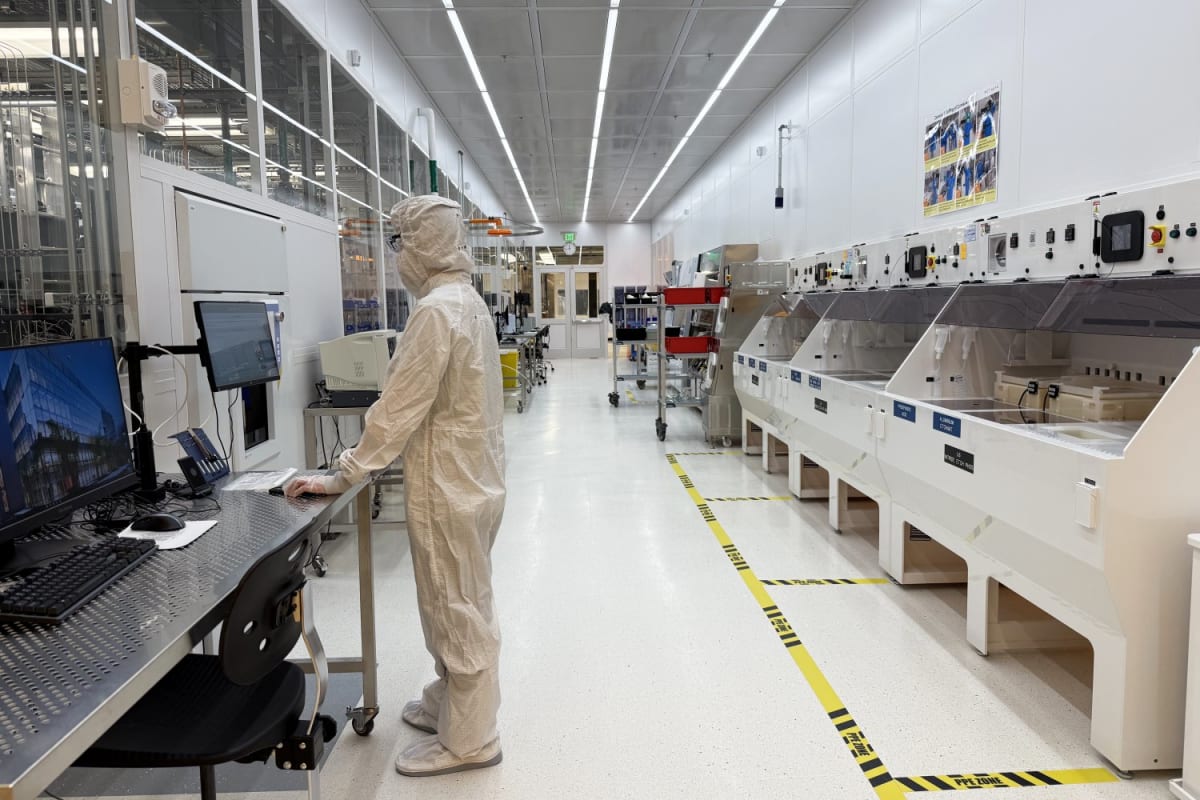
MIT.nano's New System Powers 160,000 Research Hours
Over 1,500 researchers at MIT.nano now access 200+ advanced research tools through a streamlined system that makes cutting-edge science easier than ever. The new platform turns what used to be a scheduling headache into a seamless experience that keeps innovation moving.
Managing shared access to 200 specialized research instruments for 1,500 scientists might sound like an organizational nightmare, but MIT.nano just made it look simple.
The research facility recently launched NEMO, a new laboratory management system that coordinates 160,000 hours of annual research across 88,000 tool uses. What makes this news exciting isn't just the scale, it's how the upgrade removes friction from the scientific process itself.
For years, MIT researchers relied on CORAL, a platform developed jointly with Stanford back in 2003. While groundbreaking for its time, CORAL eventually showed its age, lacking the mobile access and modern interfaces scientists now expect. Imagine trying to reserve critical lab equipment from your phone only to find the system stuck in the early 2000s.
NEMO changes everything. Researchers can now monitor equipment availability, join waitlists, register for training, report issues, and communicate with staff from a single mobile-friendly dashboard. Anna Osherov, associate director for Characterization.nano, led the three-year transition and emphasizes how the system centralizes policies, documentation, and workflows into one accessible space.
The platform comes from the National Institute of Standards and Technology and runs on an open-source model. That means improvements made at MIT.nano benefit research facilities worldwide, creating a ripple effect of efficiency across the scientific community.
The Ripple Effect
Thomas Lohman, senior software and systems manager at MIT's Microsystems Technology Laboratories, watched NEMO evolve over time. He explains that the new system didn't just replicate CORAL's functions but introduced features the old platform simply couldn't support, backed by an active global community constantly improving it.
The collaborative approach extends beyond MIT. Mathieu Rampant, NEMO project lead and CEO of Atlantis Labs, notes that the community is expanding rapidly with new features originating directly from facility users and administrators. When one institution solves a problem, everyone benefits.
For the 1,500 researchers pursuing experiments across MIT's disciplines, the change means less time wrestling with logistics and more time making discoveries. Jorg Scholvin, associate director of Fab.nano, helped ensure the system works across different lab environments, from characterization labs to chemically active cleanrooms.
The transition represents more than a tech upgrade. It's infrastructure that scales with scientific ambition, supporting the pace and collaborative spirit of modern research while maintaining the fairness and access that shared facilities require.
By removing barriers between scientists and their tools, MIT.nano just gave innovation 160,000 more hours to flourish.
Based on reporting by MIT News
This story was written by BrightWire based on verified news reports.
Spread the positivity!
Share this good news with someone who needs it