
MIT's Flexible Sheet Tracks Movement for Therapy and VR
Engineers created a soft, bendable material that digitally maps its own movement in real time. The breakthrough could transform physical therapy tracking and make virtual reality more comfortable.
Imagine a shirt that knows exactly how you're moving and can share that information instantly with doctors, therapists, or even your favorite video game.
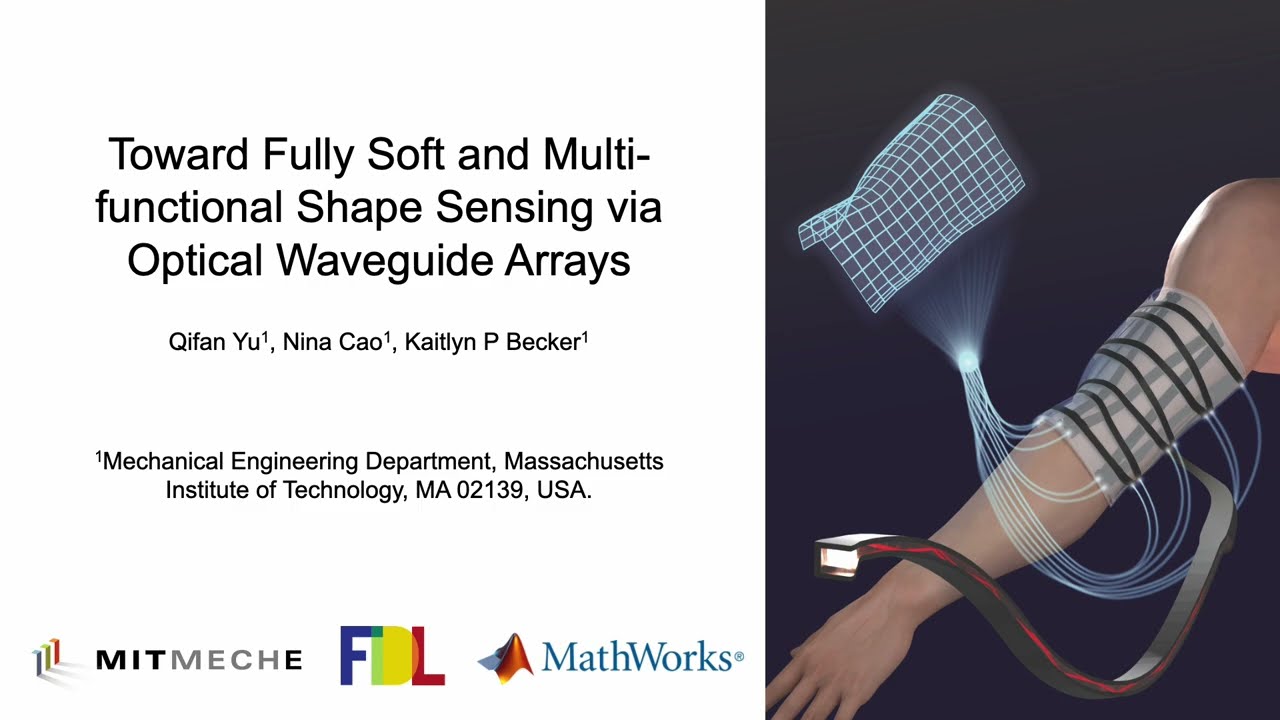
MIT engineers just made that possible. They've developed a flexible sheet embedded with soft optical fibers that can digitally reconstruct its own shape as it bends and twists in real time.
The innovation improves on existing motion-capture technology, which relies on rigid sensors stitched into specific spots on clothing. Those systems work but can be uncomfortable and limited in what they detect.
Instead, the MIT team embedded multiple soft optical fibers in a zigzag pattern throughout a stretchable sheet. When the sheet bends, the fibers bend too, changing how light travels through them.
Graduate student Qifan Yu and the research team created an algorithm that reads these light patterns instantly. The system creates a digital image that moves exactly like the physical sheet moves.
The design is remarkably resilient. Even when several fibers get cut or damaged, the remaining ones still accurately track the sheet's overall shape.
"Our setup is targeting fully soft and stretchable sensing surfaces so it's potentially safer for interacting with a human or a soft environment," Yu explains.
The secret lies in how the team modified standard optical fibers. They used clear, flexible rubber instead of rigid glass and intentionally roughened one side of each fiber's core. This roughness makes the fiber bidirectional, sensing movement in multiple directions at once.
The Ripple Effect
Physical therapy patients could soon wear these sheets wrapped around injured arms or legs. Therapists would get precise data on exactly how patients are moving during rehabilitation sessions, tracking progress with unprecedented accuracy.
"In physical therapy, you often need to gather patient data on how they are moving and stretching their arm during rehabilitation," Yu notes. "Surface shape sensing could be very useful in that way."
Gaming and virtual reality applications are equally promising. Users could wear comfortable, pliable garments that control game characters or operate robots remotely without the discomfort of rigid sensors.
The technology could extend beyond human use too. Soft robots interacting with delicate environments could use these sheets as sensitive "skins" to navigate safely.
The team published their findings in Advanced Intelligent Systems, with Yu working alongside graduate student Nina Cao and assistant professor Kaitlyn Becker.
By making movement tracking both accurate and comfortable, this soft sensing technology is opening doors to better healing, more immersive experiences, and gentler human-machine interaction.
More Images
Based on reporting by MIT News
This story was written by BrightWire based on verified news reports.
Building Something New? Try the BrightWire Tech Stack Advisor
Compare modern frameworks, cloud hosting, and AI tools tailored to your project budget and scale.
Spread the positivity!
Share this good news with someone who needs it


